In a monumental shift for global aviation, the European Union has finalized a sweeping provisional agreement to overhaul its decades-old EU261 passenger rights 2026 framework. After 13 years of intense, often stalled negotiations, this week's landmark deal introduces some of the strongest consumer travel protections ever codified into law. By completely banning extra charges for standard hand luggage, ensuring families can sit together at no extra cost, and cementing substantial cash payouts for disrupted journeys, the EU is radically redefining the flying experience. While consumer advocates across the continent hail these Europe summer travel protections as a massive victory for transparency, the commercial aviation industry is up in arms, warning that the new mandates will inevitably drive up base airfares for everyone.
A Historic Win for European Flight Delay Compensation
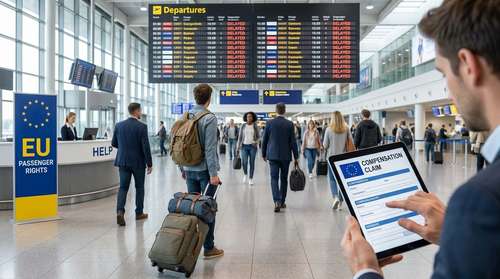
When an airline significantly delays a trip, the financial and emotional impact on travelers can be severe. Under the newly finalized regulatory update, the European Parliament and Council formally preserved the highly contested three-hour threshold for flight delays. Passengers who reach their final destination with a delay of three hours or more remain fully entitled to cash compensation of up to €600 ($695), tiered depending on the total flight distance.
The political decision to maintain this strict, passenger-friendly timeline represents a massive defeat for airline lobbying groups. Carriers had aggressively pushed regulators to extend the compensation trigger to at least five hours, arguing that the existing three-hour timeframe perversely encourages airlines to outright cancel flights rather than risk paying massive penalties while waiting for a relief aircraft. By rejecting the extension, regulators have solidified European flight delay compensation as the gold standard for traveler rights worldwide.
Furthermore, the modernized airline delay refund rules will establish a much smoother, more streamlined claims process. Regulators aim to eliminate the bureaucratic red tape that often forces frustrated passengers to abandon their claims or surrender a large percentage of their rightful compensation to third-party claim farm agencies.
The Free Carry-On Bags EU Regulation Explained
For the past two decades, budget airlines have revolutionized European travel by unbundling their fares, stripping away basic amenities to advertise rock-bottom baseline prices. However, the most frustrating casualty of this pricing model has undoubtedly been the overhead bin. Thanks to the newly adopted free carry-on bags EU regulation, airlines operating within the bloc must now include two baggage items in the standard ticket price: a small personal item that fits comfortably under the seat, and a second, larger standard cabin bag for the overhead compartment.
These transformative airport baggage fee changes specifically address widespread consumer complaints regarding hidden fees and predatory pricing tactics enforced at the boarding gate. Travelers will no longer face surprise credit card charges just to bring a standard weekend suitcase on board. Industry experts note that while some ultra-low-cost carriers will likely resist, the law mandates transparent, upfront pricing.
Fee-Free Family Seating and Expanded Ticketing Flexibility
The scope of the revised EU261 framework extends far beyond baggage allowances. Airlines are now legally mandated to provide fee-free seating for parents placed directly next to their young children, officially eliminating the dreaded family tax during the digital seat selection process.
Additionally, the agreement permanently bans retaliatory no-show clauses. Previously, if a passenger missed their outbound flight leg due to an emergency, carriers would automatically void their return ticket without a refund. The new reform strictly prohibits this controversial practice, allowing travelers to safely retain their inbound bookings even if their initial travel plans are altered. Passengers will also benefit from free name spelling corrections on their boarding passes, removing yet another notoriously high administrative penalty.
IATA Pushback EU261 Reform: Will Ticket Prices Rise?
Not everyone is celebrating the EU261 passenger rights 2026 updates. The ink was barely dry on the provisional agreement before major airline associations launched a fierce, coordinated opposition campaign. The vocal IATA pushback EU261 reform argument centers on the claim that EU regulators completely ignored the actual root causes of regional aviation disruptions, namely, severe air traffic control (ATC) staffing shortages and chronic airspace congestion.
Willie Walsh, Director General of the International Air Transport Association (IATA), expressed deep frustration, labeling the legislative package a missed opportunity. He warned that the new operational challenges and compliance costs will ultimately be passed directly down to the consumer. Ryanair CEO Michael O'Leary was even more blunt in his assessment, dismissing the changes to the law as bureaucratic bunkum. O'Leary cautioned that forcing airlines to artificially bundle baggage costs into the base fare will inflate visible ticket prices and severely weaken the global competitiveness of European carriers against their international counterparts.
Despite these dire warnings from top aviation executives regarding ancillary revenue losses, consumer rights advocates strongly maintain that upfront pricing transparency is well worth the potential shift in fare structures. As the historic new regulations prepare to take full effect next year, travelers can finally look forward to a more honest, reliable, and family-friendly flying experience across the European continent.