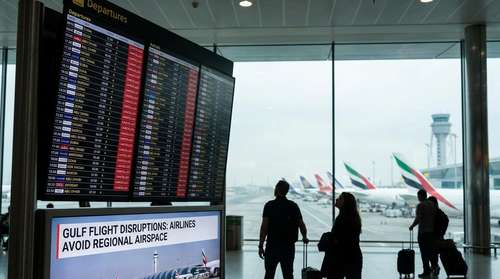
Summer vacations are facing an unprecedented hurdle as Gulf flight disruptions 2026 take a massive toll on global aviation. Following the sudden collapse of a 60-day diplomatic ceasefire between Washington and Tehran, escalating military action has forced major carriers to reroute or suspend services entirely. With airspace closures and heightened security warnings sweeping across the region, travelers are bracing for widespread summer travel flight delays 2026.
The renewed conflict has effectively transformed one of the world's busiest transit corridors into a high-risk zone. Missile exchanges and drone activities have surged, prompting international regulators to issue urgent directives. For passengers holding tickets through major hubs like Dubai, Doha, and Abu Dhabi, understanding these sudden Middle East flight cancellations is essential for navigating the volatile weeks ahead.
Regulators Issue Urgent Warnings as Airlines Avoid Gulf Airspace
To ensure passenger safety, the European Union Aviation Safety Agency (EASA) reinstated a stringent Conflict Zone Information Bulletin on July 14, 2026. The directive explicitly advises carriers to avoid the airspace over the United Arab Emirates, Bahrain, Qatar, and Kuwait. Furthermore, the warning encompasses the waters of the Gulf of Oman west of longitude 58 degrees east.
This critical guidance remains in effect until at least July 29, 2026. While national aviation authorities in the Gulf have not ordered formal airspace closures, EASA's assessment of aviation security Middle East leaves little room for compromise. The agency specifically cited the unpredictable nature and rapid evolution of military activity as the primary catalyst for the warning. European carriers, including Air France and Lufthansa, along with third-country operators flying into the EU, must immediately adjust their flight paths to prevent the risk of civilian aircraft misidentification amid the intense military buildup.
Singapore Airlines Dubai Flight Updates and Carrier Cancellations
Asian and Middle Eastern carriers are taking drastic preemptive measures to protect their crews and passengers. Notably, the latest Singapore Airlines Dubai flight updates confirm that the carrier has extended its suspension of flights between Singapore and Dubai until October 24, 2026. The airline originally planned an earlier resumption of its network, but the fluid security dynamic dictated a more conservative approach. The airline's budget subsidiary, Scoot, has similarly pulled its flights between Singapore and Jeddah until July 27. Affected passengers are being offered re-accommodation on alternative flights or full refunds for the unused portions of their tickets.
Regional airlines are feeling the immediate operational strain as well. Flydubai was forced to cancel multiple daily departures from Dubai International Airport to Abha, Saudi Arabia, due to cross-border strikes that disrupted airport operations. Saudi carriers like Saudia and flynas also heavily reduced their domestic Abha rotations as conditions worsened.
The Cost of Rerouting
When airlines avoid Gulf airspace, the logistical ripple effects are staggering. Bypassing the restricted zones forces long-haul flights between Europe and Asia to divert significantly further north over Central Asia or south across Africa. Dispatch teams must rapidly recalculate block times, crew duty limits, and fuel uplifts. These detours add hours to journey times, surging fuel consumption that will inevitably trickle down to consumers in the form of higher ticket prices.
US Iran Travel Advisory Impacts on Global Transit
The root cause of these disruptions stems from a severe breakdown in geopolitical stability. An interim memorandum of understanding signed in June 2026 originally aimed to secure commercial vessel movement through the Strait of Hormuz. However, accusations of broken commitments led to its collapse, throwing the entire region back into uncertainty. Following renewed strikes on Iranian military assets and a reimposed US naval blockade on Iranian ports, commercial shipping is again under threat.
Several Western governments have responded by tightening their travel guidance. A newly issued US Iran travel advisory warns citizens of the extremely volatile security environment. The UK, Canada, and Australia have mirrored these concerns, urging their nationals to reconsider travel through major Gulf transit hubs due to the unpredictable nature of the conflict and potential transport disruptions. For international passengers, this means a seemingly straightforward layover could be subjected to sudden ground holds or outright Middle East flight cancellations.
How to Navigate Summer Travel Flight Delays 2026
If your upcoming itinerary involves transiting through the Middle East, proactive planning is your best defense against the chaos. The volatility of the situation means schedules can change with little to no warning. Aviation analysts note that avoiding these critical corridors removes an essential artery of global travel, turning normally bustling departure gates into waiting games.
Follow these essential steps to protect your travel plans:
- Monitor official channels: Keep a close eye on your airline's flight status page and download their mobile app for real-time push notifications.
- Review alternative routes: If your carrier announces Middle East flight cancellations, inquire immediately about rerouting options through unaffected hubs in Europe or Asia.
- Check travel insurance: Verify whether your current policy covers trip interruptions caused by acts of war, airspace restrictions, or government travel advisories.
- Update contact details: Ensure your airline has your current phone number and email address so they can reach you directly during a sudden operational disruption.
As the diplomatic standoff continues, the aviation industry remains on high alert. Until sustainable security agreements are reached, passengers must remain flexible and vigilant during this highly unpredictable summer travel season.