
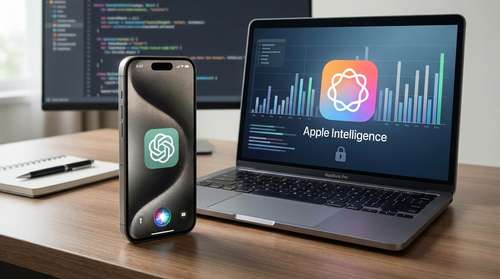
As the tech landscape shifts rapidly in mid-April 2026, Apple has doubled down on its transformative ecosystem. The latest wave of Apple Intelligence features is officially redefining how users interact with their devices, moving away from simple voice commands to a deeply integrated "Agentic AI" experience. By bridging the gap between on-device processing and advanced cloud capabilities, Apple is positioning the iPhone as an intelligent companion capable of understanding profound personal context, routines, and on-screen activities.
The Shift Toward Agentic AI and Deeper Integration
Building upon the foundation laid by the initial iOS 18 AI updates, the company's recent strategic shifts showcase a rapidly maturing ecosystem. With the introduction of advanced on-device foundation models and the expanding capabilities of its App Intents framework, the Cupertino giant is proving that its approach to artificial intelligence is both deliberate and revolutionary. The system goes beyond simple chatbots, integrating directly into the operating system to perform multi-step actions across different applications without requiring manual user intervention.
A Smarter Assistant: The Seamless Siri ChatGPT Integration
At the heart of this transformation is the landmark OpenAI Apple partnership. This strategic collaboration has brought unparalleled generative capabilities to the everyday user without the friction of downloading separate applications or creating new accounts. By leveraging OpenAI's cutting-edge language models, Apple has drastically expanded the horizons of what its native tools can accomplish, answering the industry's demand for a truly smart digital assistant.
The crown jewel of this collaboration is the deeply woven Siri ChatGPT integration. Siri is no longer just a basic voice assistant limited to setting timers or checking the weather; it is an intelligent orchestrator. When faced with complex, general-knowledge queries, coding questions, or tasks requiring sophisticated creative generation, Siri seamlessly hands the request over to ChatGPT. Users can ask Siri to draft a weekly meal plan, write a complex professional email, or analyze a lengthy attached document, and the assistant will utilize ChatGPT to deliver a comprehensive, native-feeling response directly on the screen.
Uncompromising Security: Apple AI privacy standards
Despite integrating powerful third-party language models, Apple refuses to compromise on its core ethos. The rigorous Apple AI privacy standards are meticulously designed to keep user data secure at every touchpoint. Most everyday AI tasks—such as text summarization, live call transcription, and advanced photo editing—are processed entirely on-device. This means your personal information, messages, and photos never leave your hardware.
For heavier workloads that require more computational muscle, Apple utilizes its proprietary Private Cloud Compute. This groundbreaking server architecture runs entirely on custom Apple silicon, ensuring that cloud-based requests are processed securely and immediately discarded without being stored. Furthermore, thanks to the strict terms of the OpenAI Apple partnership, prompts sent through the Siri ChatGPT integration are completely anonymized. OpenAI is restricted from using these requests to train its future models unless a user specifically signs into their account, ensuring that enterprise users and privacy-conscious consumers can utilize these tools with absolute peace of mind.
Hardware Requirements: iPhone 15 Pro AI compatibility and Beyond
Advanced generative AI requires serious processing power, which means older devices simply cannot support these next-generation capabilities. The baseline for entry into this new era remains strict, with iPhone 15 Pro AI compatibility serving as the minimum requirement for smartphones prior to the newer iPhone 16 and 17 series. The A17 Pro chip, equipped with a robust and highly optimized Neural Engine, is uniquely capable of handling intensive on-device foundation models without sacrificing battery life or performance.
As of April 2026, consumers upgrading to the latest hardware are experiencing a radically optimized system, but millions of iPhone 15 Pro users are already taking full advantage of the ecosystem. The seamless performance on these specific older flagship models highlights Apple's commitment to long-term hardware support, provided the silicon meets their stringent computational thresholds.
Transforming the Desktop: Generative AI for Mac
The AI revolution extends far beyond the smartphone. The rollout of Generative AI for Mac has officially transformed macOS into an unprecedented productivity powerhouse. Leveraging the immense power of the M-series chips—from the M1 all the way up to the latest M5 processors—Macs can now run complex, heavy-duty AI workloads entirely offline, drastically reducing latency and ensuring data privacy.
System-Wide Writing Tools and Developer Integration
Mac users now have access to system-wide Writing Tools that can rewrite, proofread, and summarize text across any application—from Mail and Pages to third-party software. Additionally, the Image Playground feature allows users to generate custom visuals directly within their workflows. Apple has also opened the doors for developers; using the new Foundation Models framework, creators can tap directly into the core of Apple Intelligence with just three lines of Swift code.
Whether you are drafting an executive presentation, organizing your inbox, or coding a new application in Xcode, the integration of generative AI for Mac ensures that advanced computational assistance is always just a click away. Ultimately, the latest Apple Intelligence features represent a true paradigm shift in consumer technology. By perfectly marrying the Siri ChatGPT integration with ironclad privacy protections, Apple is setting the definitive standard for the future of personal computing.