In a move that could redefine the global technology landscape, SoftBank Group is reportedly in advanced discussions to inject an additional $30 billion into OpenAI. This massive capital infusion is the cornerstone of a historic $100 billion funding round that would skyrocket the ChatGPT creator's valuation to a staggering $830 billion. As of January 28, 2026, this deal represents not just a financial transaction, but a definitive declaration of the "infrastructure era" of artificial intelligence, where the battle for supremacy moves from code to concrete, energy, and silicon.
The $830 Billion Valuation: A New Tech Hierarchy
If completed, this deal would catapult OpenAI into the stratosphere of the world's most valuable companies, cementing its status as the undisputed leader in generative AI. An $830 billion valuation places the privately held AI lab within striking distance of the trillion-dollar club, a league previously reserved for public giants like Apple, Microsoft, and Nvidia. To put this in perspective, this valuation is nearly half that of Meta Platforms, signaling that investors view OpenAI not merely as a software company, but as a foundational utility for the future economy.
The proposed $100 billion funding round is unprecedented in Silicon Valley history. It dwarfs the GDP of many nations and underscores the capital-intensive nature of training next-generation models like GPT-6 and beyond. Market analysts suggest that this war chest is essential for OpenAI to maintain its lead against fiercely competitive rivals like Google's DeepMind and Anthropic, both of which have been aggressively scaling their own capabilities.
Masayoshi Son’s "All-In" AI Strategy
For SoftBank CEO Masayoshi Son, this investment marks the culmination of a strategic pivot that has been years in the making. After famously liquidating significant holdings in other tech sectors—including a notable exit from Nvidia—Son is now betting the house on what he terms "model sovereignty." The Japanese billionaire believes that the companies controlling the most powerful foundation models will dictate the future of human productivity.
"This is Masayoshi Son going back to his roots as the ultimate visionary gambler," says a Tokyo-based tech analyst. "He sees OpenAI not just as a chatbot maker, but as the operating system of the 21st century. By leading this $30 billion tranche, SoftBank is effectively securing a seat at the table for the most important technological shift since the internet."
From Vision Fund to Strategic Partner
This potential deal follows SoftBank's previous aggressive moves in the AI space. Having reportedly secured an approximate 11% stake in OpenAI through prior investments in late 2025, SoftBank is transitioning from a passive investor to a critical strategic partner. The firm is expected to leverage its global network of chip designers (like Arm) and energy partners to help OpenAI overcome its most pressing bottleneck: physical infrastructure.
Project Stargate and the Infrastructure Arms Race
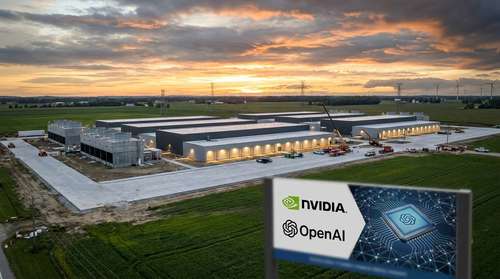
The capital from this round is widely expected to fuel Project Stargate, a rumored $500 billion initiative aimed at building a network of AI supercomputers across the United States. As AI models grow exponentially in size, the current global supply of data centers and energy is proving insufficient. The "infrastructure gap" has become the primary constraint on AI progress.
"We are moving from an algorithm race to a heavy industry race," notes an insider familiar with the negotiations. "The next phase of AI isn't just about writing better Python code; it's about pouring concrete, securing gigawatts of nuclear and renewable power, and manufacturing custom silicon at a scale never before seen."
This funding will likely accelerate partnerships with energy providers and chip manufacturers, ensuring that OpenAI has the raw compute power necessary to achieve Artificial General Intelligence (AGI). The scale of spending required—estimated at tens of billions annually for electricity alone—makes this $100 billion round a necessity rather than a luxury.
Navigating Financial Realities in 2026
Despite the eye-watering valuation, OpenAI faces significant financial headwinds that make this funding critical. Internal documents leaked earlier this month suggest the company could face operational losses exceeding $14 billion in 2026 due to the immense costs of model training and staffing. With rumors of a potential "cash crunch" circulating in late 2025, this capital injection serves as a vital lifeline.
The deal also raises questions about a potential IPO. While an $830 billion private valuation is impressive, it limits the pool of available investors to sovereign wealth funds and massive conglomerates like SoftBank. Many industry observers believe this funding round is the final stage-setter for a public listing, possibly in late 2027, which could be the largest IPO in history.
As negotiations enter their final stages, the tech world watches with bated breath. If the deal closes, it will confirm that the AI revolution is far from peaking—in fact, the real investment phase is only just beginning.