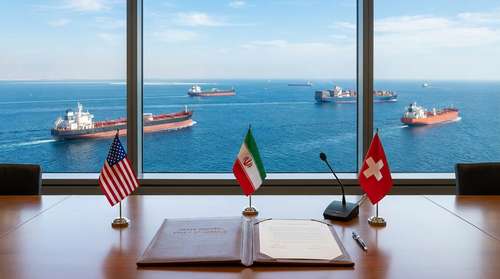
In a monumental diplomatic breakthrough, U.S. President Donald Trump and Pakistani Prime Minister Shehbaz Sharif announced on Sunday that a comprehensive peace accord has been reached between the United States and Iran. The landmark Trump Iran peace deal establishes an immediate and permanent halt to military operations across all active conflict zones. With an official signing ceremony scheduled for this Friday in Switzerland, the agreement ends months of intense hostilities and aims to rapidly stabilize the fractured geopolitical landscape.
Key Terms of the US Iran Framework Agreement 2026
The diplomatic breakthrough, facilitated heavily by Pakistani and Qatari mediators over several grueling weeks, introduces sweeping changes to the region's security architecture. At the center of the US Iran framework agreement 2026 is the immediate cessation of armed conflict. Sharif confirmed that the pact mandates a permanent halt to fighting on all fronts, prioritizing a Middle East ceasefire Lebanon. Lebanon has been a particularly stubborn sticking point in the broader negotiations, with Israeli and Hezbollah forces routinely ignoring earlier calls for restraint.
Under the finalized text of the agreement, the primary immediate deliverables include:
- Immediate cessation of hostilities: A total halt to direct military action between US and Iranian forces.
- Lebanon de-escalation: Mandatory stand-down orders affecting proxy militias, prioritizing the stabilization of the Lebanese border.
- Maritime freedom: The toll-free reopening of the Strait of Hormuz to all international commercial shipping.
- Blockade termination: The immediate withdrawal of the US naval cordon surrounding key Iranian ports.
Despite an Israeli strike targeting Hezbollah positions in Beirut just hours before the announcement, Iranian Deputy Foreign Minister Kazem Gharibabadi confirmed in televised statements that the memorandum of understanding is fully finalized. The agreement effectively forces a pause in the cascading proxy conflicts that have paralyzed regional security, providing a desperately needed off-ramp for all involved factions.
Market Relief: The Strait of Hormuz Reopening
Global energy markets reacted instantly to the Sunday afternoon announcement. For months, the heavily contested shipping lane has severely restricted global supply chains, pushing fuel costs higher worldwide. The Strait of Hormuz reopening is a central pillar of the new policy, with President Trump explicitly noting that the vital maritime artery will resume operations under a strict "toll-free" arrangement.
"Ships of the World, start your engines. Let the oil flow!" Trump posted on his Truth Social platform at approximately 5:30 p.m. ET. Following his statement, Brent crude futures plunged nearly 4 percent to $83.92 a barrel, while U.S. West Texas Intermediate slid more than 4.5 percent down to $80.25 as traders priced in the imminent resumption of Middle Eastern oil shipments. While initial reports from Iranian state media suggested the waterway would open under Iranian supervision within 30 days, the White House clarified that passage will be secured immediately following Friday's signature, initially to allow for comprehensive mine removal operations.
US Naval Blockade Lifted Ahead of European Summit
As a direct concession to secure the maritime corridor, the US naval blockade lifted order will take effect simultaneously with the formal adoption of the pact. American forces have maintained a tight cordon around Iranian ports, throttling Tehran’s economic capabilities. Removing this immense naval pressure was reportedly a non-negotiable demand from Iranian negotiators, who have watched their domestic economy suffer under the crushing weight of restricted maritime trade.
All eyes are now looking toward the formal Switzerland peace signing, slated for June 19. This upcoming ceremony is not the final step but rather the trigger for a critical 60-day diplomatic window.
The 60-Day Diplomatic Window
Once the ink dries in Geneva, a ticking clock begins. During this 60-day phase, negotiators will pivot to deeply technical discussions. The core objective will be establishing verifiable constraints on Iran’s nuclear program—a long-standing hurdle that has previously collapsed similar diplomatic initiatives. The success of this secondary phase will determine whether the current ceasefire evolves into a permanent, multi-lateral treaty.
Regional Reactions and Political Roadblocks
While the international community has largely welcomed the de-escalation, the framework faces steep domestic hurdles in both nations. In Tehran, hardline factions immediately mobilized against the perceived compromise. Protests erupted late yesterday in the northeastern city of Mashhad, where crowds actively demanded the resignation of chief negotiator Abbas Araghchi. Hardline critics argue the concessions made to achieve the naval blockade's end undermine Iran's regional leverage and compromise national security.
Meanwhile, Washington faces the complex reality of enforcing the terms on the ground. Ensuring compliance across a volatile theater will vigorously test the durability of the ceasefire. Still, if Friday's diplomatic ceremony proceeds without disruption, it will mark one of the most consequential geopolitical shifts in modern Middle Eastern history, temporarily silencing the guns and allowing international energy markets to finally breathe.