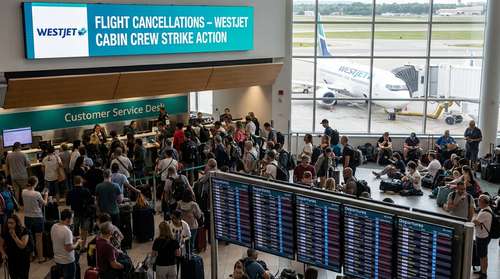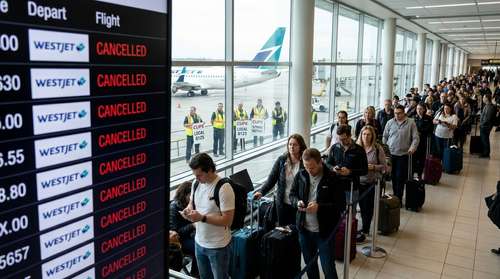
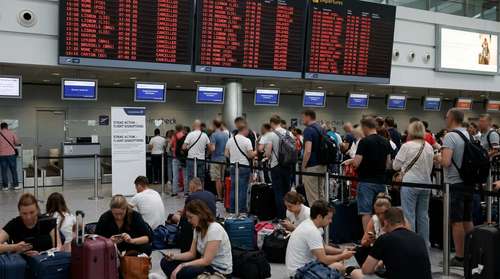
The start of the busy vacation season has morphed into an unprecedented logistical disaster for millions of travelers. A cascading wave of transport walkouts is sweeping the continent, bringing commercial aviation to a grinding halt. As the reality of the Europe summer travel strikes 2026 sets in, travelers are encountering deserted check-in counters and endless rows of red canceled notices on departure boards. With industrial disputes escalating across multiple nations, the disruption is forcing airlines into emergency scheduling protocols while stranding thousands of passengers far from home.
Italy Airport Strike June 5: Friday Walkout Halts Operations
The epicenter of the crisis today sits directly over Italian airspace. The highly anticipated Italy airport strike June 5 has officially commenced, significantly crippling operations across major hubs including Rome Fiumicino, Milan Malpensa, and Venice Marco Polo. Unlike isolated disputes, this massive aviation walkout involves baggage handlers, security personnel, and key ground handling staff.
Airlines have preemptively slashed their schedules for Friday, removing hundreds of flights from the board to avoid total terminal gridlock. Passengers attempting to fly in or out of the peninsula are encountering a system strained beyond capacity. Italian civil aviation authorities typically mandate guaranteed operating windows between 7:00 AM to 10:00 AM and 6:00 PM to 9:00 PM local time to move essential traffic, but the vast majority of daytime leisure flights are simply not taking off.
Sudden Disruptions: Portugal General Strike Travel and Belgian ATC Walkouts
Italy is not acting in isolation. Further west, the recent Portugal general strike travel disruptions are paralyzing the Iberian nation. What began as a targeted labor dispute has expanded into a nationwide shutdown, severely affecting Lisbon, Porto, and Faro airports. Bus and rail connections to these transport hubs have completely collapsed, leaving even those few passengers who do have active flights physically unable to reach the terminals.
Simultaneously, European airspace has been thrown into disarray by a sudden Belgium air traffic control strike. The wildcat action initiated by Belgian controllers has created a massive bottleneck in one of Europe's busiest transit corridors. Flights traveling between the UK and central Europe are being forced onto lengthy, inefficient detour routes, burning excess fuel and throwing arrival schedules into total chaos.
The Impact on Budget Airlines
The combination of these labor movements, along with brewing disputes in neighboring Spain and France, is directly feeding the massive wave of flight cancellations Europe June 2026 is currently experiencing. Budget carriers, which run notoriously tight turnaround schedules, are absorbing the brunt of the damage. Operations for popular carriers face severe rolling delays, while immediate Ryanair flight cancellations are stripping thousands of routes from the sky.
Because low-cost airlines typically rely on point-to-point models rather than hub-and-spoke networks, a single grounded aircraft in Milan, Brussels, or Paris triggers a cascading failure that can ruin a scheduled departure in London or Berlin hours later. The lack of available spare aircraft means delayed planes stay delayed, pushing evening schedules past strict airport curfew hours.
What to Do If Stranded: Navigating EU Passenger Rights
If you find yourself stuck in a departure lounge, understanding the nuances of an EU passenger rights flight delay claim is your best defense against out-of-pocket losses. Under Regulation EC 261/2004, anyone departing from an EU airport or flying into the EU on a European carrier is entitled to a specific standard of care.
Airlines are legally required to provide meals, refreshments, and hotel accommodations if you are delayed overnight. They must also offer you the choice between a full ticket refund or rerouting to your final destination at the earliest opportunity.
Financial compensation, however, gets complicated during industrial action. Here is how the rules generally apply:
- Internal Airline Strikes: If the walkout involves the airline's own staff—such as cabin crew or airline-employed pilots—you are typically entitled to cash compensation ranging from €250 to €600, depending on the flight distance.
- External Strikes: Walkouts by third parties, such as the Belgian air traffic control disruption or independent airport security, are legally classified as extraordinary circumstances. In these cases, airlines are exempt from paying out the €250-€600 cash compensation, though they must still provide food and lodging.
Immediate Steps for Affected Travelers
Standing in a massive customer service queue at the airport is rarely the fastest way home. The 2004 framework was designed to protect consumers, but enforcing it during mass disruption requires persistence. Log into your airline's mobile app to search for immediate rebooking options. Because phone lines are heavily congested, reaching out to the airline's dedicated social media support channels often yields faster results.
Keep every receipt. If the airline fails to provide a hotel room during an overnight delay and you are forced to book your own, you will need itemized documentation to claim reimbursement later. For now, travelers heading to Europe should double-check their itineraries, consider packing only carry-on luggage to avoid baggage-handling bottlenecks, and prepare for a highly unpredictable start to the summer season.