The path to permanent leadership at the Justice Department has suddenly cleared for acting Attorney General Todd Blanche. A weeks-long standoff threatening the Todd Blanche attorney general nomination officially ended on Monday, August 3, 2026, after he provided written assurance that a highly controversial payout initiative had been permanently scrapped. The breakthrough agreement with Republican Senators John Cornyn of Texas and Thom Tillis of North Carolina ensures that his confirmation will now move forward to the full Senate.
A Crucial Breakthrough for the Trump Justice Department Nominee
The Trump Justice Department nominee had been facing intense pushback from two key Republican holdouts on the Senate Judiciary Committee. Cornyn and Tillis, both outgoing lawmakers who have occasionally clashed with the White House over the past year, drew a hard line regarding a financial initiative tied to a recent executive settlement. Their independence from standard party pressures in their final months in office made them formidable gatekeepers during the confirmation process.
Blanche, who has served as acting attorney general since April 2026, previously worked as a personal attorney for the president before taking on senior federal law enforcement roles. This background brought intense scrutiny to his policy directives. The impasse over the financial initiative threatened to derail his confirmation entirely, forcing the committee to delay a vote originally scheduled for the previous week.
The turning point arrived late Sunday night when Blanche released a formal document ensuring the $1.8 billion anti-weaponization fund rescinded is now a legally enforceable reality. In a message posted to X, Blanche emphasized that the Justice Department welcomes productive engagement with Congress and confirmed that the May 18 order establishing the fund "is rescinded and shall have no force or effect."
Dismantling the DOJ Political Slush Fund
At the center of the confirmation battle was an initiative widely decried by critics as a DOJ political slush fund. The $1.8 billion program was originally designed to compensate individuals who claimed to have been victims of political persecution by the government. The concept drew fierce bipartisan criticism, particularly because payouts could have potentially extended to individuals involved in the January 6 Capitol breach.
The financial pool was birthed from the controversial Trump IRS settlement in May 2026. The administration had reached an agreement to resolve a lawsuit filed by the president against the Internal Revenue Service over the unauthorized leak of his tax returns. Critics argued that rather than simply resolving the privacy breach, the Justice Department was attempting to utilize the settlement to create a backdoor mechanism to enrich political allies.
Lawmakers demanded concrete proof that the compensation mechanism was completely dead. Blanche’s Sunday retraction clarified that the program never actually launched. His order explicitly noted that no administrative members had been appointed, no funds were transferred, and no mechanism for receiving or paying claims had ever been established. “This Order establishes, beyond any doubt, that there is no Fund,” the document stated.
Resolving the John Cornyn Thom Tillis Todd Blanche Standoff
The John Cornyn Thom Tillis Todd Blanche dispute was not solely about the $1.8 billion payout pool. It also hinged on sweeping tax immunities that were bundled into the same May agreement. A federal judge had previously blasted the arrangement, suggesting the Justice Department failed to properly defend the government in an effort to engineer a favorable result for the president.
To address this, Blanche’s new directive clarified the scope of the tax audit protections. The written order explicitly limits the settlement to the original plaintiffs and confirms that the president and his family will not receive indefinite protection from audits of future tax filings, ensuring the protections only apply retroactively.
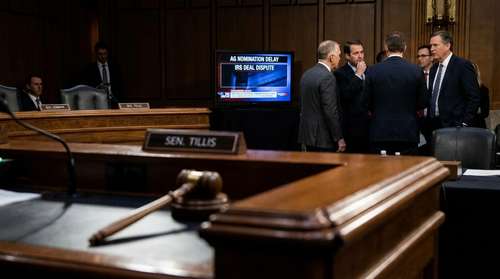
On Monday morning, the senators announced their complete satisfaction with the new terms. Blanche had previously testified under oath that the fund would not move forward, but the senators insisted that verbal promises were insufficient. “From the outset, we were clear that we needed a written document addressing our concerns,” Cornyn and Tillis said in a joint statement. “We want to express our gratitude to Mr. Blanche and his staff for working with us on this, and we look forward to voting to advance his nomination.”
What This Means for the Senate Judiciary Committee Vote
Ahead of Tuesday morning's crucial Senate Judiciary Committee vote, the legislative math now heavily favors the acting attorney general. Without the resistance from the two key Republican holdouts, Blanche’s nomination is fully expected to be favorably reported out of the committee and sent to the broader Senate floor for final confirmation. Securing permanent status will allow him to implement broader institutional changes without the inherent limitations of an acting title.
Lingering Skepticism Among Critics
Despite the resolution on Capitol Hill, some legal observers maintain a degree of skepticism. Because the original IRS settlement dictated that modifications must be made "with the written agreement of the parties," critics point out that Blanche was the sole signatory on Sunday’s retraction. The Justice Department has not indicated whether other parties formally agreed to the nullification, leading to speculation that the administration could theoretically attempt to revive the fund in the future if challenged in court.
For now, the immediate legislative hurdle has been cleared. By putting the assurances in ink, Blanche has effectively secured his path forward, successfully navigating one of the most contentious confirmation battles of the year and bringing a tense congressional standoff to a definitive close.