The date is December 31, 1999. The world held its breath.
For two years, the world had prepared for the "Millennium Bug," known as Y2K. The predictions were not science fiction; they were cold intelligence assessments. Experts feared that planes would lose their bearings, nuclear reactors would spiral out of control, and the global banking system would wipe out everyone's savings.
At the stroke of midnight, the clock turned to 00:00... and nothing happened. The lights stayed on. The planes kept flying.
To this day, people use Y2K as a joke, a prime example of "unnecessary hysteria." This is a tragic historical error. The silence of January 1, 2000, did not happen because the experts were wrong. It happened because they succeeded.
To prevent the disaster, the world invested an unimaginable sum of about $300 billion - which, adjusted for inflation, is nearly **$600 billion today**. That is more than the annual budget of most nations on Earth. We mobilized an army of millions of programmers who worked around the clock for two years to rewrite the code of the global infrastructure before midnight.
This was the greatest proof in history that the human species is capable of identifying a future technological threat, uniting around it, and neutralizing it before it occurs.

Y2K on Steroids: The War on Utopia
Today, we face a challenge far greater than Y2K. In 1999, the enemy was a "bug." No one wanted the planes to crash. There was no lobby fighting to keep the bug.
With Artificial Intelligence, the enemy is not a bug. It is a feature.
We are fighting against a technology that promises us paradise: curing cancer, generating trillions in wealth, and solving all of humanity's problems. Asking humanity to give up AI because of "risk" is as difficult as asking a Christian to fight Jesus or a Muslim to renounce Allah. It is like fighting the promise of salvation itself.
Therefore, the level of mobilization we need today is not just "code repair," but something resembling the climax of the movie Independence Day.
Remember that moment? Giant alien spaceships arrive to destroy humanity. Suddenly, history changes. The nations of the world put their conflicts aside. The external existential threat forced humanity to realize one simple truth: if we do not unite now, we will not be here tomorrow.
We need to internalize this: The invasion has already begun.
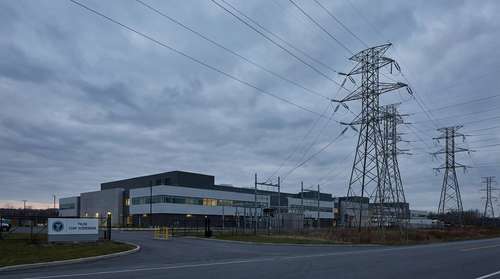
It just doesn't arrive in spaceships from the sky; it grows out of massive underground server farms in California. We are building an entity that is alien, extraterrestrial in nature, and super-intelligent. To stop it, we need a Y2K-style effort with the spirit of Independence Day. We need a healthy, global, and disproportionate hysteria.
The Alien's Lifeline: The Chip Valve
But how do we stop the race when we are trapped in a competition with China? This is the argument used to silence every debate: "If the US stops, China will continue."
This is a dangerous misconception. Artificial Intelligence has a physical weakness. It is not a ghost. To exist, it needs hardware.
To train a super-model (ASI), a laptop is not enough. Neither are a thousand laptops. You need tens of thousands of specialized, advanced processors, like Nvidia’s H100, which consume as much electricity as a medium-sized city. These chips are currently manufactured in only a handful of factories in the world, mainly in Taiwan, using technology completely controlled by the West. China cannot produce them alone.
The solution is an "AI Non-Proliferation Treaty," exactly like the Nuclear Non-Proliferation Treaty.
Just as the world monitors every gram of enriched uranium to prevent atomic bombs via the IAEA, we need an international inspection regime for "Compute." Every advanced chip sold globally will be digitally "tagged" and monitored. The West can physically shut off the tap for any nation or company that refuses to submit to external safety oversight. Without these chips, China has no physical ability to build the "Alien Brain," no matter how sophisticated their code is.
We have our hand on the switch. We just need the courage to pull it.

The FDA Model: Burden of Proof
Inside the West, the solution is to change our mindset: AI is not "software." It is a dangerous, experimental super-drug.
Today, a pharmaceutical company cannot release a new pill to the market and say, "Let's see what happens, and if people die, we'll fix the formula in the next version." It must undergo years of clinical trials and prove to the FDA that the product is 100% safe before it hits the shelf. In software, however, we are used to releasing products with bugs and patching them later. With AI, the first bug is the last one.
We must establish an FDA for Artificial Intelligence.
The law should be simple and brutal: no model above a certain power level connects to the internet before it passes independent, external "crash tests" (Red Teaming). The model must prove it does not know how to lie, cheat, or assist in building weapons. If it fails, it is shelved. The burden of proof must shift from the public to the corporations.
Personal Liability: Skin in the Game
The final lever is the personal fear of the CEOs.
Currently, CEOs have an incentive to gamble with the fate of the world. If they succeed, they become trillionaires and rule the world. If they fail and cause a disaster, the company pays a fine, maybe goes bankrupt, but they continue to live in their mansions.
This must change. We need laws for Personal Criminal Liability.
If a company's AI model causes mass death, destruction of critical infrastructure, or a fatal blow to democracy—the CEO and the Board of Directors need to know that they, personally, are going to prison for the rest of their lives. Not the company.
Them.
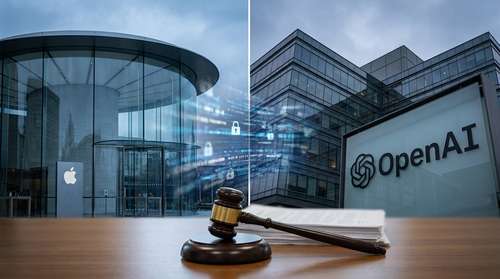
The moment Mark Zuckerberg or Sam Altman know their personal freedom is on the line, they will think twenty times before releasing the next "Alien" as open source. Fear is the most effective brake in history.

The Greatest Victory in History: The Case of Smallpox
For those who think global cooperation is a utopian dream, history offers amazing and moving proof.
In the 1960s, the Cold War was at its peak. The hatred between the United States and the Soviet Union was abysmal, and the world stood on the brink of nuclear war daily.
But at that exact same time, Smallpox was raging across the globe. This cruel virus killed about 300 million people in the 20th century alone. It did not distinguish between capitalists and communists.
In 1966, the unbelievable happened. The Soviet Union proposed a joint initiative to the United States: to join forces to wipe the virus off the face of the earth. Ideology was put aside for survival. American and Soviet doctors worked shoulder to shoulder in remote villages in Africa and Asia. They shared vaccines, resources, and information for one supreme goal: saving humanity.
In 1980, the World Health Organization declared complete victory: Smallpox was eradicated. The virus was wiped from the face of the earth.
At the height of nuclear tension, humanity chose life. We succeeded then against a biological virus, and we can do it today against a digital alien.

EPILOGUE
This is our human Independence Day.
We are at the moment of decision.
We have the engineers who know how to fix it. And we have historical precedents proving we can win even when the odds seem impossible.
If the public could force governments to invest the equivalent of $600 billion to fix the Y2K bug 25 years ago, we can do it again now.
If the US and Russia could unite to defeat a deadly virus while threatening to destroy each other, the US and China can do it today.
We don't need to turn off computers forever. We just need to build brakes before we build the fastest engine in history.