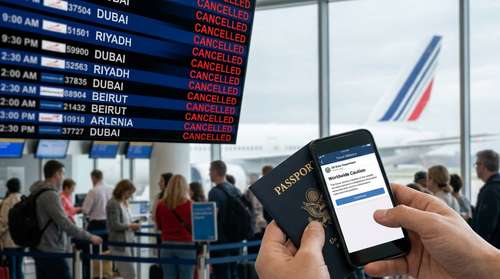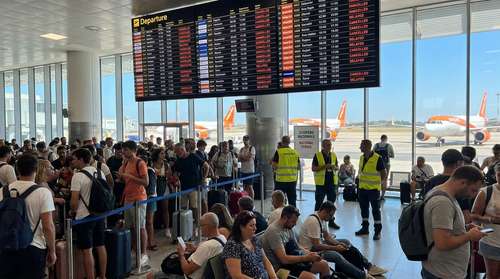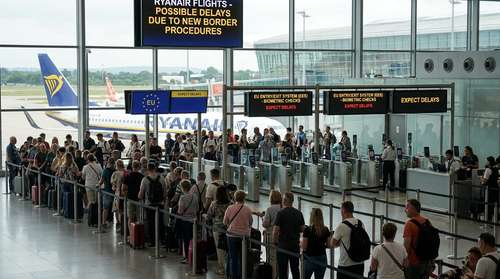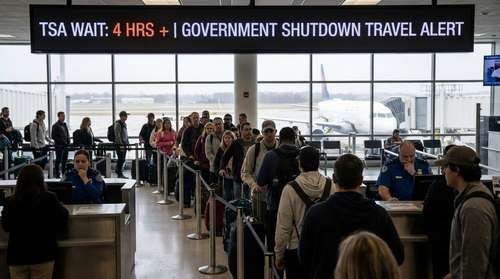
The highly anticipated spring vacation season has rapidly transformed into a logistical nightmare for millions of passengers. Across the country, unprecedented TSA wait times 2026 are leaving travelers stranded at terminal gates and scrambling to rebook. As the Department of Homeland Security (DHS) partial funding lapse crossed its 40th day on March 25, the government shutdown travel impact has reached a breaking point. Security checkpoints at major hubs like Houston's George Bush Intercontinental, Atlanta's Hartsfield-Jackson, and New York's JFK are buckling under the pressure, with wait times officially exceeding four hours during peak morning rushes.
For families looking forward to a seamless getaway, this spring break flight chaos is a harsh reality check. The crippling airport security delays are not merely a temporary inconvenience; they represent a systemic failure tied directly to a massive TSA staffing shortage. With essential screening workers missing nearly $1 billion in combined paychecks since mid-February, the operational breaking point has officially arrived at terminal gates nationwide.
The Human Cost of the TSA Staffing Shortage
While frustrated passengers are venting their anger in endless terminal queues, the reality for the screeners is increasingly grim. During a March 25 House Homeland Security Committee hearing, TSA Acting Deputy Administrator Ha Nguyen McNeill painted a dire picture of the workforce's current conditions. Checkpoint call-out rates have skyrocketed to between 40% and 50% at several major international hubs as workers can no longer afford to commute.
Even more alarming, over 480 transportation security officers have formally resigned since the shutdown commenced. Working without pay for over a month, dedicated federal employees are facing severe financial distress. According to congressional testimony, officers are receiving eviction notices, sleeping in their vehicles, or resorting to donating blood and plasma just to make ends meet. Compounding this personal turmoil is a shocking 500% surge in physical assaults against officers by irate passengers attempting to navigate the unprecedented airport security delays.
Missed Flights Shutdown: Airlines Issue Emergency Waivers
The ripple effects of the ongoing legislative deadlock are hitting the commercial aviation industry hard. The missed flights shutdown crisis has forced major carriers to adapt their policies on the fly. Recognizing the sheer impossibility of clearing a four-hour security line for a standard domestic departure, airlines including Delta and Allegiant have proactively started waiving change fees for affected passengers.
Due to shutdowns of federal agencies, security processing is taking significantly longer than usual, read one of many recent U.S. airport travel alerts issued directly to ticketed flyers. In a highly debated move to alleviate the immediate bottleneck, President Donald Trump has deployed federal Immigration and Customs Enforcement (ICE) agents to assist at certain checkpoint lines. While this has provided temporary queue relief at specific terminals in Houston, lawmakers and aviation experts warn that it is merely a stopgap measure. The situation is so volatile that JFK officials have temporarily suspended live wait-time reporting on their website because the queues fluctuate too wildly to track accurately.
Navigating the Spring Break Flight Chaos
If you are scheduled to fly before a congressional funding resolution is signed, proactive preparation is your best defense against the government shutdown travel impact. The standard rule of arriving two hours early for a domestic flight no longer applies.
- Arrive Exceptionally Early: Aviation authorities now recommend arriving at least three to four hours before your scheduled departure time, especially if you are flying out of a major hub between 4:00 a.m. and 8:00 a.m..
- Monitor U.S. Airport Travel Alerts: Keep a close eye on your airline's app and official airport social media channels. Checkpoint wait times can spike from 20 minutes to three hours based on a sudden wave of staff call-outs.
- Pack Strategically: With the TSA staffing shortage forcing lane closures, any bag check that requires a manual search will stall the entire line further. Ensure your carry-on is strictly compliant with liquid and electronic rules to avoid secondary screening.
- Prepare for Rebooking: Take advantage of the fee waivers offered by Delta, Allegiant, and other major carriers if you anticipate missing your boarding window.
Will Airport Security Delays Force Closures?
The sheer magnitude of the TSA wait times 2026 crisis poses a legitimate threat to domestic aviation infrastructure. Acting Deputy Administrator McNeill noted on Wednesday that if absenteeism continues on its current trajectory, the agency may be forced to completely shut down smaller regional airports to consolidate remaining personnel at major international hubs. Furthermore, the hiring pipeline is entirely frozen; the lack of pay has deterred new applicants and paused training programs, meaning these shortages could easily bleed into the summer travel season—even affecting long-term logistical security planning for the upcoming 2026 FIFA World Cup.
Until lawmakers reach a definitive agreement on homeland security funding, the burden remains squarely on the shoulders of exhausted security personnel and weary travelers. For now, surviving the airport requires maximum patience, a highly flexible itinerary, and an acceptance that routine travel has temporarily ground to a halt.