President Donald Trump has issued a stark ultimatum to America’s largest technology companies: absorb the skyrocketing energy costs of the artificial intelligence boom or face administrative intervention. In a late-night statement on Monday, the President specifically named Microsoft as the first industry titan expected to implement "major changes" this week, ensuring that the massive electricity demands of AI infrastructure do not inflate utility bills for American families. The demand sets the stage for a high-stakes address today in Washington by Microsoft President Brad Smith, where the company is expected to unveil a comprehensive plan to address the AI energy crisis.
The President's Ultimatum: "Pay Your Own Way"
Taking to Truth Social on Monday evening, President Trump drew a hard line in the sand regarding the nation's energy future. "I never want Americans to pay higher electricity bills because of Data Centers," Trump wrote, directly linking the recent surge in household utility costs to the rapid expansion of Big Tech energy consumption. The President argued that while American dominance in artificial intelligence is a national security priority, the companies building the physical backbone of this technology must "pay their own way."
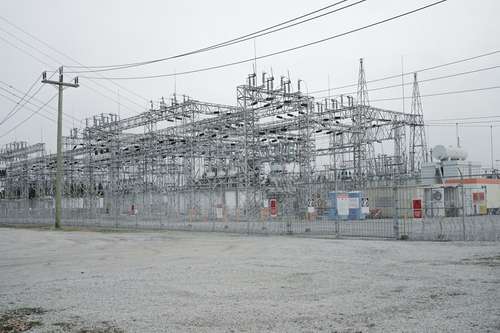
The administration's stance comes amid growing voter frustration over inflation and living costs. With electricity prices in major U.S. cities up nearly 40% over the last five years, the strain on the national power grid has become a potent political flashpoint ahead of the midterm elections. Trump's declaration effectively shifts the financial burden of grid modernization and power generation from the taxpayer to the private sector. "First up is Microsoft," Trump stated, indicating that his team has been in active negotiations with the Redmond-based giant to secure a commitment that shields consumers from further rate hikes.
Microsoft's Imminent Response in Washington
All eyes are now on Washington, D.C., where Microsoft Vice Chair and President Brad Smith is scheduled to deliver a pivotal policy address today. While the company has not yet released the specific details of its plan, a preliminary statement issued prior to the President's post acknowledged the gravity of the moment. "As America approaches its 250th anniversary, the country is entering a new era of opportunity shaped by the power of AI," the statement read. "This moment raises fundamental questions about the future we build together—who benefits from AI, its potential impacts, and who should bear the cost of critical artificial intelligence infrastructure?"
Industry insiders speculate that the Brad Smith Microsoft announcement will outline a multi-billion dollar investment strategy focused on "behind-the-meter" power generation. This could involve direct funding for new nuclear reactors, such as the recently restarted unit at Three Mile Island, and accelerated deployment of fusion and geothermal technologies. By generating their own power independently of the public grid, tech giants could theoretically expand their Microsoft data center power capacity without competing with residential customers for electricity.
The Scale of the Energy Challenge
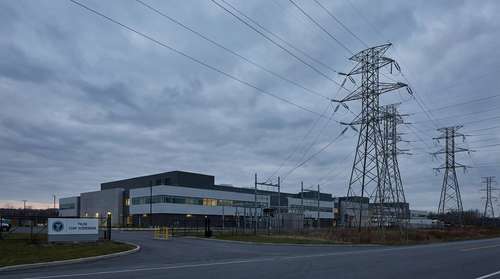
The sheer scale of power required to train and run next-generation AI models is staggering. According to the International Energy Agency (IEA), data center electricity consumption is projected to double by 2026, rivaling the energy usage of entire nations like Japan or Germany. A single hyperscale data center can consume as much power as 100,000 homes. Without significant intervention, this demand creates a zero-sum game where grid operators must either dramatically increase generation—often using fossil fuels—or raise prices to manage scarcity.
Trump Tech Policy 2026: Innovation Without Inflation
The President's latest move signals a shift in Trump tech policy 2026, moving from broad deregulation to targeted intervention where consumer costs are concerned. The administration is attempting to thread a needle: aggressively promoting U.S. leadership in AI to compete with China, while simultaneously protecting domestic energy security. Trump emphasized that data centers are "key to keeping Americans free and secure," but insisted that the AI electricity costs associated with national dominance must be borne by corporate balance sheets, not monthly utility statements.
This policy pivot places immense pressure on other members of the "Magnificent Seven," including Google, Amazon, and Meta. If Microsoft agrees to a precedent-setting deal to self-fund its energy infrastructure, competitors will likely be forced to follow suit. The outcome of today's announcement could reshape the economics of the tech industry, potentially diverting billions in capital expenditure toward building independent power plants and grid upgrades.
What Lies Ahead
As Brad Smith takes the stage today, the technology sector faces a defining moment. The era of cheap, abundant power from the public grid appears to be ending for hyperscalers. The AI energy crisis has forced a convergence of tech and energy policy, with the White House serving as the ultimate arbiter. Whether Microsoft's new framework can satisfy the President's demands while maintaining the pace of AI innovation remains to be seen, but one thing is clear: the bill for the AI revolution has arrived, and the White House is determined not to let voters pick up the tab.