President Donald Trump warned Sunday that the Islamic Republic of Iran will "no longer exist" if the United States is forced to escalate military action, pushing the US Iran ceasefire collapse closer to reality. Following a weekend of intense cross-Gulf hostilities, the delicate truce established just days ago has seemingly unraveled. The sudden escalation—triggered by drone assaults on commercial shipping—marks a dangerous new chapter in the Strait of Hormuz crisis 2026. With US strikes Iran dominating headlines and Tehran retaliating against American allies, the fragile peace framework is now on the brink of total failure.
US Strikes Iran Following Tanker Drone Assaults
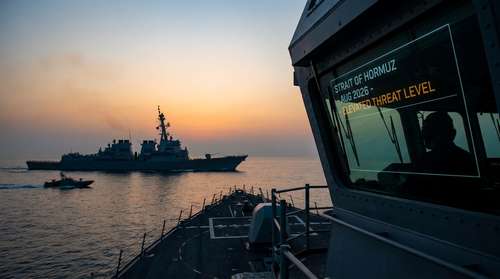
The weekend's military confrontation began after Iranian forces fired four one-way attack drones at cargo vessels traversing the critical maritime chokepoint. According to President Trump, one drone severely damaged the upper deck of a Panama-flagged tanker, the M/T Kiku, late last week as it transported more than two million barrels of crude oil. American naval forces successfully intercepted the remaining three projectiles.
In direct retaliation, the US military launched early Sunday airstrikes against ten Iranian military installations. US Central Command (CENTCOM) confirmed the operation systematically targeted the country's surveillance infrastructure, naval mine-laying capabilities, drone storage facilities, communications networks, and air defense systems.
Washington framed the offensive as a mandatory defensive measure. CENTCOM emphasized that the strikes were a direct response to continuous aggression against commercial shipping, noting the attack on the M/T Kiku followed an earlier strike against the merchant vessel M/V Ever Lovely. Military officials stated that Tehran was given ample opportunity to honor the existing truce but elected to ignore the agreement.
Kuwait Ali Al Salem Base Attack and Gulf Retaliation
Tehran wasted no time in delivering a counter-response. Early Sunday morning, Iran's Revolutionary Guards (IRGC) executed a joint missile and drone operation aimed at eight American military sites positioned strategically within allied Gulf nations. The IRGC issued a concurrent statement warning that any future aggression, regardless of the pretext, would be met with a "crushing response."
The Kuwait Ali Al Salem base attack saw incoming Iranian projectiles target one of the most significant US Army staging grounds in the Middle East. The Kuwaiti military reported detecting and successfully intercepting two ballistic missiles. While the air defenses held strong, the assault underscored the vulnerability of Gulf nations hosting American forces. No immediate casualties or severe damage were recorded at the installation itself.
Bahrain US Fifth Fleet Strike
Simultaneously, the IRGC launched projectiles toward the Bahrain US Fifth Fleet strike zone located in Port Salman. While military defenses engaged the incoming threats, Bahraini authorities confirmed that collateral damage occurred in civilian sectors. A residential building near the international airport suffered severe structural impacts. The country's defense ministry released images showing the top floor of an eight-story structure completely destroyed, its windows blown out by the blast radius. Fortunately, no fatalities were reported in the residential area.
Iran's Foreign Ministry issued a defiant statement following the barrage, condemning the US operations. They branded the initial airstrikes as the actions of a "terrorist US army" and declared that Tehran remains fiercely determined to defend its national sovereignty against American intervention.
Trump Threatens Iran: "No Longer Exist"
The rapid exchange of fire prompted a furious response from the Oval Office. Trump threatens Iran with total devastation if they continue to test American military resolve. Taking to Truth Social on Sunday morning, the President characterized the Iranian drone strikes on commercial shipping as a "foolish violation" of their recent diplomatic arrangements.
"There may come a point when we are no longer able to be reasonable, and will be forced to militarily complete the job that we very successfully started," Trump stated. He issued a stark ultimatum regarding the regime's survival, adding, "If that happens, the Islamic Republic of Iran will no longer exist!"
The Islamabad Memorandum of Understanding in Peril
This weekend's violence has effectively sidelined the Islamabad Memorandum of Understanding. Signed remotely on June 17, 2026, by President Trump and Iranian President Masoud Pezeshkian, the Pakistan-brokered agreement was designed to implement an extendable 60-day ceasefire. Its primary goals were to halt military operations across all fronts, stabilize global energy markets by unconditionally reopening the Strait of Hormuz, and establish a diplomatic window to negotiate long-term limits on Iran's nuclear ambitions.
Barely over a week after the ink dried, the pact is deteriorating. Gulf allies—including the UAE and Saudi Arabia, who reluctantly supported the 14-point diplomatic arrangement to prevent an economic catastrophe—now find themselves caught directly in the crossfire. With active strikes hitting sovereign territory in Kuwait and Bahrain, the diplomatic off-ramp negotiated in Switzerland appears increasingly unviable.
As the international community monitors this geopolitical flashpoint, global oil markets are bracing for severe volatility. The immediate future hinges on whether Washington and Tehran can salvage the remaining shreds of their diplomatic framework or if the region will descend back into unchecked warfare.