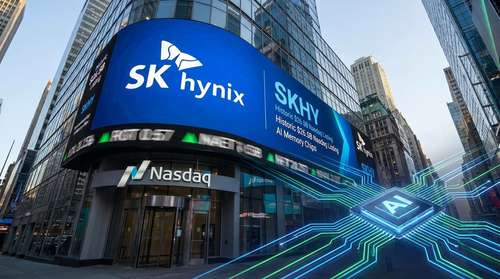

The financial markets are reeling from a dramatic reversal of the momentum trade that dominated the first half of the year. In a staggering shift, the ongoing tech selloff July 2026 has officially driven global equities into turbulent territory, resulting in a full-blown chip stocks bear market. The Philadelphia Semiconductor Index has plunged 20% from its record highs, weighed down by mounting AI investment skepticism and the emergence of fierce overseas competition. Compounding the Wall Street distress is a severe geopolitical shock: a sudden Strait of Hormuz oil spike triggered by fresh military exchanges between the United States and Iran. This toxic cocktail of macroeconomic fears and sectoral revaluations has fundamentally disrupted the summer trading season, leaving portfolios scrambling for cover.
Unpacking the AI Investment Skepticism
For months, the narrative driving equities higher was the seemingly insatiable demand for artificial intelligence infrastructure. The build-out of massive data centers propelled semiconductor companies to unprecedented valuations, operating on the assumption of infinite runway. However, the mood on trading floors has abruptly shifted. Institutional investors are now loudly questioning whether the sheer scale of capital expenditures by technology hyperscalers can truly justify current market prices.
This rising AI investment skepticism was recently accelerated by a major breakthrough from Moonshot, a Chinese AI startup that released a highly advanced, low-cost open-weight model named Kimi K3. Performing comparably to leading American models but at a fraction of the cost, the development jolted Western markets. The sudden prospect of intensified global competition has Wall Street aggressively reassessing the underlying economics of frontier AI development. When the technological moat appears to shrink, the premium placed on the hardware suppliers naturally begins to compress.
High-Flyers Stumble: Nvidia Stock Slide and TSMC Pressures
The fallout has been concentrated among the most historically popular tech darlings. The ongoing Nvidia stock slide has served as a stark bellwether for the broader retreat, trading down alongside heavy selling pressure on industry titans like Taiwan Semiconductor Manufacturing Co. (TSMC) and Advanced Micro Devices (AMD).
Even robust earnings reports have failed to stem the bleeding. For example, TSMC's recent confirmation of 36% quarterly revenue growth—proving that base AI demand remains strong—did little to pacify the market. The market had already priced in an extraordinary, flawless future. Consequently, standard earnings beats are no longer sufficient to sustain the lofty multiples seen earlier this year. Investors require constant acceleration, and any hint of plateauing growth triggers immediate liquidations.
Broader Equity Contagion and the Nasdaq 100 Drop
The semiconductor rout has quickly spilled over into broader indices, ending a multi-week winning streak for major market averages. Friday's trading session saw a significant Nasdaq 100 drop of 1.5%, effectively erasing weeks of steady gains for the tech-heavy benchmark. The S&P 500 similarly shed 1%, while the Dow Jones Industrial Average dropped 0.8%, indicating that the weakness is no longer strictly isolated to silicon manufacturers.
Despite the red screens, financial analysts are quick to note that this is not an outright abandonment of equities. Instead, we are witnessing a pronounced and aggressive semiconductor market rotation. Capital is shifting rapidly away from the highly leveraged, crowded trades of AI infrastructure suppliers and moving toward cyclical sectors, value-style investments, and international stocks. This rotation reflects a classic factor unwind. Portfolio managers are locking in their outsized profits from peak valuations to seek shelter in more defensively positioned, historically cheaper assets.
Supply Chain Fears and the Strait of Hormuz Oil Spike
Adding volatile fuel to the market's growing anxiety is a rapidly escalating situation in the Middle East. Equities were further pressured by a sharp rise in global energy prices after the U.S. and Iran traded direct military strikes overnight. The conflict centers around critical international shipping lanes, resulting in a dramatic Strait of Hormuz oil spike that threatens to upend the global supply chain.
With approximately 20% of the world's global oil supply passing through this vital marine chokepoint, the threat of a prolonged blockade has reignited dormant inflation jitters. Brent crude prices surged past $80 a barrel as observable ship traffic through the strait plummeted by an estimated 60% week-on-week. Several major oil trading houses have preemptively suspended crude and fuel shipments via the channel to avoid the crossfire. This macroeconomic headwind severely complicates the Federal Reserve's ongoing inflation fight. A sustained jump in energy costs threatens to push treasury yields higher, which in turn puts additional mathematical pressure on the valuations of growth-oriented technology stocks.
Navigating the Semiconductor Market Rotation
As the dust settles on the worst weekly decline for chipmakers since the tariff-driven turmoil of April 2025, market participants must navigate a fundamentally altered landscape. While the build-out of artificial intelligence remains a transformative long-term economic cycle, the immediate term requires heightened caution and strategic hedging.
Market analysts emphasize that the AI theme is likely maturing rather than breaking entirely. However, investors should brace for continued friction. The convergence of a crowded tech positioning unwinding and severe geopolitical shocks creates a precarious trading environment. Whether this drop represents a healthy summer reset or a deeper structural breakdown will depend heavily on upcoming hyperscaler capital expenditure updates and the diplomatic resolution of the Gulf conflict. For now, diversification remains the most prudent defense against an increasingly unpredictable tape.