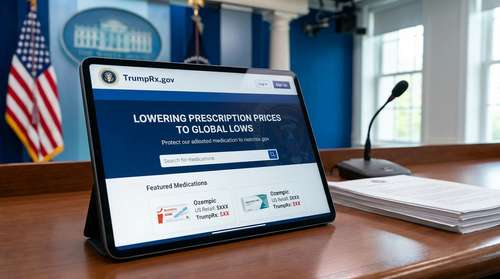
President Donald Trump officially launched TrumpRx.gov today, February 6, 2026, delivering on a central campaign promise to radically restructure American healthcare costs. The new federal platform allows U.S. patients to purchase 40 of the most expensive branded prescription medications at the same prices paid by other developed nations, effectively bypassing the complex web of insurance and pharmacy middlemen. This move marks the implementation of the administration's aggressive "Most Favored Nation" (MFN) drug pricing strategy, aimed at ending what the President calls "global freeloading" on American medical innovation.
Direct-to-Consumer Access at International Rates
The core functionality of the TrumpRx website launch is its direct-to-consumer model. By visiting TrumpRx.gov, patients with valid prescriptions can order medications directly from participating manufacturers at government-negotiated rates. These prices are pegged to the lowest price paid by comparable wealthy nations—such as France, Germany, and Japan—stripping away the premium often charged to American consumers. Administration officials confirmed that the platform is live as of 8:00 AM ET, with initial shipments expected to begin within 48 hours.
"For too long, American patients have been forced to subsidize socialist healthcare systems abroad while facing bankruptcy at home," President Trump stated during the launch ceremony at the White House. "Starting today, if Germany pays $300 for a life-saving drug, you pay $300. Not a penny more." This policy shift leverages the purchasing power of the U.S. government to demand parity, a strategy solidified by the "One Beautiful Bill Act" signed last July and a series of executive orders revived from his first term.
Ozempic Price Drop and Key Savings
Among the most anticipated price reductions is the Ozempic price drop, which has garnered significant public attention due to the drug's widespread use for diabetes and weight management. Under the new TrumpRx pricing structure, a monthly supply of Ozempic is listed at $350, a stark contrast to the previous U.S. list price which frequently exceeded $900. Similarly, the cholesterol-lowering drug Repatha, manufactured by Amgen, is now available for approximately $239, down from over $570.
Breakdown of Immediate Price Cuts
The initial rollout covers 40 high-cost branded medications treating conditions ranging from heart disease to autoimmune disorders. Early data from the site indicates the following reductions:
- Trulicity (Eli Lilly): Reduced to $389 per month.
- Keytruda (Merck): Significant discounts for uninsured cancer patients.
- Eliquis (Bristol Myers Squibb): Price matched to the lowest G7 nation index.
These figures represent a seismic shift in Trump healthcare policy 2026, moving beyond traditional insurance rebates to offer transparent, upfront cash prices that often undercut insurance copays for high-deductible plans.
Bypassing the Middlemen
A critical component of the TrumpRx strategy is its circumvention of Pharmacy Benefit Managers (PBMs)—the corporate intermediaries that negotiate drug prices for insurers. The administration has long argued that PBMs inflate drug costs to maximize their own rebates. By creating a direct pipeline between manufacturers and patients, TrumpRx.gov removes these middlemen from the transaction entirely for the select list of drugs.
Industry analysts note that this approach puts immense pressure on major PBMs like CVS Caremark and Express Scripts. "This is an existential challenge to the traditional pharmacy supply chain," explains healthcare economist Dr. Sarah Jenkins. "By offering a 'public option' for drug purchasing that undercuts the insurance-negotiated rate, the administration is effectively forcing the private market to lower its prices to compete."
Most Favored Nation Drug Pricing in Action
The concept of most favored nation drug pricing has been a controversial yet consistent theme in Trump's health policy. The mechanism ensures that U.S. Medicare programs and now, via TrumpRx, individual consumers, are not charged more than the lowest price index of a basket of OECD countries. While pharmaceutical companies initially resisted these measures, threatening legal action and supply restrictions, the administration secured voluntary compliance through a mix of tariff threats and incentives for U.S.-based manufacturing.
The launch follows agreements announced in November 2025 with pharmaceutical giants like Novo Nordisk and Eli Lilly, who committed to the pricing tier in exchange for market stability and extended patent protections in other areas. This pragmatism has allowed the administration to deliver affordable medication US citizens have demanded for decades, turning a complex geopolitical trade argument into tangible savings at the pharmacy counter.
Future Implications for Pharma
As lower prescription drug prices become a reality for millions of Americans, the long-term effects on pharmaceutical innovation remain a topic of debate. Critics argue that slashing revenue will dampen R&D investment, while supporters contend that the industry's record profits can sustain the correction. Regardless of the economic forecast, the immediate political victory for President Trump is undeniable. With the 2026 midterms approaching, the successful rollout of TrumpRx serves as a tangible achievement in his populist economic agenda.