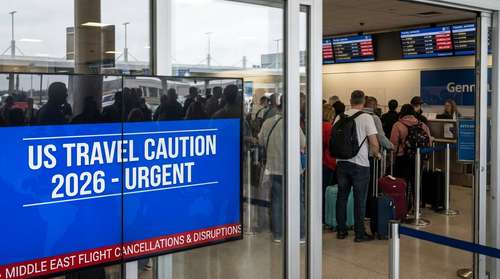
The U.S. State Department has issued an urgent US travel caution 2026, urging citizens to exercise increased vigilance globally as escalating conflict severely disrupts international aviation. Triggered by intensifying regional warfare and complex airspace closures, the sweeping directive comes as major carriers grapple with unprecedented Middle East flight cancellations. For travelers eyeing overseas getaways, the combination of geopolitical instability, widespread airline rerouting, and overlapping domestic security delays has transformed the 2026 spring travel season into a deeply challenging navigational environment.
State Department Worldwide Alert: What Americans Need to Know
Issued on March 22, 2026, the State Department worldwide alert represents a significant escalation in official government warnings. The advisory explicitly instructs Americans abroad to maintain heightened awareness, noting that U.S. diplomatic facilities have already been targeted outside the immediate conflict zone. The security alert was prompted by the widening scope of "Operation Epic Fury"—a joint U.S. and Israeli military campaign in Iran—and the subsequent retaliatory strikes across the Gulf region.
Officials emphasize that while the alert centers primarily on the Middle East, the caution applies on a global scale. Groups supportive of Iran may target locations associated with the United States, meaning tourists in traditionally secure European, Asian, or African destinations should remain vigilant. The State Department strongly recommends that citizens enroll in the Smart Traveler Enrollment Program (STEP) and monitor official communication channels, such as the newly established WhatsApp rapid alert system, for location-specific updates. Since the conflict escalated in late February, more than 70,000 Americans have already evacuated the Middle East, aided by roughly 60 government-organized evacuation flights.
Widespread Airspace Closures and Airline Rerouting Middle East
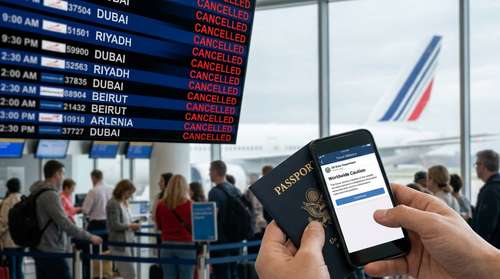
The aviation fallout has been swift and unforgiving. According to global aviation tracking data, over 52,000 flights to, from, and through the Middle East have been canceled since February 28, 2026. Airspace restrictions across Iran, Iraq, Syria, and several Gulf states have forced an unprecedented degree of airline rerouting Middle East, effectively severing primary transit arteries.
Carriers linking North America and Europe to Asia are diverting flights over the Caucasus, Central Asia, and Africa. These complex new flight paths add hours to journey times and severely stretch crew logistics. Mainline U.S. operators, including United Airlines and American Airlines, have suspended routes to regional hubs and extended generous travel waivers, allowing passengers to rebook without penalty through mid-April. European flag carriers like Lufthansa, Air France, and KLM have also pulled capacity, extending flight suspensions well into the spring and leaving thousands of transit passengers scrambling for alternative arrangements. Furthermore, Asian carriers such as Singapore Airlines and Cathay Pacific have entirely suspended their Dubai operations, forcing reroutes via London or Zurich.
Dubai Airport Flight Delays and Operational Shifts
The global aviation squeeze is acutely felt in the United Arab Emirates. A foreign airline ban currently restricts operations at Dubai International Airport (DXB), fundamentally altering how passengers transit through one of the world's busiest international connection points. While hometown carriers Emirates and flydubai continue to operate on reduced schedules, the day-to-day passenger experience has dramatically changed.
Travelers navigating Dubai airport flight delays face strict new protocols. Emirates now requires check-in four hours prior to departure to accommodate enhanced security sweeps, and new ticket purchases necessitate an "operational OK" confirmation email before a booking is finalized. Compounding the logistical nightmare, severe adverse weather conditions—including heavy rain, strong winds, and low visibility—are hitting Dubai between March 23 and March 27, 2026. These storms are expected to further hamper ramp operations, cause surface access issues, and stretch airport resources to their limits.
Spring Break Travel Disruptions 2026: A Perfect Storm
The convergence of overseas conflict and domestic administrative hurdles has created acute spring break travel disruptions 2026. Beyond the international reroutes, travelers departing from U.S. airports are encountering massive bottlenecks due to an ongoing partial government shutdown affecting the Department of Homeland Security.
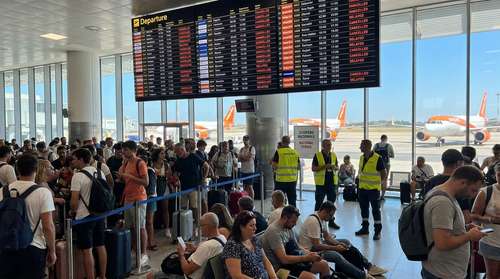
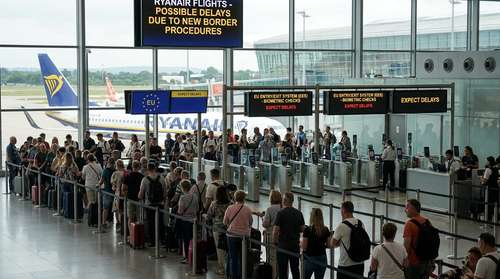
The federal funding lapse has triggered significant Transportation Security Administration (TSA) staffing shortages. Unpredictable callouts by TSA officers have led to checkpoint closures and hours-long security lines at major domestic hubs across the country. To mitigate the chaos, the administration has deployed U.S. Immigration and Customs Enforcement (ICE) agents to assist with crowd control and line management at commercial airports. For passengers already stressed by the prospect of missing long-haul connections or navigating restricted airspace, the domestic security gridlock adds a deeply frustrating preliminary hurdle to their journeys.
Maintaining International Travel Safety 2026
Navigating international travel safety 2026 requires a proactive, highly informed approach. Industry experts advise passengers to verify their flight status directly with their airline before leaving for the airport, as schedules remain highly fluid and subject to sudden adjustments. If your itinerary involves a Middle Eastern transit stop, immediately contact your carrier to confirm whether your flight is operating or if a reroute is available.
Travelers should also prepare robust contingency plans. Ensure you have comprehensive travel insurance that explicitly covers geopolitical disruptions and trip interruptions. Budget ample extra time for both domestic security screenings and the extended international flight paths caused by the reroutes. While the current environment presents undeniable logistical hurdles, staying connected to official State Department updates and adhering to airline advisories provides the most reliable framework for secure and successful global travel.