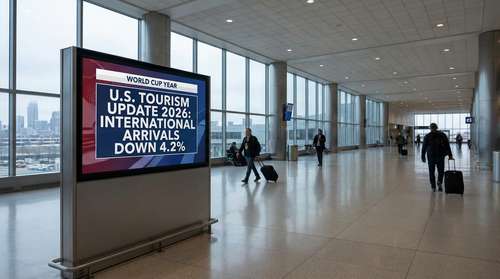
NEW YORK – The numbers are in, and they paint a worrying picture for the American travel industry. Official data released this week confirms a sharp U.S. tourism decline 2026, with international arrivals dropping 4.2% in 2025—the first annual contraction since the pandemic recovery began. This unexpected downturn comes just months before the highly anticipated 2026 FIFA World Cup, forcing major cities and hospitality giants to rethink their strategies in a scramble to fill empty rooms.
The Perfect Storm: Why International Arrivals Are Slumping
The international arrivals slump is not the result of a single factor but a convergence of economic headwinds and bureaucratic hurdles. According to the latest report from the U.S. Travel Association, the United States lost an estimated 11 million foreign visitors over the last 12 months, translating to a staggering $50 billion loss in direct spending. While global long-haul travel has rebounded by 4% elsewhere, the U.S. is notably lagging behind competitors like Japan and Western Europe.
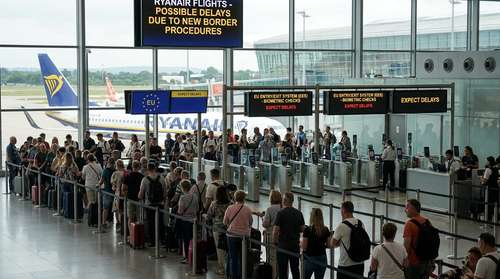
Two primary drivers are fueling this exodus: skyrocketing costs and stricter entry rules. The introduction of the new "Visa Integrity Fee"—which has raised the cost of entry by nearly $250 for many non-visa waiver countries—has acted as a significant deterrent. Combined with the recently implemented Presidential Proclamation 10998, which introduced more rigorous social media vetting and longer interview wait times, many potential tourists are simply choosing easier destinations.
FIFA World Cup Travel News: A Tournament at Risk?
The timing could not be worse. With the tournament kickoff approaching in June, FIFA World Cup travel news has shifted from excitement to concern. Data from aviation analytics firm Cirium reveals that airline bookings from Europe to the U.S. for July 2026 are currently down 14% year-over-year. Key markets like Germany and France are showing booking drops of over 20%, raising fears that the expected economic boom from the tournament may fall short of the $30 billion projection.
"The emotional draw of the World Cup is colliding with the rational barriers of travel," notes Heinz Zimmermann, a travel industry analyst based in Zurich. "Fans want to come, but the 'hassle factor' of U.S. entry right now is higher than it has been in decades." To combat this, officials have rushed to launch the "FIFA PASS" priority appointment system, hoping to fast-track visa interviews for ticket holders before the summer rush.
Hotels Pivot: American Hotel Price Drops Incoming
Faced with softer-than-expected demand, the hospitality sector is entering a correction phase. Reports from CoStar and Tourism Economics indicate that while luxury rates remain high, the broader market is seeing American hotel price drops in gateway cities like New York, Los Angeles, and Miami. Occupancy forecasts for 2026 have been revised downward to 62%, prompting chains to pivot their marketing aggressively toward domestic travelers to pick up the slack.
For savvy travelers, this U.S. tourism decline 2026 might actually present a silver lining. Affordable U.S. travel 2026 is becoming a reality as hotels slash rates to attract business. "We are seeing flash sales and value-add packages that we haven't seen since 2021," says a revenue manager for a major hotel group. Domestic tourists planning summer getaways may find themselves paying significantly less than they did two years ago.
Visa Entry Protocols 2026: What Travelers Need to Know
Navigating the new visa entry protocols 2026 is essential for any international visitor still planning a trip. The landscape has changed significantly since January 1st:
- Social Media Vetting: Applicants for B1/B2 visas must now provide five years of social media history, a policy that has lengthened processing times.
- Visa Waiver Changes: Travelers from ESTA countries are facing increased scrutiny, with new questions added to the authorization process.
- Interview Wait Times: In key markets like Colombia and India, wait times for interviews still exceed 400 days, though the FIFA PASS initiative aims to reduce this for match attendees.
Travel Industry Economic Trends and Future Outlook
The current travel industry economic trends suggest a year of recalibration. While the strong dollar continues to make the U.S. an expensive destination for foreign tourists, the domestic market remains resilient. However, economists warn that without a reversal in international visitor numbers, the sector could face job losses estimated at 157,000 positions by year's end.
As 2026 unfolds, the industry is watching closely to see if the World Cup will provide the necessary spark to reverse the trend, or if the barriers to entry will keep the world's biggest party quieter than expected. For now, the message to international travelers is clear: apply for visas early, and for domestic travelers: get ready for some unexpected bargains.