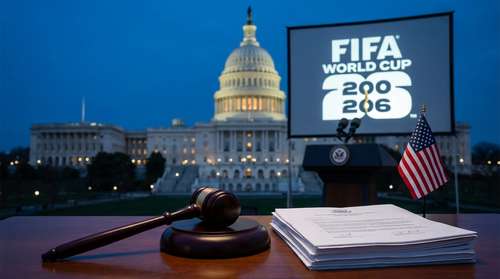
The matches have concluded, but a massive 2026 World Cup controversy is rapidly escalating on Capitol Hill. Representative Jamie Raskin, the ranking Democrat on the House Judiciary Committee, has officially launched a formal congressional inquiry targeting FIFA President Gianni Infantino. The sweeping probe centers on mounting evidence of a potential quid pro quo between the global soccer governing body and the White House. At the heart of the investigation are allegations of bribery, political favoritism, and unprecedented interference in the sport's competitive integrity.
Lawmakers are demanding strict accountability for what they describe as a sustained campaign by soccer executives to secure special favors from the administration. The investigation seeks to unravel exactly how an international sporting event hosted largely on American soil became entangled in closed-door political dealmaking. As the legal net widens, fans and officials alike are left questioning the legitimacy of decisions made both in corporate boardrooms and on the pitch.
The Trump Tower FIFA Office and Quid Pro Quo Claims
Raskin’s July 27 letter to Infantino details severe allegations regarding the financial relationship between the soccer organization and the administration. According to committee documents, lawmakers are heavily scrutinizing the high-priced Trump Tower FIFA office, which was allegedly leased at inflated rates for limited practical use. Investigators view this lucrative real estate arrangement as a potential vehicle for exchanging political favors.
The congressional committee points directly to the Justice Department’s surprising decision to abandon decade-long corruption cases against top soccer officials. Those initial investigations had uncovered over $200 million in bribes and kickbacks. Furthermore, the probe highlights the peculiar "FIFA Peace Prize" that Infantino bestowed upon the President at the Kennedy Center in late 2025. This sequence of events has fueled congressional suspicions that the administration turned a blind eye to FIFA's corporate operations in exchange for financial and political capital.
Consumer Exploitation and Ticket Gouging
The financial implications extend well beyond commercial real estate. The inquiry also addresses how American fans were treated during the tournament. Lawmakers argue that the White House ignored aggressive ticket price-gouging and deceptive sales tactics. By disabling internal ethical guardrails and cozying up to the administration, the soccer organization allegedly operated with total impunity, squeezing consumers who simply wanted to attend a local match.
The Folarin Balogun Red Card Reversal
While financial agreements form the backbone of the inquiry, the most public flashpoint of the Donald Trump FIFA relationship occurred directly on the pitch. During a tense round of 32 match against Bosnia and Herzegovina in early July, American forward Folarin Balogun was sent off for an awkward challenge on Tarik Muharemović. Under standard disciplinary rules, this offense triggers an automatic one-game suspension.
Those standard rules vanished following a direct phone call from the President to Gianni Infantino. Claiming the dismissal was a "horrible" call, the President successfully lobbied the soccer chief to review the decision. Within days, the governing body made the unprecedented move to defer the punishment, clearing Balogun to play in the crucial round of 16 match against Belgium.
This blatant political interference provoked immediate backlash from the international sports community. The Norwegian soccer federation is preparing a formal ethics complaint, with their president warning that the organization is on a dangerous "slippery slope". Belgium, who ultimately defeated the U.S. 4-1, alongside UEFA officials, openly criticized the move as a breach of competitive fairness. The Folarin Balogun red card saga has now become a prime exhibit in Raskin's investigation into how external forces manipulate the beautiful game.
Looming FIFA Congress Investigation
The fallout from these revelations is expected to carry heavy consequences for the sport's global leadership. A broader FIFA Congress investigation could soon materialize as international delegates question Infantino’s ability to lead without political bias. Several European federations are reportedly holding closed-door meetings to assess whether a vote of no confidence is necessary to restore the governing body's credibility.
Sports organizations fiercely protect their autonomy from state intervention, strictly prohibiting government interference in national federations. Yet, recent actions indicate a stunning departure from these principles. The aggressive lobbying from the Oval Office, combined with the governing body's willingness to bend its own disciplinary rules and lease high-profile commercial real estate, has fundamentally blurred the line between sports and state politics.
As lawmakers prepare subpoenas and demand comprehensive communications records regarding all gifts, payments, and benefits provided to the administration, the pressure mounts. Representative Raskin has set a firm August 9 deadline for the organization to hand over the requested documents. The coming weeks will determine whether the current leadership can survive the mounting legal and political scrutiny stemming from this unprecedented international scandal.