Tens of thousands of frustrated residents flooded the streets of the Balearic capital on Sunday evening, July 26, 2026, effectively bringing the city center to a standstill. The Mallorca anti-tourism protests 2026 mark a historic tipping point for the island, with organizers claiming a staggering turnout of 70,000 demonstrators demanding immediate government intervention to curb unchecked visitor numbers. As authorities grapple with the sheer scale of the crowds, the message from locals is unmistakable: the current model of mass vacationing is destroying their quality of life.
"Mallorca at the Limit": Inside the Historic March
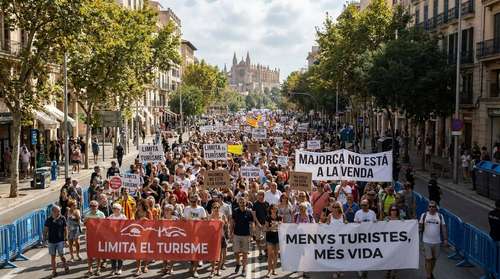
Marching under the banner Mallorca al límit (Mallorca at the Limit), the crowds gathered at Plaça d'Espanya just before 7:00 p.m. on Sunday. Organized by the grassroots platform Menys Turisme, Més Vida (Less Tourism, More Life), the demonstration dwarfed similar rallies seen in 2024 and 2025. Environmentalist groups, neighborhood associations, and workers' unions formed a unified front, chanting for structural change as they moved through the city.
National Police offered a more conservative estimate of 25,000 to 30,000 attendees, but even those figures cement this as the largest demonstration of its kind in the island's history. Protesters wove through Vía Roma and La Rambla before converging at Ses Voltes near the waterfront. While the march remained overwhelmingly peaceful, severe bottlenecks at the final gathering point forced police to draw batons to manage the surging crowd, resulting in a brief clash where medics treated eight people for minor injuries.
The Breaking Point for Locals
At the heart of the unrest is a crippling housing crisis. Residents argue they have been entirely priced out of their own neighborhoods by the unchecked spread of short-term holiday rentals. Demonstrators carried signs denouncing precarious seasonal employment, skyrocketing rent, and the severe strain on public infrastructure, including chronic traffic jams and excessive noise. "Lower the rents or we will f*ck in the street," read one highly visible, controversial shirt worn by protesters, underscoring the raw desperation felt by the local workforce. Furthermore, local environmental groups have pointed to the severe ecological degradation caused by millions of annual visitors, demanding a cap on the number of flights and cruise ships permitted to dock.
A Spreading European Summer Travel Backlash
The sheer magnitude of the unrest in the Balearics highlights a much broader, continent-wide issue. These Spain mass tourism protests are not isolated incidents but rather the latest eruption in an escalating trend. Frustrated communities across southern Europe are increasingly rejecting the heavy environmental and social toll of limitless international arrivals.
Riding the Wave of the Barcelona Cruise Tax Hike 2026
The mobilization in Palma arrives directly on the heels of major legislative pushes on the mainland. Most notably, the recent Barcelona cruise tax hike 2026 saw the Catalan capital aggressively move to triple its fees for short-stay cruise passengers. That decisive action energized activist networks across the Mediterranean. Demonstrators in Palma are now demanding their own local government take similarly drastic measures, citing the Barcelona cruise tax hike 2026 as definitive proof that lawmakers can indeed regulate heavy tourist traffic when pushed by the public.
Spain Overtourism Protests Palma: What Authorities Are Doing
Political figures are finding themselves backed into a corner. Representatives from opposition parties, including PSOE and Més, joined the Sunday march, signaling a shift in how political capital is built on the island. They are pressuring the regional government to implement immediate caps on tourist beds and aggressively tax rental properties.
Yet, business owners warn that abruptly restricting visitors could trigger an economic catastrophe. Local commerce groups and hotel associations argue that the Spain overtourism protests Palma threaten the primary livelihood of the island. They assert that tourism funds local infrastructure and provides employment for tens of thousands of residents, warning that driving visitors away will lead to mass layoffs.
However, activists remain unfazed by these economic warnings. The Menys Turisme, Més Vida platform insists that the current distribution of wealth solely benefits large hotel chains, foreign investors, and real estate developers. They argue that everyday workers are left with stagnant wages, temporary contracts, and unaffordable living conditions, making the current economic model fundamentally unsustainable.
Latest Palma de Mallorca Travel Updates for Visitors
For those with upcoming trips, navigating the island requires elevated situational awareness. The latest Palma de Mallorca travel updates suggest tourists should prepare for spontaneous disruptions, particularly around busy transit hubs and the primary airport. While water-gun attacks on tourists have been reported in other Spanish cities recently, Sunday's protest in Palma did not feature such direct confrontations with vacationers.
While the animosity is largely directed at government policy and systemic issues rather than individual travelers, the atmosphere remains highly charged. Visitors are advised to check local travel advisories, respect residential boundaries, and be prepared for potential transportation delays as organizers promise continued pressure throughout the peak holiday season. This European summer travel backlash proves that the island is still welcoming visitors, but the traditional rules of engagement are rapidly changing. Travelers must now navigate a destination that is demanding respect, sustainability, and a fundamental shift in how tourism operates.