In a seismic shift for the technology sector, Amazon has officially announced the elimination of 16,000 corporate roles as of Wednesday, January 28, 2026. This latest round of Amazon layoffs 2026 marks the largest single-day workforce reduction in the company's history, surpassing the cuts seen during the post-pandemic corrections of 2023. The move signals a decisive pivot by CEO Andy Jassy to dismantle internal bureaucracy and redirect massive capital reserves toward an intensifying artificial intelligence arms race.
A Historic Restructuring: Inside the 16,000 Job Cuts
The announcement, confirmed in a company-wide memo from Beth Galetti, Senior Vice President of People Experience and Technology, details a sweeping reorganization affecting departments globally. The cuts strike deep into Amazon’s corporate structure, with significant reductions reported in Amazon Web Services (AWS), Prime Video, Retail, and the People Experience and Technology (PXT) division itself.
Combined with the 14,000 positions eliminated in October 2025, Amazon has now shed nearly 30,000 corporate roles in just four months. "We are reducing layers, increasing ownership, and removing bureaucracy," Galetti wrote in the memo, emphasizing the need for a leaner, faster organizational structure.
The news was preempted by an internal leak on Tuesday, when a calendar invite referencing a confidentiality-labeled "Project Dawn" was inadvertently sent to thousands of employees, sparking confusion and anxiety across the company's Seattle and Arlington hubs. Amazon has confirmed that affected U.S. employees will receive a 90-day window to find alternative roles internally before severance packages are triggered.
The AI Infrastructure Pivot: Funding the $146 Billion Bet
While the company frames the decision as an efficiency drive, financial analysts point to a more capital-intensive motivation: the skyrocketing cost of generative AI infrastructure. As the Big Tech efficiency drive accelerates, Amazon is aggressively reallocating resources from traditional corporate overhead to physical infrastructure.
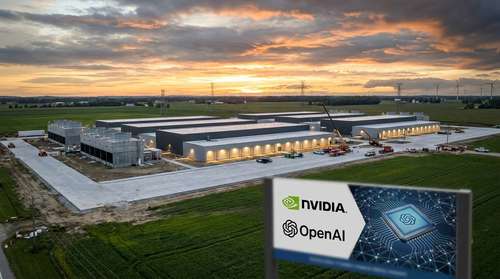
In 2025 alone, Amazon spent nearly $100 billion on AI and cloud capabilities. Projections for 2026 suggest this figure could climb to a staggering $146 billion as the company races to build data centers and deploy proprietary Trainium chips to rival Nvidia. This AI infrastructure spending is critical for Amazon to maintain its lead against Microsoft Azure and Google Cloud, both of which are similarly aggressively expanding their AI footprints.
Flattening the Hierarchy
Central to this restructuring is CEO Andy Jassy's mandate to increase the ratio of individual contributors to managers. The goal is to eliminate "pre-meetings for the pre-meetings" and accelerate decision-making—a philosophy Jassy has championed since taking the helm. By removing middle management layers, Amazon aims to recapture the agility of a startup, despite its massive scale.
Impact on the Tech Industry Landscape
The sheer scale of the Amazon 16,000 layoffs serves as a bellwether for the broader tech industry in 2026. Despite a stabilizing economy, major tech firms continue to trade headcount for compute power. The era of "growth at all costs" has been firmly replaced by "profitability per employee," with AI tools increasingly viewed as a lever to decouple revenue growth from headcount growth.
For tech workers, the landscape has shifted. While roles in AI development, specialized chip engineering, and data center operations remain in high demand, generalist corporate roles—particularly in program management and recruiting—face a shrinking market. Amazon's restructuring is likely to ripple through the industry, potentially emboldening other tech giants to initiate similar "efficiency" measures in the first quarter of 2026.
What's Next for Amazon?
Investors have reacted cautiously to the news, balancing the short-term costs of severance against the long-term promise of improved operating margins. Amazon is set to release its Q4 2025 financial results on February 5, where Wall Street expects further clarity on how these savings will be reinvested into the company's ambitious AI roadmap.
As the dust settles on this historic reduction, the message from Amazon's leadership is clear: the future of the company lies not in headcount, but in high-performance computing and automated efficiency.