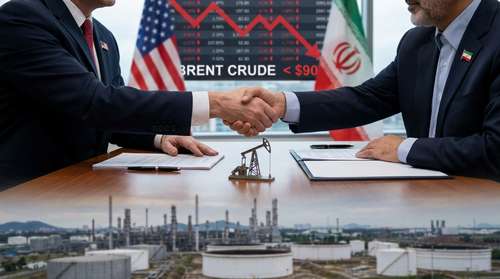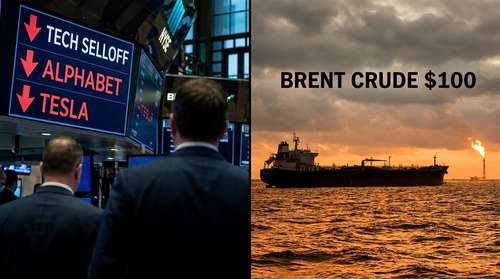
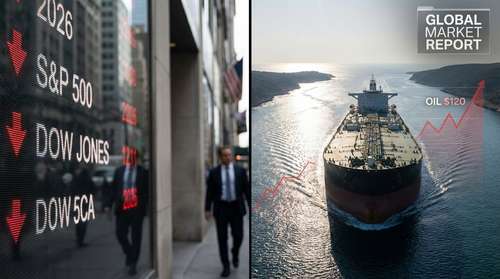
The global financial ecosystem is reeling from a historic "Manic Monday," marked by extreme swings in asset prices and commodities. The catalyst was an intense oil price surge Iran conflict scenario that temporarily pushed crude near the $120-per-barrel mark. While a dramatic Dow Jones recovery today offered some late-day relief following optimistic remarks from President Donald Trump, the undercurrent of Wall Street volatility 2026 remains fierce. Investors are now aggressively weighing global stagflation risks against the prospect of a swift end to the hostilities.
Crude Realities: The Oil Price Surge and Iran Conflict
Energy markets took the brunt of the geopolitical shockwave early Monday. Brent crude, the international benchmark, briefly touched $119.50 per barrel, representing its most aggressive price action since 2022. The oil price surge Iran conflict dynamics were driven by fears that military operations could systematically cripple energy infrastructure across the Middle East. However, the parabolic spike was abruptly capped by intervention chatter.
Following an emergency virtual meeting, G7 finance ministers signaled a strong readiness to stabilize the market. Speculation mounted regarding a coordinated release of 300 to 400 million barrels from strategic reserves. This swift diplomatic signaling helped pull Brent crude back down into the $80-range by late afternoon, averting an immediate catastrophe but leaving the market on edge.
The Strait of Hormuz Energy Crisis and Trump's Response
The focal point of the panic has been the Strait of Hormuz energy crisis. With roughly one-fifth of global oil consumption passing through this narrow maritime chokepoint on a typical day, any sustained closure threatens to paralyze global trade. The market narrative shifted sharply, however, after President Trump appeared on CBS News to project confidence regarding the U.S.-led operations.
Trump boldly claimed the military campaign was "very complete, pretty much," adding that Iranian forces currently have "no navy, no communications, they've got no air force". Further calming the markets, he stated that ships are successfully moving through the Gulf and mentioned his administration is considering taking direct control over the Strait of Hormuz. This rhetoric fueled a stunning Dow Jones recovery today. After plunging heavily in early trading, the Dow closed up 239 points, or 0.5%. The Nasdaq Composite soared nearly 1.4%, and the Volatility Index (VIX) plunged by over 13% to 25.5.
Shipping Corridors Under Pressure
Even as the immediate panic subsides, logistics companies and energy transporters are bracing for a prolonged period of logistical friction. Tehran's past threats to attack vessels attempting to transit the strait, combined with production halts by several Middle Eastern oil producers, have significantly driven up global shipping rates. The cost to insure commercial maritime trade traveling the Gulf has skyrocketed, forcing the U.S. International Development Finance Corporation to step in with political risk insurance guarantees. Trump emphasized that the U.S. Navy could begin directly escorting oil tankers if necessary, firmly declaring that the flow of energy to the world will be protected.
Recession Fears March 2026: The Stagflation Threat
Despite the late-day stock market rally, the underlying macroeconomic picture remains deeply complex. The combination of surging energy costs and deteriorating labor data has intensified recession fears March 2026. Just days prior, the Bureau of Labor Statistics delivered a shock to the system: the U.S. economy unexpectedly shed 92,000 nonfarm jobs in February, pushing the unemployment rate up to 4.4%.
When you combine a softening labor market with an inflationary energy shock, the result is textbook stagflation. The global stagflation risks are now the primary concern for the Federal Reserve. Central bank officials, who were previously debating the timing of interest rate cuts, are now caught in a policy bind. Easing rates to support the labor market could further ignite inflation, while holding them steady risks accelerating an economic downturn.
S&P 500 Market Forecast: Navigating the Uncertainty
Looking ahead, the S&P 500 market forecast heavily depends on whether the Middle East conflict concludes as swiftly as the White House suggests. The broad index managed a respectable 0.83% gain to close at 6,795.99 on Monday, yet portfolio managers are advising defensive posturing.
If the G7 successfully mitigates further oil shocks and inflation data remains manageable, the current Wall Street volatility 2026 could present a unique entry point for equities. Conversely, if supply chain disruptions persist in the Persian Gulf, analysts at major financial institutions warn that energy prices could stubbornly remain elevated, dragging corporate profit margins down with them. For now, traders must remain agile, keeping one eye on inflation metrics and the other on unfolding geopolitical developments.
Sector Breakdown: Winners and Losers
In this high-stakes environment, not all equities are reacting uniformly. Defense contractors and domestic energy producers have seen a massive influx of capital as investors seek safe havens amidst the geopolitical turmoil. On the flip side, consumer discretionary stocks and transportation companies are taking a severe hit. Major airlines and logistics firms, highly sensitive to jet fuel and diesel costs, are preemptively slashing their upcoming earnings guidance. Until the global stagflation risks definitively clear, market leadership will likely remain concentrated in defensive sectors, dividend-paying utilities, and commodities.