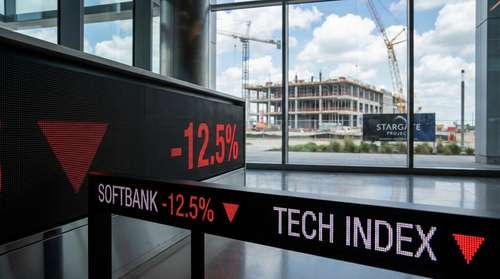
On March 10, 2026, global financial markets experienced a sharp jolt as SoftBank Group shares plummeted 12.5%, sliding to their lowest valuation since early 2025. The severe SoftBank share price drop was triggered by breaking reports that Oracle and OpenAI have officially abandoned a massive data center expansion in Abilene, Texas. Originally touted as a critical node in the monumental $500 billion OpenAI Stargate project, the scrapped expansion has sent shockwaves through the tech ecosystem. Wall Street is now actively debating whether the relentless spending on generative computing has officially tipped into an AI infrastructure bubble.
The Collapse of the Oracle and OpenAI Texas Facility
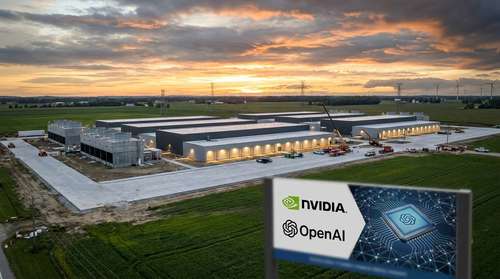
The fallout centers on a planned 600-megawatt capacity upgrade at the flagship Oracle OpenAI data center campus in Abilene. Unveiled to massive fanfare early last year, the Stargate initiative was designed to construct unprecedented hyperscale computing environments across the United States. However, mounting financial pressures, shifting power requirements, and logistical hurdles ultimately derailed the Texas expansion.
According to industry insiders, protracted negotiations between the tech giants broke down over complex financing terms and evolving infrastructure needs from OpenAI. The sudden cancellation of this Texas AI data center news highlights the staggering capital required to sustain and train next-generation artificial intelligence models. As computing demands scale exponentially, even the most capitalized tech titans are finding the economics of advanced, gigawatt-level infrastructure difficult to stomach. The scuttled expansion has forced market analysts to reassess the financial viability of similar mega-projects currently in the pipeline.
Masayoshi Son's High-Stakes AI Gamble
For SoftBank, the collapse of the Abilene expansion arrives at the worst possible moment. The Japanese investment powerhouse had gone all-in on the Stargate vision, positioning it as the ultimate vehicle to dominate the next decade of technology. Late last year, SoftBank made the highly controversial decision to liquidate its entire $5.8 billion stake in chipmaking giant Nvidia. The move was designed to free up liquid capital explicitly to fund these massive data center build-outs.
Today, that decision is facing intense scrutiny. The stalled Texas expansion casts a heavy shadow over the broader Masayoshi Son AI investment strategy. Son has famously bet the future of his conglomerate on AI's transformative potential, but the lack of a cohesive financing template for the Stargate project is severely alarming shareholders. Investors are increasingly questioning whether SoftBank's aggressive capital reallocation was premature. Tensions have reportedly flared between OpenAI, Oracle, and SoftBank regarding role-sharing, financial burdens, and the overall partnership structure of the venture.
Meta and Nvidia Capitalize on the Disruption
While the Texas expansion is dead in the water for OpenAI, the physical real estate is not staying vacant. Meta has reportedly moved swiftly to capitalize on the collapsed deal, entering advanced negotiations with the site's developer, Crusoe. Mark Zuckerberg's company is looking to lease the massive capacity to support its own open-source models and internal workloads, showcasing how fierce the competition for premium infrastructure remains.
In a fascinating strategic twist, Nvidia is heavily involved in reshaping the site's future. The semiconductor juggernaut has reportedly backed Meta's leasing bid with a $150 million deposit. This aggressive maneuver is designed to ensure that the developer continues utilizing Nvidia hardware rather than pivoting to competitor Advanced Micro Devices (AMD) to power the facility. The behind-the-scenes maneuvering reveals a cutthroat landscape where hardware providers are willing to directly subsidize real estate deals to maintain their market monopoly.
Reassessing the AI Scaling Strategy in 2026
The abrupt pivot in Abilene underscores the chaotic reality of the AI scaling strategy 2026 playbook. Technology companies are fiercely competing for limited electrical power, specialized cooling resources, and prime real estate. Yet, the intense financial strain of these deployments is triggering widespread corporate belt-tightening. Oracle, for instance, is concurrently contemplating thousands of job cuts to offset its surging infrastructure costs and balance the books.
The collapse of this specific data center expansion serves as a stark reminder that visionary ambition does not automatically guarantee operational execution. The ambitious blueprint for the Stargate initiative relies on flawless coordination, unprecedented power generation breakthroughs, and near-limitless capital access. With Oracle pulling back and SoftBank investors rapidly heading for the exits, the broader market is beginning to price in the stark reality of physical and economic constraints.
If today's market reaction is any indicator, the honeymoon phase of blank-check AI spending is officially over. As companies transition from theoretical planning to the grueling reality of operational execution, the industry must now prove that these monumental capital investments will yield proportionate financial returns. For now, the scrapped Texas facility serves as a profound cautionary tale for a sector moving at breakneck speed.