In a staggering declaration of intent that has sent shockwaves through Wall Street and Silicon Valley alike, the four titans of the American technology sector—Alphabet, Amazon, Meta, and Microsoft—have signaled a combined capital expenditure forecast of approximately $650 billion for 2026. Revealed in a flurry of earnings reports and strategic updates culminating on February 6, 2026, this unprecedented financial commitment marks the most aggressive infrastructure build-out in the history of the industry. As the race for artificial intelligence dominance accelerates from a sprint to a marathon, Big Tech AI spending 2026 has become the defining metric of the year, signaling that the era of AI theoreticals is over and the era of massive industrial deployment has begun.
The $650 Billion Breakdown: Who is Spending What?
The sheer scale of these investments dwarfs the GDP of many mid-sized nations. Each of the "Big Four" has outlined a capital expenditure (CapEx) roadmap that reflects their specific strategic imperatives in the AI ecosystem.
Amazon leads the pack with a jaw-dropping forecast of nearly $200 billion for the fiscal year. CEO Andy Jassy defended the figure as a necessary evolution, pointing to insatiable demand for AWS cloud capacity and next-generation AI tooling. "We are monetizing capacity as fast as we can install it," Jassy told investors, highlighting that a significant portion of this outlay is earmarked for specialized AI chips and robotics.
Alphabet (Google) is not far behind, projecting expenditures between $175 billion and $185 billion. This figure represents a near-doubling of its 2025 spending. The search giant is channeling these funds directly into its custom Tensor Processing Units (TPUs) and a global network of hyper-efficient data centers designed to train its Gemini models.
Meta, continuing its pivot from the metaverse to "Meta Superintelligence Labs," has guided for a range of $115 billion to $135 billion. Mark Zuckerberg described the investment as critical for training future open-source models that will power everything from smart glasses to automated business agents.
Microsoft, while reporting on a slightly different fiscal calendar, is tracking toward an annualized spend of approximately $120 billion. With its deep integration of OpenAI's technology across its product suite, Microsoft's investments are heavily focused on securing vast quantities of GPUs to support its Azure AI infrastructure.
Data Centers and Silicon: The Hardware Behind the Hype
Where exactly is this money going? The bulk of this Artificial Intelligence capital expenditure is flowing into two primary buckets: concrete and silicon.
The Great Data Center Expansion
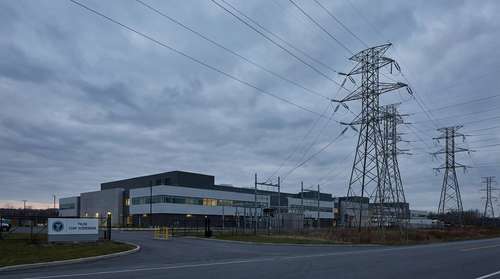
We are witnessing a global construction boom. Google data center expansion plans for 2026 include new facilities in the U.S. Midwest, Europe, and Southeast Asia. These are not traditional server farms; they are gigawatt-scale AI factories designed to handle the immense thermal and power loads of modern training clusters. Similarly, Meta AI infrastructure projects are breaking ground in regions with abundant renewable energy, a critical requirement as power consumption becomes a bottleneck.
The Chip Wars Intensify
While Nvidia remains the primary beneficiary of this spending spree, 2026 marks a turning point for custom silicon. Amazon AWS AI growth is increasingly powered by its own Trainium and Inferentia chips, reducing reliance on third-party vendors. Google is aggressively deploying its sixth-generation TPUs, and Microsoft is ramping up production of its Maia AI accelerators. This shift indicates that Big Tech is not just buying the future—they are attempting to manufacture the underlying physics of it to control costs and performance.
Investor Skepticism vs. Corporate Conviction
Despite the confidence exuded by tech CEOs, the stock market's reaction has been tepid, bordering on hostile. Following the announcements, shares of Amazon and Microsoft saw volatility, with investors questioning the timeline for returns on such massive outlays. The core concern is the "margin squeeze"—the fear that AI chip demand 2026 and construction costs will eat into profitability long before AI services generate revenue commensurate with a $650 billion price tag.
However, the companies argue that the risk of under-investing is far greater than the risk of over-spending. In a winner-takes-most market, falling behind on compute capacity could mean irrelevance. As Gil Luria, an analyst at D.A. Davidson, noted, "None of them is willing to lose." The consensus among tech leadership is that we are in the early innings of a platform shift as significant as the internet itself, and the only way to play is to pay.
The Strategic Gamble: Why Now?
This Microsoft AI investment and broader industry surge are driven by the realization that 2026 is a "make or break" year for model capability. The current generation of Large Language Models (LLMs) is reaching a plateau that can only be overcome with exponentially more compute power and data. By securing the infrastructure now, these companies are betting they can unlock "reasoning" capabilities in AI that will transform enterprise software, healthcare, and scientific research.
Furthermore, the geopolitical dimension cannot be ignored. Secure, domestic AI infrastructure is becoming a matter of national interest. By building massive capacity on U.S. soil, these companies are aligning themselves with national security priorities, ensuring that the most advanced AI systems remain under American purview.
As the dust settles on these announcements, one thing is clear: the $650 billion bet is placed. Whether this capital injection births a new golden age of productivity or results in an overbuilt bubble remains the trillion-dollar question. But for now, the excavators are digging, the foundries are printing, and Big Tech is all in.