
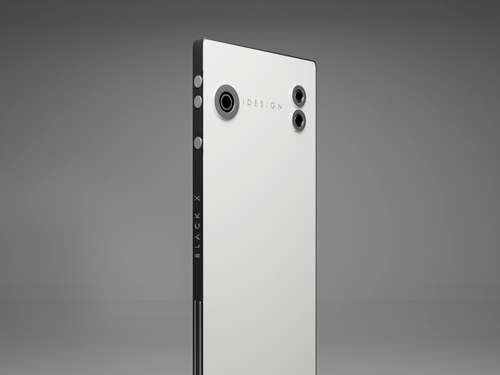
The smartphone industry is bracing for a seismic disruption. In a sweeping departure from its software-only origins, the creator of ChatGPT is reportedly developing a flagship OpenAI smartphone designed to completely replace the traditional app ecosystem. Supply chain analysts reveal that the company has partnered with industry heavyweights to build an autonomous AI agent phone, shifting the battleground away from standard mobile operating systems and positioning this new hardware as a direct threat to Apple's market dominance.
Whispers of OpenAI entering the hardware space have circulated for years, primarily centering around screenless wearables and smart speakers. However, new supply chain checks published on April 27, 2026, by TF International Securities analyst Ming-Chi Kuo confirm the company is building a fully integrated mobile device. Mass production is slated for 2028, with component suppliers finalizing contracts by early 2027. This ambitious hardware pivot sets the stage for a high-stakes OpenAI vs Apple iPhone showdown.
A Paradigm Shift: The Rise of the AI Agent Phone
Unlike standard mobile devices that require users to toggle between dozens of siloed applications, the upcoming device relies entirely on autonomous intelligence. The core premise of this AI agent phone is to eliminate homescreens cluttered with app icons. Instead, a persistent system-level agent will interpret user intent and execute complex workflows in the background, from booking flights to summarizing real-time market data.
This bold strategy follows a period of internal realignment. Just weeks ago, reports surfaced that the organization was shutting down certain consumer-facing side projects—including the Sora video app—to simplify efforts and refocus on enterprise coding. However, a multi-year hardware program proves that executive leadership views the smartphone not as a distraction, but as the essential vessel for their technology. An app-free interface means the intelligence takes on a proactive role, anticipating needs before the user even types a query.
To make this continuous inference possible, the device needs deep, unfettered access to user context—a level of integration impossible on existing Android or iOS platforms. By owning both the underlying operating system and the physical hardware, OpenAI can bypass the restrictive developer guidelines enforced by Apple and Google. CEO Sam Altman seemingly corroborated this architectural shift on April 26, posting on X that it "feels like a good time to seriously rethink how operating systems and user interfaces are designed".
Building AI-Native Hardware from the Ground Up
Running a localized generative intelligence model requires specialized AI-native hardware capable of handling constant contextual awareness without draining battery life. The smartphone must continually track location, activity, and communication in real time to feed precise inputs to the agent. Rather than relying entirely on cloud servers, the architecture will utilize a hybrid approach, handling latency-sensitive tasks locally on the device while routing massive computational requests to the cloud.
The Dream Team: Jony Ive OpenAI Partnership
The aesthetic and functional vision for this unprecedented device rests in the hands of the very designer who shaped the modern smartphone era. In May 2025, OpenAI executed a landmark $6.5 billion all-stock acquisition of io Products, a hardware startup founded by legendary former Apple design chief Jony Ive. This Jony Ive OpenAI alignment brought 55 top-tier hardware engineers and designers under Altman's roof, including crucial figures who previously led Mac, iPad, and iPhone design teams.
Ive's involvement signals that the company is not merely assembling off-the-shelf parts, but rather crafting a premium, design-forward flagship. While earlier rumors hinted the Jony Ive collaboration would yield a pocket-sized companion without a screen, the realization that only a smartphone can capture a user's full real-time state pushed the collective toward a phone form factor.
Powering the Future: MediaTek Qualcomm AI Chip
Executing a completely new mobile operating system requires formidable silicon. OpenAI has reportedly tapped two major semiconductor giants to co-develop a custom MediaTek Qualcomm AI chip specifically tuned for large language model inference. Rather than settling for a general-purpose processor, the bespoke silicon will be optimized to handle continuous on-device workloads seamlessly.
The financial markets reacted aggressively to the leaked partnership. Following Kuo's weekend report, Qualcomm shares surged as much as 12% during intraday trading on Monday, April 27, effectively erasing the stock's previous losses for 2026. Meanwhile, Chinese manufacturing giant Luxshare—a firm actively trying to diversify away from its heavy reliance on Apple supply chain contracts—has secured the exclusive rights for the device's system co-design and final assembly.
Redefining the Future of Mobile Technology
Taking on the established mobile duopoly is a notoriously unforgiving endeavor. Historical attempts to reinvent the phone have routinely failed, and recent standalone AI gadgets like the Humane AI Pin and Rabbit R1 faced severe critical backlash for poor execution and limited utility. Yet, no previous challenger has possessed OpenAI's massive capital, Jony Ive's hardware pedigree, or the staggering daily user base of ChatGPT.
If the 2028 mass production timeline holds true, the future of mobile technology will likely hinge on subscription-bundled hardware models rather than one-off device sales. Kuo sketched out a potential revenue model where the company ties hardware access to premium subscription tiers, cultivating a new ecosystem for developers who build plugins for the agents rather than standalone applications. Kuo even projects this high-end device could eventually reach annual shipment volumes of 300 million to 400 million units. While overtaking Apple in pure brand loyalty remains a monumental task, this upcoming device represents the first legitimate structural threat to how consumers interact with technology.