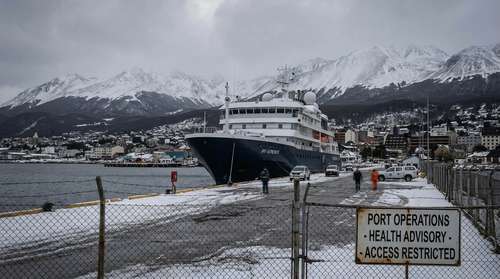
The global travel industry is bracing for a severe economic shock as a deadly Hantavirus Ushuaia outbreak sends ripples of fear through prospective adventurers. Following a tragic sequence of events aboard the Dutch expedition vessel MV Hondius, travelers are abandoning their polar dreams in droves. This sudden wave of Antarctic cruise cancellations threatens to devastate the local economy of Ushuaia, Argentina, a remote gateway city that relies on tourism for a staggering 25% of its annual revenue.
The Tragic Voyage of the MV Hondius
The latest MV Hondius cruise ship news paints a grim picture of what was supposed to be a dream vacation. The vessel departed from Ushuaia on April 1, 2026, embarking on a month-long Atlantic expedition across remote islands like South Georgia, Tristan da Cunha, and Saint Helena. The situation took a devastating turn when a mysterious respiratory illness began spreading among passengers and crew. By early May, the World Health Organization (WHO) confirmed the presence of the Andes virus—a rare strain of Hantavirus capable of human-to-human transmission.
As of mid-May 2026, the outbreak has resulted in at least three confirmed deaths, including a Dutch couple believed to have contracted the virus prior to boarding their flight or cruise. The ship finally arrived at the port of Rotterdam on May 18, carrying an atmosphere of sorrow and strict quarantine protocols. Understandably, the intense international news coverage has left the polar travel sector reeling.
Ushuaia Tourism Impact 2026: An Economic Crisis
Often branded as the "End of the World," Ushuaia serves as the primary hub for Antarctic voyages, boasting stunning landscapes and unique wildlife. However, the Ushuaia tourism impact 2026 is rapidly evolving into an unprecedented economic crisis. With the exact source of the initial infection still under investigation by the Argentine Health Ministry, international visitors are not waiting for final epidemiological reports. Instead, they are hastily pivoting to alternative adventure destinations in Asia and Africa over health and safety concerns.
Local businesses, from boutique tour operators to hospitality workers, are feeling the immediate sting of this mass exodus. For a municipality where a quarter of the economic lifeblood flows directly from foreign visitors, the sudden freeze in bookings represents a devastating blow. Many local guides who depend entirely on the short summer and shoulder seasons are now facing severe financial uncertainty as ships sit empty or alter their routes entirely.
Understanding the Andes Variant Travel Risk
At the center of this global panic is the Andes virus. Unlike most hantaviruses, which are exclusively contracted through exposure to the aerosolized urine, feces, or saliva of infected rodents, the Andes strain presents a unique challenge. It is the only known variant with documented, albeit very rare, human-to-human transmission. This typically requires close, sustained contact, making a confined environment like a ship particularly vulnerable.
Health experts are working overtime to clarify the actual Andes variant travel risk. The WHO continues to assess the global threat level as "low," emphasizing that outbreaks of this nature are highly isolated. While a cruise ship's tight quarters can accelerate transmission, the risk to the general public in open-air, land-based settings throughout Patagonia remains exceedingly minimal.
Evaluating Argentina Travel Safety
In response to the crisis, regional authorities are fiercely defending Argentina travel safety. The Argentine Health Ministry is currently retracing the extensive month-long itinerary of the deceased Dutch couple across Argentina and Chile to pinpoint the exact origin of the infection. Officials are even deploying teams to capture and test local rodent populations along the travelers' route. Currently, there is no concrete evidence proving the virus was contracted within Ushuaia city limits.
Despite these proactive assurances, Ushuaia officials feel they are fighting a losing battle against a global smear campaign. Former tourism secretaries and local business owners emphasize that the region's main attractions are its clean, pure landscapes. To combat the rising tide of fear, health departments are implementing rigorous pest control measures and enhanced sanitation protocols along popular tourist corridors.
The Future of Antarctica Expedition Travel
The long-term effects of this tragic outbreak on Antarctica expedition travel remain largely uncertain. While the immediate future looks undeniably bleak for Ushuaia's upcoming polar season, the expedition cruise industry is no stranger to overcoming complex health-related hurdles. Major cruise lines are already drafting enhanced pre-boarding health screenings, introducing advanced HEPA filtration systems, and bolstering onboard medical facilities to restore consumer confidence.
For now, prospective polar explorers must weigh their desire to witness the pristine, icy landscapes of the Antarctic against the current climate of uncertainty. As health authorities conclude their investigations and the travel sector adapts to these new challenges, Ushuaia hopes to weather this storm and eventually welcome the world back to the edge of the map.