The explosive growth of artificial intelligence has triggered an unprecedented terrestrial energy crisis, but the ultimate solution may lie far beyond Earth's atmosphere. In a move that fundamentally redefines AI infrastructure expansion, a historic Google SpaceX partnership is reportedly entering advanced negotiations to deploy AI data centers into orbit. Driven by Google's ambitious initiative known as Google Project Suncatcher, this collaboration aims to launch thousands of solar-powered computing satellites by the end of the decade, shifting the heavy lifting of machine learning from our crowded planet to the vacuum of space.
The Breaking Point: Why Earth Can't Handle the AI Boom
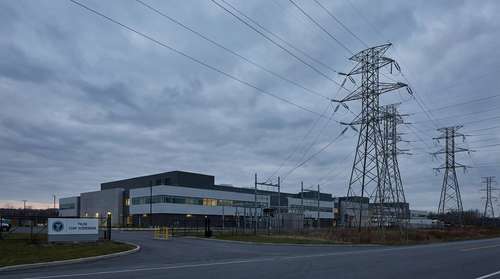
As advanced generative models scale at lightning speed, technology giants are hitting a physical wall. Current terrestrial facilities are draining global power grids and consuming billions of gallons of water for cooling. The International Energy Agency recently projected that global data center electricity consumption will more than double to roughly 945 terawatt-hours by 2030, largely driven by AI adoption. This staggering demand has forced the industry to desperately seek viable AI power crisis solutions.
We are already seeing extreme measures on the ground. Competitors are actively buying up gas-powered assets or signing contracts to restart dormant nuclear reactors just to secure enough gigawatts for next-generation model training. Communities are increasingly pushing back against these massive facilities due to environmental concerns and grid strain. As Earth-based power sources struggle to keep up, tech leaders realize that scaling limits are no longer software-based—they are bound by basic thermodynamics and energy availability.
Google Project Suncatcher: The Orbital Solution
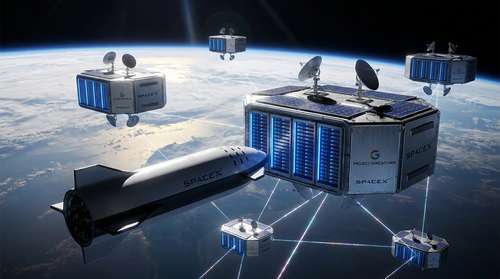
First teased in late 2025 as a research moonshot, Google Project Suncatcher is rapidly transitioning from theoretical science to corporate strategy. The plan envisions a sprawling constellation of satellites equipped with Google's proprietary Tensor Processing Units (TPUs). By placing these compute nodes in dawn-dusk sun-synchronous orbits, the hardware can access near-constant sunlight without the interruptions of Earth's day-night cycle or atmospheric interference.
According to Google's engineering blueprints, solar panels in these optimal orbits can generate up to eight times more continuous power than their terrestrial counterparts. Furthermore, the subzero ambient temperatures of deep space offer a massive advantage for heat dissipation, entirely bypassing the need for millions of gallons of cooling water.
The Architecture of Space-Based Computing 2026
Moving compute off-planet involves overcoming staggering technical hurdles. Standard silicon chips often fry when exposed to cosmic radiation, but recent testing proved that Google's latest TPU architecture is surprisingly resilient, capable of surviving a five-year orbital lifespan without requiring prohibitively heavy shielding.
To function as a cohesive supercomputer, these SpaceX orbital data centers will rely on free-space optical links—essentially high-bandwidth space lasers—capable of multi-terabit speeds. By flying the satellites in tight formations separated by only hundreds of meters, Google aims to network these orbital nodes into a unified computing cluster that processes complex neural networks in orbit and beams the finished data back to Earth.
The Google SpaceX Partnership: Heavy Lifting to Orbit
While Alphabet possesses the hardware and cloud architecture, getting thousands of tons of server racks into space requires unmatched launch capability. This is where the Google SpaceX partnership becomes critical. Reports from May 2026 confirm that Google is in advanced discussions with Elon Musk's aerospace giant to serve as the primary launch provider.
SpaceX is uniquely positioned to make space-based computing 2026 an economic reality. With the massive payload capacity of the Starship platform driving launch costs down toward the $200-per-kilogram threshold, shooting a server into orbit is inching closer to being cheaper than paying its lifetime electricity bill on Earth. SpaceX has already proven its interest in the AI sector through a recent landmark computing deal with Anthropic, and regulatory filings hint at constellations that could eventually support up to one million specialized satellites.
The Future of Data Centers is Off-Planet
The timeline for this orbital migration is highly aggressive. Google has confirmed a secondary collaboration with satellite manufacturer Planet Labs to launch two fully functional Project Suncatcher prototype satellites by early 2027. These early deployments will test hardware durability in a microgravity environment and validate the intricate laser communication networks required for seamless data transfer.
If successful, these prototypes will prove that the future of data centers isn't grounded in Texas or Iceland, but floating in Low Earth Orbit. This extraterrestrial shift in AI infrastructure expansion promises to unburden Earth's fragile energy grid while providing the limitless, clean solar power required to push artificial intelligence into its next evolutionary stage.
As the AI race accelerates, the alliance behind Google Project Suncatcher and SpaceX highlights a striking new reality. The path to advanced artificial intelligence is paved with heavy-lift rockets, and the cloud of tomorrow will literally reside among the stars.