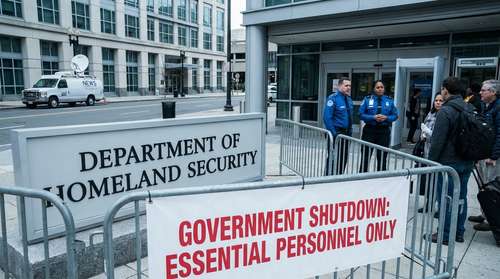
WASHINGTON — The partial government shutdown affecting the Department of Homeland Security (DHS) has entered its fourth day, with Senate Democrats delivering a high-stakes counterproposal to the White House late Monday. As approximately 50,000 Transportation Security Administration (TSA) agents report for duty without pay, the political impasse has hardened into a bitter standoff over federal law enforcement accountability following the fatal shootings of two U.S. citizens in Minneapolis last month.
Senate Democrats Push Back with New Counteroffer
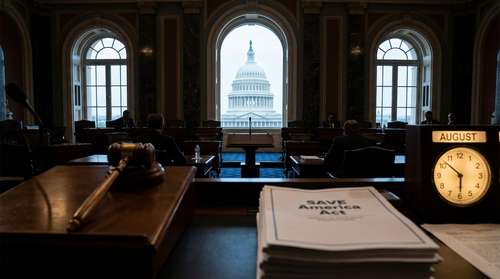
On Monday evening, Senate Minority Leader Chuck Schumer’s office confirmed the delivery of a counteroffer to the Trump administration, attempting to break a deadlock that has left key national security components unfunded since Saturday morning. While specific details of the latest proposal remain under wraps, sources on Capitol Hill indicate it doubles down on core Democratic demands for strict oversight mechanisms attached to any new DHS funding.
The move follows a breakdown in negotiations over the weekend, where Democrats rejected a White House proposal they characterized as "unserious." The central friction point remains the Democratic caucus's insistence on a "code of conduct" for federal immigration agents. This legislative push comes in direct response to the deaths of Alex Pretti, 37, and Renee Good, 37, both U.S. citizens killed by federal agents during a surge of enforcement operations in Minneapolis in January.
"We are not asking for the moon; we are asking for constitutional policing," Senator Schumer said in a brief statement Tuesday morning. "We cannot write a blank check to a department that operates with impunity on American streets."
The Minneapolis Trigger: A Crisis of Oversight
The current legislative paralysis is inextricably linked to the events in Minnesota, which have galvanized the Democratic base and drawn sharp condemnation from human rights groups. The shootings of Pretti, a VA nurse, and Good, a mother of three, occurred during what the administration termed "Operation Metro Surge." Both victims were U.S. citizens, challenging the administration’s narrative that the operations were solely targeting undocumented immigrants with criminal records.
Senate Democrats are demanding specific statutory language in the spending bill that would require:
- Mandatory Identification: A ban on face masks for agents and a requirement to display visible nameplates and badge numbers during operations.
- Judicial Warrants: A prohibition on entering private property or sensitive locations like schools and hospitals without a warrant signed by a federal judge.
- Body Cameras: Universal deployment of body-worn cameras with strict data retention policies to ensure footage is available for accountability investigations.
The White House has staunchly refused these conditions, arguing they would endanger officers and cripple enforcement capabilities. Tom Homan, the administration’s "Border Czar," appeared on Sunday talk shows to draw a hard line. "We will not agree to unmask our agents in a hostile environment," Homan stated. "These demands are designed to stop deportation operations, not to make them safer."
TSA Funding Crisis Looms Over Travel Sector
While the political battle plays out in the corridors of the Senate, the operational reality at the nation’s airports is becoming increasingly precarious. Unlike the broad government shutdown of late 2025, this funding lapse is surgically targeted at DHS. This means that while most of the government remains open, the TSA is operating without funding.
Approximately 95% of TSA employees are deemed "essential" and must work, but they will not receive paychecks until the shutdown ends. Union representatives have warned that financial stress could lead to a spike in "sick-outs" similar to those seen in previous shutdowns, potentially causing massive delays just as the spring travel season ramps up.
"Our officers are professional, but they cannot work for free indefinitely," warned a representative for the American Federation of Government Employees (AFGE). "Mortgages and grocery bills don't pause just because Congress does."
Deportation Operations Continue "Unabated"
In a unique twist to this shutdown, the Trump administration’s core immigration enforcement machinery remains largely unaffected by the funding lapse. Thanks to a 2025 tax and spending law—often referred to by the President as his "big beautiful bill"—agencies like Immigration and Customs Enforcement (ICE) and Customs and Border Protection (CBP) have access to multi-year appropriations that exist outside the current budget fight.
This financial anomaly has emboldened the White House, as the shutdown does not halt the President’s signature deportation campaign. Instead, the pain is felt primarily by administrative support staff, the Coast Guard, and the TSA. This dynamic has shifted the leverage, forcing Democrats to weigh the cost of disrupting air travel and emergency management against their demand for civil rights protections.
As the Senate remains in a nominal recess until February 23, the delivery of the Democrats' counteroffer suggests that back-channel negotiations are active. However, with both sides dug in deeply on ideological grounds—accountability versus enforcement power—a quick resolution appears elusive.