
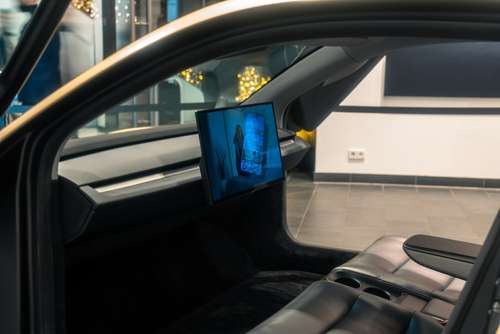
Tesla CEO Elon Musk has issued a stark warning regarding the initial production phases of the company's two most ambitious projects: the autonomous Cybercab and the Optimus humanoid robot. In a statement made on social media platform X just days before Tesla’s scheduled Q4 2025 earnings call, Musk tempered investor expectations, admitting that the manufacturing ramp-up would be “agonizingly slow” due to the sheer complexity of the new technologies involved.
The Reality of Manufacturing Innovation
Musk’s comments came in response to discussions about the Cybercab’s impending launch, slated for April 2026 at Giga Texas. While the timeline remains aggressive, the Tesla CEO emphasized the engineering hurdles inherent in launching completely novel products. “For Cybercab and Optimus, almost everything is new, so the early production rate will be agonizingly slow, but eventually end up being insanely fast,” Musk wrote.
This admission highlights the double-edged sword of Tesla’s “Unboxed” manufacturing process. Unlike traditional assembly lines, this new method treats the vehicle more like a consumer electronics device, aiming to drastically reduce costs and footprint. However, as Musk noted, the speed of a production ramp is inversely proportionate to the number of new parts and processes introduced. With the Cybercab lacking a steering wheel and pedals, and Optimus requiring cutting-edge actuators and sensors, the learning curve for Tesla's factory teams will be steep.
Optimus Robot: A Long Road to Mass Adoption
While the Cybercab grabs headlines for its transport revolution potential, the Optimus robot represents Tesla’s pivot toward general-purpose robotics. The updated timeline suggests that while low-volume production is expected to begin in 2026, these early units will likely be restricted to internal use within Tesla factories. The goal is to have Optimus performing useful, complex tasks on the assembly line before it is ever sold to external customers.
Mass production for the humanoid robot is now projected for 2027 or later. This conservative estimate aligns with Musk’s strategy of validating reliability and safety internally. The “agonizingly slow” start allows engineers to troubleshoot hardware issues in a controlled environment, preventing the kind of public quality control struggles that plagued early vehicle launches.
Echoes of Production Hell 2026?
Long-time Tesla watchers will hear echoes of the infamous “production hell” era of the Model 3 ramp in 2017-2018. However, the context for 2026 is different. Tesla is no longer a cash-strapped startup but a trillion-dollar AI and robotics juggernaut. The warning of a slow start appears to be a calculated move to manage Wall Street's expectations, preventing a stock sell-off if initial quarterly numbers for Cybercab and Optimus appear low.
The stakes, however, are higher than ever. Tesla’s massive valuation is increasingly tied to the promise of autonomous robotaxis and AI robotics rather than just electric vehicle sales. With the stock experiencing volatility in January 2026, the market is looking for concrete evidence that these “agonizingly slow” beginnings will indeed lead to the exponential growth Musk promises.
The Autonomous Robotaxi Landscape
Despite the manufacturing warnings, Tesla continues to make progress on the software front. The company has been operating a pilot fleet of Model Y robotaxis in Austin, Texas, recently moving to remove human safety monitors from the passenger seat. This real-world testing is crucial for gathering the data needed to validate the software that will eventually power the purpose-built Cybercab.
As the April 2026 production date for Cybercab approaches, the industry will be watching Giga Texas closely. If Musk’s prediction holds true, the world may see very few Cybercabs on the road initially, but the infrastructure being built behind the scenes could set the stage for a manufacturing revolution that eventually floods the market with autonomous transport.