Travelers planning a European getaway this summer can breathe a sigh of relief. In a significant move to avert potential gridlock at major airports, the European Commission has officially granted member states the flexibility to "partially suspend" the full rollout of the biometric Entry/Exit System (EES) until September 2026. The decision, confirmed earlier this week by Commission officials, aims to prevent the massive queues and technical failures that have plagued the system's initial phased launch, offering a reprieve for millions of tourists from the United States and the United Kingdom during the upcoming peak travel season.
The "Soft Launch" Extension: What Happened?
The EES, which replaces traditional physical passport stamping with a high-tech digital registry of facial images and fingerprints, was originally scheduled for full, mandatory implementation by April 10, 2026. However, following a chaotic trial period that began in late 2025, European authorities have pivoted.
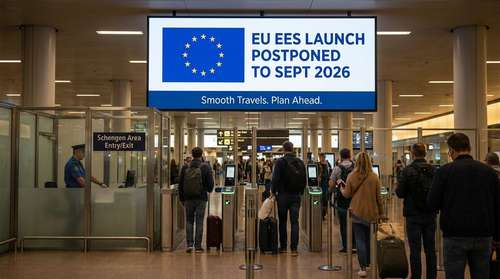
Markus Lammert, the European Commission Spokesperson for Internal Affairs, confirmed on Monday that while the official "progressive deployment" period legally concludes in April, member states will retain the power to temporarily suspend these digital checks. Countries can now pause EES operations for an additional 90 days—with a further possible 60-day extension—effectively pushing strict enforcement past the busy summer months to September 2026.
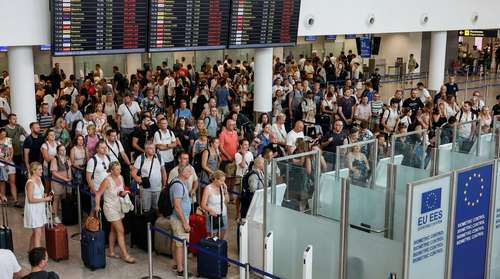
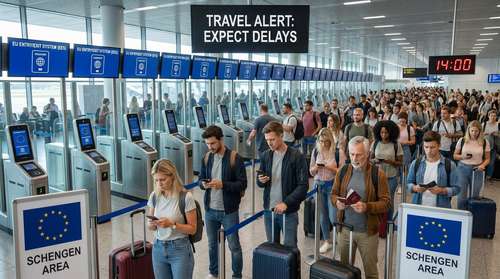
This "emergency brake" mechanism allows border guards to revert to manual processing if waiting times become unmanageable, a direct response to reports of multi-hour delays at hubs like Lisbon and Málaga during the holiday season.
Why the Delay? Technical Glitches and Queue Nightmares
The decision to pump the brakes follows a rocky introduction to the system. Since the phased rollout began in October 2025, several Schengen Area entry points have struggled to cope with the new technology. The EES requires every non-EU traveler to register their biometric data at a kiosk upon their first entry—a process that takes significantly longer than a simple passport stamp.
The consequences of these "teething problems" were starkly visible over the winter holidays. Lisbon’s airport was forced to suspend the system entirely after passengers faced grueling seven-hour waits. Similarly, airports in Spain and France reported processing times increasing by up to 70%, raising alarms that a full summer rollout could lead to operational collapse. By delaying full enforcement, the EU acknowledges that its infrastructure isn't yet ready to handle the crush of summer tourism without causing severe disruption.
What This Means for US and UK Travelers in Summer 2026
For American and British tourists heading to Europe between June and August 2026, this announcement brings much-needed clarity—and likely, faster lines. While the requirement to provide biometric data remains technically in place, the new flexibility means you may not face it at every border.
Potential for Manual Checks
If you arrive at a busy airport like Paris Charles de Gaulle or Rome Fiumicino during a peak window, authorities now have the discretion to wave you through the traditional passport control lanes instead of forcing you to use the new EES kiosks. This dynamic approach is designed to keep lines moving.
Preparation is Still Key
Despite the relaxation, travelers should still be prepared for digital checks. If you are landing at a smaller airport or arriving during an off-peak time, you will likely still need to complete the biometric registration. Always carry your valid passport and ensure it has at least three months of validity remaining beyond your planned departure date.
ETIAS and Future Travel Requirements
It is important to distinguish the EES from ETIAS (European Travel Information and Authorisation System). The EES is the physical registration system at the border, while ETIAS is the online pre-travel authorization (similar to the US ESTA) for visa-exempt travelers.
With the EES facing these operational delays, the launch of ETIAS—which relies on the EES database to function—remains slated for late 2026 at the earliest. Travelers do not need to apply for ETIAS for their summer 2026 trips. The current focus remains entirely on stabilizing the border check process before introducing the pre-travel screening layer.
Looking Ahead to September 2026
This postponement is a temporary fix, not a cancellation. The European Commission remains committed to fully digitizing the Schengen Area's external borders. Come September 2026, once the summer crowds have dissipated, the "partial suspension" window will close, and the EES is expected to become the strict standard across all 29 participating countries.
For now, the priority is clear: keeping Europe open and accessible. This strategic delay ensures that your summer vacation memories will be of the Colosseum or the Eiffel Tower, not the inside of an airport terminal.