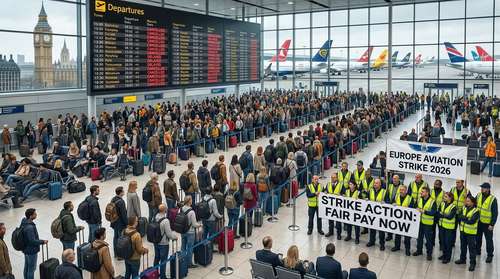
Travelers looking forward to their highly anticipated getaways are waking up to a harsh reality this week. The Europe airport strikes 2026 have transformed bustling terminals into epicenters of frustration, triggering massive operational breakdowns across the continent. From misplaced baggage to hours-long tarmac waits, coordinated industrial actions by air traffic controllers, ground handlers, and security staff are crippling major aviation hubs. If you are crossing the Atlantic or flying within the continent, navigating the Europe travel disruptions 2026 has brought requires immediate attention and careful planning.
Paris Airport Strike 2026: The Ripple Effect Continues
The latest operational blow arrived on June 18, when a widespread Paris airport strike 2026 hit Charles de Gaulle, Orly, and Le Bourget airports. Driven by disputes over tightened security clearance rules for airport workers, the 24-hour walkout involved crucial ground personnel, including baggage handlers, retail workers, and security badge-holding staff.
While the formal strike action has officially ended, the recovery arc is stretching into the weekend of June 20. Airlines are still battling the cascading aftermath, scrambling to reposition aircraft and crews that were left stranded mid-route. Travelers passing through Paris are experiencing sluggish aircraft turnarounds and significant baggage delivery delays. With Paris serving as a primary connector for international flights, these localized bottlenecks are directly fueling the broader flight cancellations Europe 2026 is currently experiencing.
Spain Air Traffic Control Strike Deepens the Crisis
In the Iberian Peninsula, the situation is equally dire. An ongoing Spain air traffic control strike led by the USCA and CCOO unions at SAERCO-operated towers has been extended through at least June 30. This indefinite action affects critical regional infrastructure, complicating routes connecting the UK and Northern Europe to popular Spanish leisure destinations.
Just days ago on June 17, passengers at Palma de Mallorca Airport—Spain's third-busiest aviation hub—faced a sudden 24-hour strike by ground mobility staff. The convergence of air traffic control limits and ground handling walkouts means that flights into Alicante, Barcelona, Málaga, and the Balearic Islands are frequently departing more than an hour late. For passengers banking on tight connection windows, the summer flight delays Europe is witnessing often result in missing subsequent long-haul flights entirely.
Why the Aviation Sector is Breaking Down
The root causes of this summer's travel nightmare stem from a potent combination of unresolved post-pandemic labor disputes, staffing shortages, and crushing inflationary pressures. Aviation workers across the continent—from those guiding aircraft down the runway to the teams cleaning the cabins—are demanding better working conditions and pay adjustments that match the rising cost of living. Because the European aviation network operates on a tightly interwoven schedule, an isolated dispute in one country immediately impacts neighboring territories.
For example, earlier this month, severe operational pressures and indirect strike impacts caused more than 90 flights to be canceled across Amsterdam Schiphol, Copenhagen, and Frankfurt. Because these airports function as massive global connection points, a single late rotation caused by a French or Spanish labor walkout can force airlines to scrub evening flights entirely to reset their morning schedules.
Upcoming Threat: Italy's Nationwide Shutdown
The disruption calendar offers no respite for the coming week. Airlines and travel authorities are raising red flags regarding a massive, 24-hour nationwide ground-handling strike scheduled across all Italian airports on June 26. Unlike rolling regional walkouts, this coordinated stoppage is expected to halt baggage operations and aircraft turnarounds completely from Rome to Milan. Carriers will likely trim their schedules pre-emptively, so passengers holding tickets for Italian routes should monitor their flight status closely for immediate rebooking notices.
Navigating the Chaos: Passenger Rights and Strategies
With overlapping strikes straining a system already burdened by high seasonal demand and airspace restrictions, avoiding the fallout entirely may be impossible. However, understanding your passenger rights can mitigate the financial impact of the ongoing walkouts.
Under EU Regulation 261 (EC 261), passengers suffering from sudden flight cancellations or delays exceeding three hours may be eligible for up to €600 in compensation. However, there is a critical caveat: disruptions caused directly by air traffic control strikes are generally considered extraordinary circumstances, which frequently exempts airlines from paying cash compensation. Conversely, strikes involving the airline's own staff or contracted ground handlers often do qualify for payouts.
Essential Tips for Survival
To survive these compounding travel disruptions, proactive maneuvering is your best asset. Here are the most effective strategies to employ before heading to the departure gate:
- Travel Carry-On Only: Checked baggage systems are the first to collapse during ground-handling walkouts. Skip the checked bag to ensure you can swiftly reroute or switch airlines if your primary flight falls through.
- Rebook Digitally: If a cancellation hits, do not wait in the massive customer service queues forming at the terminal. Use the airline's mobile app or call international reservation numbers to secure alternative routing instantly.
- Document Everything: If you are stranded overnight, airlines are legally obligated to provide meals and hotel accommodations regardless of the strike's cause. Keep all receipts if you are forced to pay out of pocket, and request written confirmation of the delay's cause from the gate agent.
As the peak holiday season ramps up, the ongoing wave of industrial action guarantees that this summer will be a grueling endurance test for international travelers. Stay informed, remain flexible with your itinerary, and always verify your flight's status before leaving for the airport.