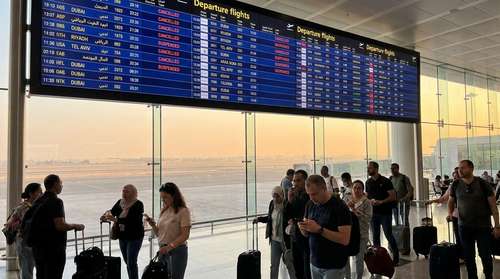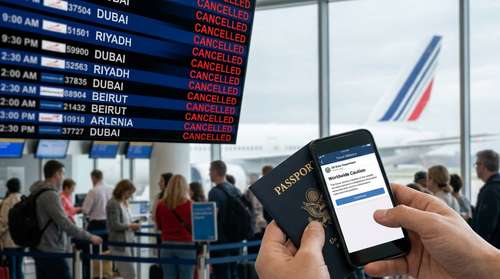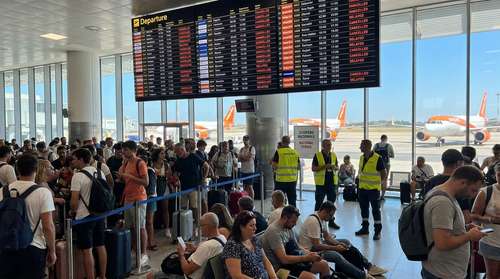
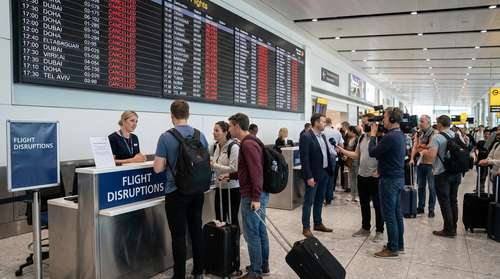
A rapidly escalating conflict in the Middle East has triggered a global aviation crisis this week, grounding thousands of flights and leaving international travelers stranded across major transit hubs. Following a series of coordinated strikes and airspace closures beginning February 28, 2026, key air corridors over Iran, Iraq, and parts of the Gulf have been shut down, severing vital links between Europe, Asia, and Africa. As the situation intensifies, governments are scrambling to launch emergency evacuation flights, with the Singapore Tourism Board announcing a special relief service for March 8 and Thailand implementing urgent humanitarian measures to assist those trapped by the disruption.
Massive Disruption in Global Air Travel
The sudden closure of airspace across multiple Middle Eastern nations has thrown the global aviation network into chaos. Since late February, major transit hubs including Dubai International (DXB), Hamad International in Doha (DOH), and Abu Dhabi (AUH) have seen unprecedented cancellations. Industry data indicates that over 19,000 flights were canceled in the first week of March alone, affecting millions of passengers.
Airlines such as Emirates, Qatar Airways, and Lufthansa have been forced to suspend services or execute drastic rerouting strategies. Carriers are currently diverting flights through narrow corridors in Egypt and the South Caucasus to avoid the conflict zones, adding hours to flight times and straining fuel logistics. The closures have effectively created a "no-fly zone" over a region that typically handles a significant portion of East-West global air traffic.
Singapore Launches Emergency Relief Flight SQ8002
In a decisive move to aid stranded travelers, the Singapore Tourism Board (STB) has collaborated with Singapore Airlines to operate a special relief flight. Scheduled for Sunday, March 8, 2026, flight SQ8002 will depart Singapore Changi Airport at 05:30 AM local time, bound for Muscat International Airport in Oman.
This emergency service is specifically designed for non-resident visitors currently stuck in Singapore whose return flights were cancelled due to the Middle East airspace closures. The STB has priced tickets at a flat rate of S$600 (approx. US$450) per seat. Officials have emphasized that this is a humanitarian effort to move travelers to a safe operational hub in the region, from where they can connect to onward destinations. Registration for the flight is critical, with priority given to those with verified flight cancellations between February 28 and March 8.
Thailand Waives Fines and Offers Financial Aid
Thailand, another major tourism hub heavily impacted by the flight suspensions, has announced a sweeping package of humanitarian assistance. The Thai government confirmed on March 5 that it would waive overstay fines for all foreign tourists stranded in the kingdom due to the aviation crisis. This amnesty applies to visitors whose visas expired on or after February 28, 2026.
Beyond visa relief, Thailand's Ministry of Tourism and Sports has activated a traveler assistance fund. Stranded tourists facing financial hardship can apply for a daily subsistence allowance of 2,000 THB (approx. $60), capped at 20,000 THB per person. These measures aim to mitigate the financial burden on travelers who find themselves indefinitely grounded while airlines struggle to rebuild their schedules.
Airlines Scramble to Reroute as Conflict Escalates
The operational impact on international carriers has been severe. With the airspace over Iran and Iraq—traditional highways for flights between Europe and Asia—firmly closed, airlines are navigating a logistical nightmare. British Airways, Air France-KLM, and other European giants have suspended flights to Tel Aviv, Beirut, and Tehran, while re-mapping long-haul routes to bypass the entire Persian Gulf region.
This mass rerouting is causing a ripple effect of delays globally. Flights that are still operating are facing severe congestion in the remaining open air corridors, leading to slot restrictions and further cancellations. Industry analysts warn that full recovery of the network could take weeks, even if the airspace were to reopen immediately, due to the displacement of crews and aircraft.
What Stranded Travelers Should Do Now
For travelers currently affected by these disruptions, aviation authorities recommend immediate action. Do not head to the airport unless you have a confirmed booking, as many terminals are already overcrowded. Instead, contact your airline or travel insurance provider via phone or online channels.
If you are in Singapore or Thailand, utilize the government-provided resources immediately. For the Singapore relief flight to Muscat, ensure you register through the official STB portal before the deadline. In Thailand, visit the nearest immigration office to formalize your visa extension under the new humanitarian guidelines. As the situation remains fluid, staying updated through official government advisories and airline alerts is essential for your safety and eventual return home.