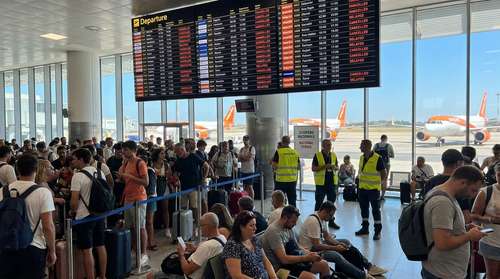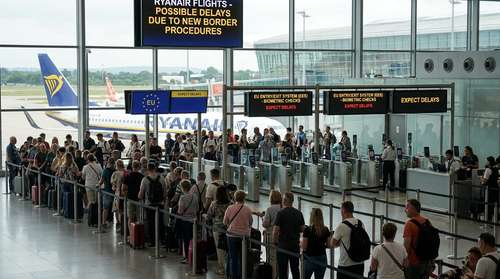
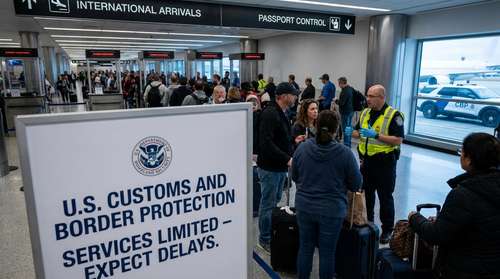
The escalating feud between the federal government and municipalities limiting cooperation with immigration authorities has officially reached terminal gates. Department of Homeland Security Secretary Markwayne Mullin has doubled down on a controversial proposal to strip federal customs processing from major global hubs, sending shockwaves through the aviation and tourism sectors. If the administration moves forward with this CBP officer withdrawal 2026 strategy, operations at sanctuary city airports could grind to an immediate halt, triggering massive international flight disruptions.
The DHS Plan to Reroute Global Travel
In a series of recent meetings with airline executives, Secretary Mullin confirmed the administration is actively weighing whether to remove Customs and Border Protection personnel from cities that refuse to assist federal immigration operations. Under current federal law, commercial hubs require highly trained, designated personnel to process passports, screen passengers, and inspect inbound cargo. Stripping these services from customs and border protection airports effectively forces passenger carriers and logistics companies to cancel routes or reroute overseas flights to non-sanctuary jurisdictions.
The latest Markwayne Mullin DHS news follows his initial Senate confirmation in March 2026, when he openly questioned why the federal government should deploy specialized agents to areas that obstruct broader enforcement mandates. Mullin explicitly stated during a television appearance that if sanctuary cities receive international flights but refuse to enforce immigration policies outside the airport, the department must reconsider its partnerships. By leveraging air travel as a political pressure point, the DHS is attempting to compel local compliance through sheer economic force.
Industry Backlash: Airlines and Tourism on High Alert
Tourism advocates, municipal leaders, and trade groups have not minced words regarding the economic gravity of the proposal. The U.S. Travel Association protest was swift and unequivocal, warning that stripping customs agents from critical hubs like Los Angeles International (LAX), San Francisco International (SFO), Chicago O’Hare, and New York's JFK would cripple regional economies. The organization released a statement declaring that such a move would unleash devastating consequences for communities that heavily depend on international visitation and commercial trade.
Airlines for America Issues Dire Warning
The ripple effects of this airline industry policy news would not be confined to passenger terminals. Cargo operations, which move hundreds of thousands of metric tons of essential goods daily, would also stall. The trade group Airlines for America immediately condemned the strategy, predicting a devastating hit to local municipalities and severe operational chaos for international carriers. In Washington state, officials worry that losing international entry services at Seattle-Tacoma International Airport could even threaten logistical preparations for the upcoming 2026 FIFA World Cup.
Rare Cabinet Pushback Over Aviation Policy
The aggressive strategy to penalize sanctuary city airports has drawn surprising resistance from within the administration's own ranks. Transportation Secretary Sean Duffy voiced deep skepticism during a recent congressional hearing, indicating he was completely against the premise of weaponizing aviation infrastructure for domestic policy disputes.
Duffy strongly warned against leveraging commercial aviation operations over local political disagreements. He argued that shutting down air travel in states that do not align politically with the current administration is a dangerous precedent, pointing out that partisan control inevitably shifts. Duffy emphasized that global travelers need access to various destinations regardless of local policies, underscoring a rare public divide between the Department of Transportation and the Department of Homeland Security.
Legal Hurdles and What Happens Next
Executing a widespread withdrawal of federal personnel requires navigating a labyrinth of legal and logistical barriers. While the DHS secretary possesses the statutory authority to designate specific locations as official air ports of entry, legal experts suggest that leveraging this administrative power for political retribution would invite immediate federal injunctions. Previous attempts by the executive branch to cut funding to sanctuary cities were swiftly struck down by federal courts in 2017, suggesting similar protections might apply to critical federal staffing.
For now, the proposal remains a looming threat rather than an immediate operational directive. However, the mere consideration of unprecedented international flight disruptions forces carriers into a highly defensive posture. Aviation logistics require months of advance planning for route allocations, crew scheduling, and terminal leasing. Until the courts or the administration provide a definitive resolution, the tourism sector remains in a holding pattern, hoping that America's busiest arrival gates avoid becoming the next political battleground.