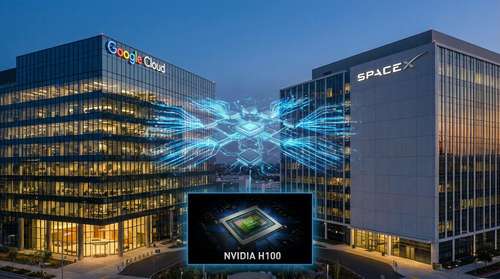
In a move that highlights the unprecedented thirst for artificial intelligence infrastructure, Google and SpaceX have formalized an agreement that fundamentally reshapes the cloud computing landscape. According to an S-1 regulatory filing released late Friday, the search behemoth will pay Elon Musk's aerospace company $920 million per month for dedicated computing power. This Google SpaceX AI deal, valued at approximately $30 billion over its lifespan, represents a dramatic pivot for SpaceX as it expands from orbital logistics into becoming a titan of data center leasing.
Under the terms of the agreement, Google gains exclusive access to an expansive cluster of approximately 110,000 Nvidia GPUs—specifically the highly coveted H200 chips—along with the requisite CPUs, memory, and high-performance networking components. This massive hardware allocation aims to alleviate constraints on Google cloud computing capacity at a time when enterprise demand is severely outstripping global silicon supply.
Meeting the Demand for Gemini Enterprise AI Infrastructure
While Alphabet operates one of the world's most sophisticated proprietary cloud networks, the sheer velocity of the generative AI boom is straining even the deepest pockets. In its most recent quarterly earnings report, Alphabet revealed that Google Cloud's backlog—a metric tracking contracted work not yet recognized as revenue—nearly doubled sequentially, surpassing $460 billion.
The primary driver behind this pre-IPO arrangement is Google's agent platform, which has seen adoption rates far beyond the company's internal projections. A Google Cloud spokesperson confirmed the partnership in a statement Friday evening, describing it as a short-term, timely agreement to secure bridge capacity. The computing infusion is directly earmarked to support the Gemini Enterprise AI infrastructure, ensuring corporate clients do not experience throttling or latency as they deploy advanced AI models in production environments.
The reality of a hyperscaler like Google having to lease external computational power highlights the continuing Nvidia GPU shortage Google and its competitors face. Building out massive data centers natively takes years of planning, zoning, and construction. Renting pre-built, operational capacity provides an immediate release valve for soaring computational requirements.
Decoding the SpaceX 30 Billion Computing Agreement
The mechanics of this contract are as fascinating as its scale. The regulatory filings indicate that Google will begin paying the full $920 million monthly rate in October 2026, with a reduced-fee ramp-up period spanning the preceding months. If the arrangement runs its full course through June 2029, the SpaceX 30 billion computing agreement will inject extraordinary, high-margin revenue directly into the rocket company's balance sheet.
However, the search giant has aggressively protected its downside. The contract features strict delivery milestones. If SpaceX fails to provision the committed number of Nvidia processors by September 30, 2026, Google retains the right to lawfully terminate the contract immediately following a one-month grace period. Additionally, either party can cancel the arrangement with 90 days' written notice any time after December 31, 2026. Google will also retain full ownership of its intellectual property, content, and AI training data throughout the duration of the lease.
The Colossus Data Center Lease Precedent
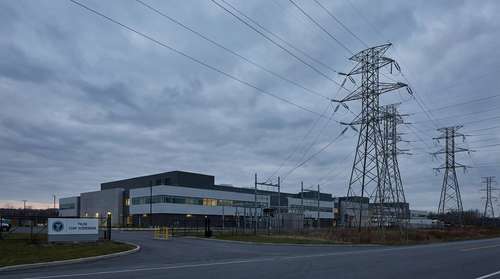
SpaceX is quickly proving that this compute-as-a-service model is a highly lucrative enterprise. The Google pact arrives just weeks after a comparable Colossus data center lease arrangement. In that previous deal, AI rival Anthropic agreed to pay $1.25 billion monthly for compute capacity housed at the massive Colossus facility in Memphis, Tennessee.
Originally constructed in record time to power Musk's xAI venture, the Memphis facility represents well over 100 megawatts of computing power—enough energy to power roughly 75,000 homes at any given moment. By leasing out these vast GPU clusters, SpaceX is effectively offsetting the astronomical capital expenditures required to build them. Recent pre-IPO filings revealed that xAI posted an operating loss of $6.4 billion on $3.2 billion in revenue last year, making these external leasing contracts critical for financial stabilization.
Setting the Stage for the SpaceX IPO June 2026
The timing of this blockbuster disclosure is entirely calculated. It arrives mere days ahead of the highly anticipated SpaceX IPO June 2026, scheduled for Wednesday, June 12, on the Nasdaq. By securing long-term, multi-billion-dollar recurring revenue from blue-chip tech firms, SpaceX is radically shifting its narrative for institutional investors.
The company is demonstrating that it is no longer just a space transport and satellite internet pioneer; it is actively operating as a dominant compute landlord. Targeting a staggering $1.75 trillion valuation and seeking to raise roughly $75 billion, this diversification into AI hardware leasing provides a lucrative safety net against the inherently high-risk nature of aerospace engineering and rocketry.
As silicon solidifies its status as the most valuable commodity in the modern digital economy, this partnership underscores a new corporate reality. The race for artificial intelligence supremacy isn't just about software algorithms and neural networks. It is a brutal, capital-intensive competition for raw processing power, and SpaceX has successfully positioned itself right at the tollbooth.