
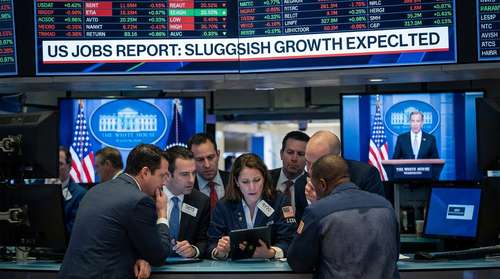
February 11, 2026 – Wall Street is on high alert this morning as traders await the delayed release of the US Jobs Report for February 11, 2026. The Bureau of Labor Statistics (BLS) is set to publish the January non-farm payrolls data at 10:30 AM ET, a release postponed from its traditional Friday slot due to the recent partial federal government shutdown. With consensus estimates hovering around a modest 63,000 new jobs, White House officials have launched a preemptive communications blitz, attributing projected weakness to what they term "ICE effects"—short-term labor supply shocks from intensified deportation operations—and structural AI job market disruption.
The Numbers Game: What to Expect from January Payrolls
Economists have lowered their expectations significantly for the January update. While the Trump administration economic policy team has touted a "productivity boom," traditional hiring metrics appear to be stalling. The consensus among major financial institutions suggests the US economy added roughly 63,000 jobs in January, a figure that would mark a significant deceleration from the 2025 average. This follows a disappointing private-sector report from ADP earlier this week, which showed only 22,000 positions added, primarily in the service sector.
The unemployment rate is expected to hold steady or tick up slightly to 4.4%, a level that Fed officials have previously described as consistent with full employment. However, the reliability of today’s data is under scrutiny. The Labor Department employment update comes after a chaotic period for federal data collection, with the 43-day shutdown in late 2025 and the recent week-long lapse in appropriations creating what analysts call a "fog of war" around economic statistics.
The 'ICE Effect': Deportations and Labor Supply Shocks
In an unusual move, Treasury Secretary Scott Bessent and other administration officials have spent the last 48 hours briefing the press on the so-called "ICE effect." This term refers to the immediate labor market friction caused by the administration's "Operation Border Trident," a massive interior enforcement campaign that has reportedly removed over 300,000 undocumented workers from the construction, agriculture, and hospitality sectors since late 2025.
While the White House argues this is a necessary "reset" that will eventually drive up wages for native-born workers, the immediate deportation impact on US economy metrics is undeniable. "You cannot remove a significant portion of the manual labor force without seeing a temporary dip in payroll numbers," a senior administration official told reporters Tuesday. "This is a feature, not a bug, of our transition to a legal-labor-first economy." Critics, however, warn that these labor shortages are stoking "sticky" inflation in the housing and services sectors, complicating the economic outlook.
Construction and Hospitality Hardest Hit
Industry groups are bracing for the worst. The National Association of Home Builders has warned that the crackdown has stalled projects nationwide, potentially reflecting a net loss in construction jobs for the first time in three years. If today’s report confirms a contraction in these key sectors, it will validate fears that the Trump administration economic policy is prioritizing immigration enforcement over short-term GDP growth.
AI Job Market Disruption: The Productivity Paradox
Beyond immigration policy, the AI job market disruption is reshaping the white-collar landscape. Tech sector layoffs have continued into 2026, not due to lack of profit, but due to efficiency gains. Companies are increasingly choosing not to backfill roles, leveraging generative AI agents to handle workflows in customer service, coding, and data analysis.
Goldman Sachs analysts have described this as a "bifurcated economy," where GDP growth remains robust—projected at 3-4% for Q1 2026—driven by AI productivity, while headcount growth stagnates. The White House has seized on this narrative as well, arguing that a lower jobs number reflects "higher efficiency" rather than economic weakness. "We are doing more with less," President Trump tweeted this morning. "The AI boom is making America the most productive nation on earth. Don't let the fake news media panic you over headcount!"
Federal Reserve Implications: To Cut or Not to Cut?
For investors, the critical question is how the Federal Reserve will interpret this data. Markets are pricing in a 60% chance of Federal Reserve interest rate cuts at the March meeting, hoping the central bank will step in to support the softening labor market. However, the picture is complicated by inflation, which remains stubborn at 2.8% according to the latest PCE data.
If today’s report shows a "stagflationary" mix—low job growth combined with high wage inflation due to labor shortages—the Fed may be forced to hold rates steady, disappointing equity markets. "The Fed is in a bind," notes RBC Economics. "They want to cut rates to support employment, but the 'ICE effect' is artificially constraining labor supply and keeping wages—and thus inflation—elevated. It’s a policy nightmare."
As the closing bell approaches, all eyes will be on the 10:30 AM release. Whether the markets accept the White House's "transitional" narrative or view the data as a sign of an impending recession will likely set the tone for the rest of 2026.