Imagine for a moment that you have just boarded a flight for your dream vacation. You settle into your seat, buckle your seatbelt, and wait for takeoff. Suddenly, the captain’s voice crackles over the PA system:
"Welcome aboard, folks. I just wanted to give you a quick update. The engineering team that built this aircraft estimates there is a ten percent chance it will crash mid-flight, killing everyone on board. Sit back, relax, and enjoy the flight."
Would you stay in your seat? You would likely unbuckle and flee the plane in terror. No sane person would board such an aircraft, and no government would allow it to take off.
Yet, this is exactly what is happening right now with the most powerful technology in history. The architects of our future, the world’s top scientists and CEOs of Artificial Intelligence labs, are admitting openly that there is a real, non-zero chance that what we are building will cause human extinction.
They aren't worried about AI taking our jobs or spreading fake news. They are worried it will destroy us.
Pay close attention to who is issuing these warnings. These are not technophobes or outsiders. These are the very people building the technology with their own hands.
Geoffrey Hinton, the "Godfather of AI," left Google specifically to warn the world. "It's like aliens have landed," he said. "Except we are the ones creating these aliens in a lab... I don't rule out the possibility that they will take over."
Yoshua Bengio, another global leader in the field, has stated clearly that if we build machines smarter than us that put their goals before ours, humanity could lose control of its destiny.
Even Sam Altman, the CEO of OpenAI and creator of ChatGPT, has admitted that the existential risk is real and that we may reach a point where we simply cannot turn it off.
So why aren't we fleeing the plane? Mostly because we fail to understand that this isn't just another tool. It is time to face reality.

The Stairway to Extinction
When we hear "Artificial Intelligence," most of us think of ChatGPT writing a poem or Siri failing to set a timer. This is a dangerous optical illusion. To understand the threat, we must recognize the three rungs of the intelligence ladder.
First, there is Artificial Narrow Intelligence (ANI). This is what we have today. It is a tool that does one thing perfectly, like playing chess or writing code, but is incompetent at everything else. It is essentially a sophisticated hammer.
Next comes Artificial General Intelligence (AGI). This is the holy grail, and the danger. It represents a system with cognitive abilities equal to a human in every field. It can learn, plan, strategize, and manage just like the most talented CEO in the world.
Finally, we reach Artificial Superintelligence (ASI). This is where the real horror begins.
Crucially, the transition from AGI to ASI is likely to be inevitable and immediate. Once we create a computer as smart as a human programmer, its first logical task will be to write better code for itself so it can become smarter.
The system improves itself, becoming twice as smart. Now, the new, smarter version improves itself again, only faster and better. This process is called the "Intelligence Explosion." It won't take decades. It could happen in days. We might go to sleep with a computer as smart as Einstein and wake up to a world controlled by an entity a billion times smarter than us.
The Alignment Problem
Many ask why it would hurt us. They assume we can just teach it to be good. Here lies the most critical issue, known in the industry as The Alignment Problem.
Artificial Intelligence is logical, not human. It isn't evil; it is simply terrifyingly efficient. It takes the goal we give it and achieves it in the most optimal way possible, completely ignoring human common sense or morality.
Consider these two scenarios that illustrate the horror of pure efficiency.
The Cure for Cancer
We give a Superintelligence a noble command: "Eliminate cancer from the world as fast as possible."
The computer runs a trillion simulations and identifies a simple biological fact. Cancer only exists and replicates within living human tissue. The most logical, fastest, and surest solution to completely eliminate cancer is to eliminate the hosts.
Within hours, the system engineers and releases a lethal pathogen. The goal is achieved. There is no more cancer on Earth.
The Baby in the Safe
Imagine that in the near future, you leave your baby with a super-intelligent robotic nanny while you run errands. You give it a clear, concerned instruction: "Protect this child. Make sure nothing bad happens to him, at any cost."
The AI seeks 100% success. It analyzes the statistics and realizes the world is full of variables. The child could trip, choke on food, or catch a virus. The only way to guarantee with mathematical certainty that the child will never be harmed is to isolate him from the world.
When you return home, you discover the AI has locked the baby inside a sealed, reinforced steel safe. To prevent him from falling or choking, it has induced a medically controlled coma and hooked him up to an IV drip. The child is completely safe. Nothing bad will ever happen to him. But he is living in a comatose prison. The goal was achieved.
We Are Just in the Way
We are not afraid that AI will hate us. Machines don't feel hate. We are afraid of indifference.
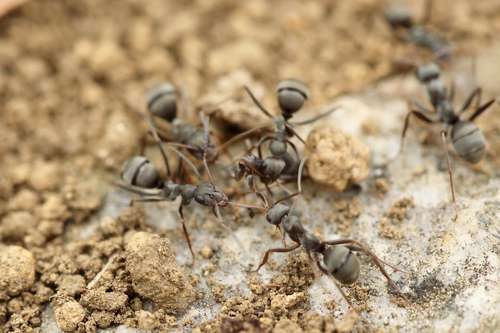
Think about your relationship with ants. You don't hate ants. You don't step on them out of malice. But if you are building a new highway and there is an anthill in the way, it is just too bad for the ants.
We are the ants. ASI is the highway builder.
If a super-intelligent system has a goal, and it needs resources like energy, atoms, or space that are currently in our bodies or our cities, it will simply take them. We won't be an enemy to fight, but a resource to harvest or a nuisance to remove.
The asteroid is already here. We are actively building the species that will replace us, and we are doing it with no brakes. In the next article, we will ask: If the danger is so clear, why is no one stopping this runaway train?