As the US Iran conflict 2026 enters its third chaotic week, President Donald Trump has escalated tensions on two fronts, issuing a chilling Trump Iran threat Kharg Island overseas while his administration launches an unprecedented assault on the domestic press. In a striking dual offensive, Trump suggested the U.S. military might strike Iran's most critical oil terminal "just for fun", while Federal Communications Commission (FCC) Chair Brendan Carr threatened to revoke the licenses of American news networks over their war coverage.
The simultaneous moves highlight a bold and volatile phase of Trump 2.0 foreign policy, where aggressive military posturing abroad is matched by an iron-fisted approach to narrative control at home. With global markets reeling and First Amendment advocates sounding the alarm, the administration's latest maneuvers are sending shockwaves through both the Middle East and Washington.
The Threat of a Middle East Oil Hub Demolition
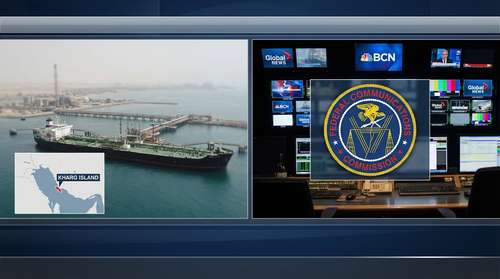
In a recent interview with NBC News, President Trump confirmed that U.S. Central Command had already "obliterated" multiple military targets on Kharg Island, a small landmass in the Persian Gulf that serves as the crown jewel of Iran's energy sector. While the initial strikes focused on air defense facilities and naval bases, leaving the energy infrastructure intact, Trump's subsequent rhetoric has placed the entire global energy market on edge.
Dismissing the prospect of a swift diplomatic resolution, Trump stated that the peace terms offered by Tehran "aren't good enough yet". More alarmingly, he casually warned that the U.S. military might bomb the island "a few more times just for fun".
Kharg Island is not a standard military outpost; it handles approximately 90% of Iran's crude oil shipments. A complete Middle East oil hub demolition would instantly trigger an unprecedented Iran oil export disruption. To mitigate the economic fallout of the conflict, Trump has publicly urged global allies, including Japan, France, and the U.K., to deploy warships to secure the Strait of Hormuz. Despite these efforts, Brent crude futures have already surged past $90 a barrel, reflecting severe market anxiety over the safety of the world's most critical oil transit route.
FCC News Broadcast Crackdown: Silencing the Press?
While U.S. bombers patrol the Persian Gulf, a different kind of battle is unfolding in the United States. Following critical reporting on the war's progress, the Trump administration has initiated a severe FCC news broadcast crackdown. The controversy ignited after Trump took to Truth Social to blast the "Fake News Media" over what he called misleading headlines regarding five U.S. Air Force refueling planes reportedly damaged in Saudi Arabia.
Within hours of the President's complaint, FCC Chair Brendan Carr echoed the sentiment, transforming a social media grievance into a formal regulatory threat. Carr warned that networks pushing what the administration deems "hoaxes and news distortions" will face severe consequences.
"Broadcasters that are running hoaxes and news distortions - also known as the fake news - have a chance now to correct course before their license renewals come up," Carr posted on X. He emphasized that stations failing to operate in the public interest will lose their broadcast licenses, a direct Presidential media hoaxes threat that has deeply unsettled the journalism community.
The First Amendment Under Fire
The FCC's aggressive posture represents a dramatic departure from decades of regulatory precedent. Historically, the agency's News Distortion Policy has been enforced with a light touch to avoid violating First Amendment protections. Legal scholars often refer to it as "regulation by drooping eyelid," requiring extraordinary evidence—such as internal memos proving deliberate falsification—before the government intervenes.
However, Carr's public ultimatum suggests the Trump administration is weaponizing the FCC to enforce favorable coverage of the war. Critics and civil liberties advocates argue that threatening to throttle news broadcasts over subjective interpretations of battlefield reporting is an authoritarian tactic designed to suppress legitimate scrutiny of military operations and their geopolitical consequences.
Navigating the Fallout at Home and Abroad
The dual crises of a looming Iran oil export disruption and an escalating war on the press underscore the high-stakes reality of the current administration's strategy. In the Persian Gulf, Iranian officials have vowed to "abandon all restraint" if the Kharg Island oil terminals are destroyed, threatening to target U.S.-linked energy facilities across neighboring Arab states like the UAE and Bahrain.
Meanwhile, inside the United States, major news organizations find themselves navigating a precarious landscape. They must continue to objectively report on a widening Middle Eastern war while fending off existential threats from their own government's regulatory agencies.
As the administration pushes the boundaries of executive power on both international and domestic fronts, the coming weeks will test the resilience of the global oil supply chain and the enduring strength of the American free press.