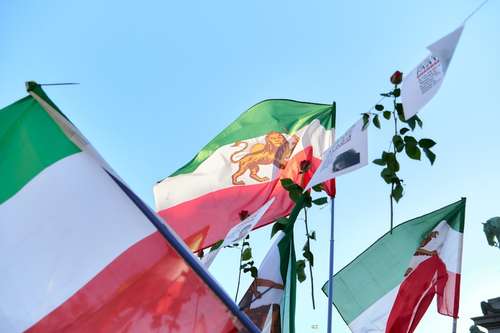
In a seismic escalation that has plunged the Middle East into uncharted territory, Ayatollah Ali Khamenei killed in a joint U.S.-Israeli military operation has been confirmed by the White House. Following the massive overnight airstrikes on Tehran, President Donald Trump addressed the Iranian people directly, urging them to seize the moment and overthrow the clerical regime that has ruled for nearly five decades. As sirens wail across Israel and Gulf capitals brace for retaliation, the death of Iran's Supreme Leader marks the most significant geopolitical event of the decade.
Operation Epic Fury: Decapitating the Regime
The operation, codenamed Operation Epic Fury by the Pentagon and Operation Roaring Lion by the IDF, was launched late Saturday night, targeting a fortified compound in central Tehran where intelligence indicated the Supreme Leader was meeting with top IRGC commanders. Israeli Prime Minister Benjamin Netanyahu was the first to break the silence, announcing in a televised address that the "tyrant of Tehran" had been eliminated.
President Trump confirmed the success of the mission shortly after, stating that U.S. forces provided critical logistical and intelligence support for the precision strikes. "Today, the world is a safer place," Trump declared from the Oval Office. "The man who exported terror and chaos for thirty-five years is gone. Justice has been delivered." Pentagon officials report that in addition to Khamenei, several high-ranking figures were neutralized, including IRGC Ground Forces Commander Mohammad Pakpour and Ali Shamkhani, a key security advisor.
The Technology Behind the Strike
Defense analysts suggest the operation utilized advanced bunker-busting munitions capable of penetrating deep underground facilities. This marks a significant escalation from the June 2025 strikes which targeted nuclear facilities at Natanz and Fordow. Unlike previous engagements limited to military infrastructure, this strike was explicitly designed to decapitate the regime's leadership structure.
Trump's Ultimatum: "Take Back Your Country"
In a dramatic shift in US foreign policy Iran, President Trump explicitly called for Trump Iran regime change in a video message released immediately after the strikes. Abandoning previous rhetoric about avoiding "endless wars," the President framed the airstrikes as a liberation opportunity for the Iranian populace.
"To the people of Iran: your tormentors are gone," Trump stated in the video, which was broadcast on social media platforms and satellite channels accessible in Iran. "The regime is crumbling. This is your moment. This will probably be your only chance for generations to take back your country and your future. The United States stands with you."
The State Department has echoed this message, signaling that Washington is prepared to support a transition government. Secretary of State Marco Rubio emphasized that the U.S. does not seek to occupy Iran but will not tolerate the continuity of the Islamic Republic's anti-American hostilities.
Tehran in Chaos: The Succession Crisis
The Iran Supreme Leader death has created an immediate and volatile power vacuum. While rumors had long circulated that Khamenei's son, Mojtaba Khamenei, was being groomed for succession, the sudden nature of the leader's death has thrown those plans into disarray. According to state-run IRNA news agency, a temporary three-person council has assumed executive leadership, comprising President Masoud Pezeshkian, Judiciary Chief Gholamhossein Mohseni Ejei, and a senior jurist.
Succession Scenarios:
- The Council Rule: The temporary council may attempt to hold power to prevent infighting, but lacks the religious authority of a Supreme Leader.
- Military Takeover: With the IRGC leadership decapitated but still powerful, surviving commanders may push for a military dictatorship under the guise of emergency rule.
- Civil Uprising: Encouraged by the U.S. and the shock of the strikes, anti-regime protests could erupt, challenging the weakened security apparatus.
Regional Retaliation and Global Fallout
The US Israel Iran conflict 2026 has already spilled beyond Iran's borders. In the hours following the announcement, remnants of the IRGC missile forces launched waves of ballistic missiles targeting Tel Aviv, as well as U.S. assets in Bahrain and the UAE. Air defense systems, including the Iron Dome and U.S. Patriot batteries, intercepted the majority of incoming fire, though debris has caused damage in civilian areas.
Global markets are reacting violently, with oil prices spiking on fears of a prolonged Middle East retaliation campaign closing the Strait of Hormuz. The White House has warned that any attempt to block international waterways will be met with "overwhelming force," further raising the stakes in a conflict that has now become an existential struggle for the Islamic Republic.