The highly anticipated 2026 FIFA World Cup final delivered on its massive expectations, capping off a historic month of spectacular soccer across North America. Following a grueling battle of attrition, La Roja are officially the Spain World Cup champions 2026, capturing their second star after defeating defending champions Argentina 1-0. Held on Sunday, July 19, the match pushed both exhausted squads to the absolute physical and mental limit. It ultimately took a dramatic 106th-minute breakthrough to finally separate the two global powerhouses, breaking Argentine hearts while sparking wild Spanish celebrations that echoed from New Jersey all the way to Madrid.
The MetLife Stadium World Cup Final Spectacle
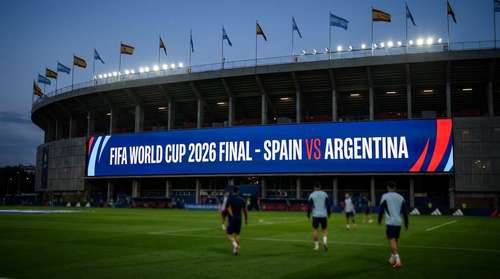
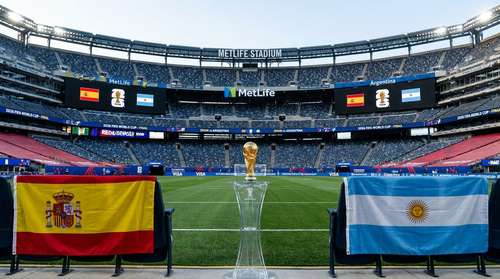
The MetLife Stadium World Cup final served as a fittingly grand conclusion to the biggest tournament in FIFA history. Hours before kickoff, a massive crowd of over 80,600 packed into the East Rutherford, New Jersey venue—temporarily rebranded as New York New Jersey Stadium for the competition. A-list celebrities, global dignitaries, and fiercely passionate fan bases transformed the massive arena into a vibrant, deafening mosaic of Spanish red and Argentine light blue.
To prepare for this specific match, engineers had painstakingly removed 1,740 modular seats from the stadium's lower bowl to accommodate FIFA's regulation pitch dimensions, ensuring the perfect stage for the sport's biggest prize. Spain entered the pitch aiming to reclaim the ultimate crown they last held in 2010, while Argentina looked to secure back-to-back titles and cement a modern international dynasty. From the opening whistle, however, it was abundantly clear that neither side was willing to concede an inch of space.
A Brutal Tactical Deadlock
Throughout regular time, the Spain vs Argentina final score remained stubbornly locked at 0-0 as both sides showcased absolute masterclasses in defensive organization. The Spanish midfield dictated the tempo and controlled possession, weaving their signature intricate passing networks to probe for weaknesses. Yet, they consistently hit a formidable brick wall against a resolute, highly disciplined Argentine backline.
Dynamic Spanish wingers, including the young sensation Lamine Yamal, attempted to stretch the field, but they were routinely neutralized by aggressive double-teams. Conversely, Argentina relied on rapid counter-attacks, looking to exploit the few gaps left by Spain's high defensive line. It was a chess match of the highest order, requiring immense focus and elite tactical awareness from every player on the pitch.
The Turning Point: A 10-Man Argentina
The momentum of the final shifted violently late in the second half when Argentina was unexpectedly reduced to 10 men. A reckless, late challenge resulted in a straight red card for Enzo Fernandez in the 93rd minute, instantly forcing the reigning champions to abandon their offensive ambitions, bunker down, and defend for their tournament lives. Despite the severe numerical disadvantage, the South American squad displayed extraordinary grit and resilience. They clogged the passing lanes and relied on crucial, acrobatic saves from their goalkeeper to drag the match into extra time through pure, unyielding determination.
A Ferran Torres Extra Time Goal For The Ages
Just when a nerve-wracking penalty shootout felt like an inevitability, a singular moment of brilliance ultimately determined the tournament. The Ferran Torres extra time goal in the 106th minute will immediately be etched into Spanish football folklore, right alongside Andrés Iniesta's iconic 2010 winner.
Coming off the bench as a strategic impact substitute, Torres found a rare pocket of space on the right flank immediately following the brief extra-time intermission. Receiving a perfectly weighted, splitting through-ball that bypassed two diving Argentine defenders, the attacker took one decisive touch into the penalty box. Without hesitation, he drove a low, thunderous strike directly into the bottom far corner of the net. The stadium erupted into absolute pandemonium as the heroic 10-man Argentine squad finally cracked under the immense, relentless pressure. Exhausted but visibly elated, the Spanish defense expertly locked down the remaining 14 minutes to secure the historic victory.
Lionel Messi World Cup 2026: A Bittersweet Farewell
The gut-wrenching defeat marks a heartbreaking conclusion to the Lionel Messi World Cup 2026 narrative. At 39 years old, the legendary forward carried the emotional weight of his nation one last time, orchestrating attacks and displaying flashes of his trademark genius throughout the grueling tournament. While Argentina fell agonizingly short of defending their coveted 2022 title in Qatar, Messi’s commanding presence on the pitch during this unprecedented 48-team competition reaffirmed his unquestioned status as one of the sport's eternal icons. As the final whistle blew, he was met with a standing ovation from both sets of supporters—a fitting tribute to a generational talent.
The Legacy of North America's Record-Breaking Tournament
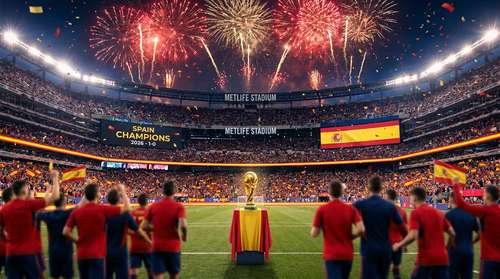
As Spain proudly lifted the iconic 18-karat gold trophy under the New Jersey sky, it marked the official end of the largest World Cup tournament ever staged. Expanding across 16 host cities in the United States, Canada, and Mexico, the massive 104-match format tested the endurance, logistical capabilities, and roster depth of every participating national team.
For Spain, navigating this physically demanding, month-long marathon to officially become the Spain World Cup champions 2026 proves the profound depth of their current generation. Blending seasoned veterans with dynamic, fearless young talent, La Roja has firmly reestablished itself at the absolute pinnacle of international football. As the celebratory confetti settles on the pitch, one thing remains absolutely certain: the 2026 FIFA World Cup will be remembered for its unprecedented sheer scale, its dramatic finale, and a remarkably resilient Spanish squad that simply refused to be denied.