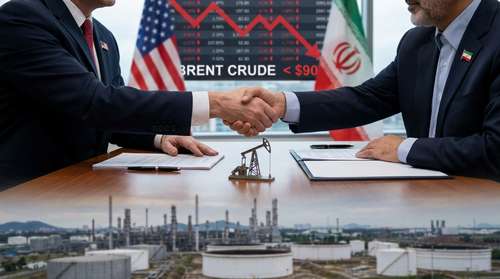
Global financial markets experienced a violent jolt this week following the sudden collapse of a fragile Middle East truce. During a tense NATO summit in Ankara, President Donald Trump officially declared the US Iran ceasefire over, triggering a domino effect across global energy and financial sectors. The breakdown in diplomatic relations immediately unleashed a fresh wave of American military strikes in a critical maritime chokepoint. With international benchmark Brent crude surging near 8% to top $80 a barrel, and Wall Street indices flashing red, the economic fallout is rapidly taking shape.
Trump Iran Strikes: Markets React to Renewed Hostilities
President Trump caught European allies off guard on Wednesday when he used a joint press appearance with NATO Secretary General Mark Rutte to declare the 60-day memorandum of understanding dead. Citing recent aggressive maneuvers against commercial vessels, Trump stated flatly, "As far as I'm concerned, it's over," while unleashing a harsh verbal broadside against Tehran's leadership. Curiously, while returning to the United States on Air Force One, the President offered mixed signals, claiming Iranian officials had called and wanted to make a deal "badly," though he openly questioned whether they could be trusted to honor any new agreement.
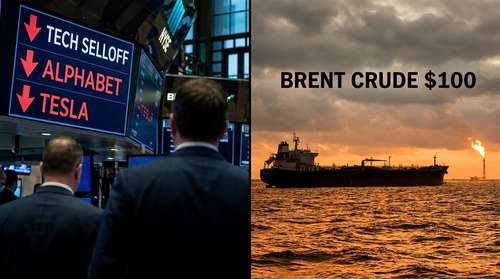
In direct response to the escalating threats, the Pentagon confirmed it executed retaliatory strikes against more than 80 Iranian military targets overnight. The sudden pivot back to military confrontation triggered an immediate stock market reaction to the Iran war. The Dow Jones Industrial Average dropped roughly 1% at the opening bell, while the tech-heavy NASDAQ fell by about half a percent. Across the Atlantic, the UK's FTSE 100 suffered its steepest one-day decline since May, plummeting nearly 1.7% as investors sought safe-haven assets and government bond yields spiked. The broader Trump Iran strikes markets fallout highlights the extreme sensitivity of global equities to Middle Eastern stability.
The Strait of Hormuz Shipping Crisis Deepens
At the geographic center of this geopolitical storm is the Strait of Hormuz, a narrow maritime bottleneck that historically accommodates roughly 20% of global crude oil and liquefied natural gas shipments. The current phase of the conflict ignited when Iranian forces allegedly targeted three fossil fuel tankers, breaching the terms of the temporary ceasefire established in mid-June.
This renewed Strait of Hormuz shipping crisis has effectively paralyzed transit through the Persian Gulf. Commercial shippers face an impossible choice: risk catastrophic damage to their vessels and crews, or halt operations entirely. Maritime security experts at the Council on Foreign Relations warn that reopening the waterway and clearing it of potential hazards could take months, heavily delaying a genuine recovery for global energy markets even if a permanent diplomatic resolution is reached. Furthermore, the White House has officially revoked a temporary sanctions waiver that previously allowed Tehran to export limited quantities of oil, adding another layer of complexity to regional trade.
Oil Prices Spike July 2026: Brent Crude Tops $80
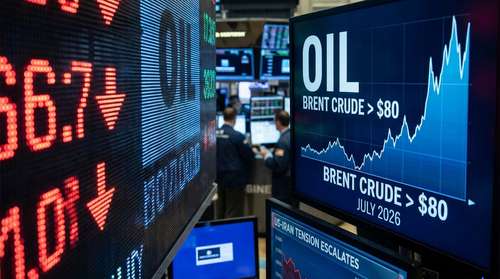
The immediate casualty of the collapsed truce was energy market stability. When the geopolitical risk premium was suddenly priced back into the trading desks, analysts witnessed the sharpest single-day energy rally in nearly two months. This dramatic oil prices spike July 2026 has completely reversed the brief relief consumers experienced just weeks prior when the ceasefire was first announced.
Following the White House's declarations and the overnight military operations, international benchmark Brent crude over 80 dollars a barrel became a reality, jumping almost 8% in a matter of hours. The American benchmark, West Texas Intermediate (WTI), mirrored this aggressive trajectory by climbing more than 7% to hover around $75 a barrel. Energy analysts are now warning that if transit through the Strait remains paralyzed, national averages for retail gasoline will likely reverse their recent declines, placing renewed strain on consumer wallets during the peak summer travel season.
IMF Global Growth Downgrade 2026 Amid Energy Shock
The rippling effects of the prolonged Middle East conflict have forced major financial institutions to rapidly revise their macroeconomic outlooks. On Wednesday, the International Monetary Fund issued a highly anticipated IMF global growth downgrade 2026, lowering its worldwide economic expansion forecast to a sluggish 3.0%, down from the 3.1% projected in April.
IMF officials directly cited the energy shock triggered by the ongoing naval blockade and the resulting supply chain disruptions as the primary headwind. The organization also raised its 2026 global headline inflation projection to 4.7%, a stark increase signaling that the fight to normalize consumer prices has stalled dramatically.
However, the economic damage could have been far worse. According to the IMF's research department, an unprecedented boom in artificial intelligence investments and accelerated technology sector momentum have partially shielded the global economy from a steeper downturn. While energy-importing nations face severe cost pressures, countries embedded deeply in the AI supply chain are experiencing enough localized growth to keep the broader global economy afloat.
Looking Ahead: A Precarious Economic Balance
As diplomatic channels remain strained and military postures harden, the intersection of geopolitics and global commerce has rarely looked more fragile. Whether the current administration can leverage this maximum-pressure strategy into a sustainable peace agreement remains highly uncertain. For now, consumers, logistics companies, and investors alike are bracing for prolonged volatility, tightly bound to the daily developments in the Persian Gulf.