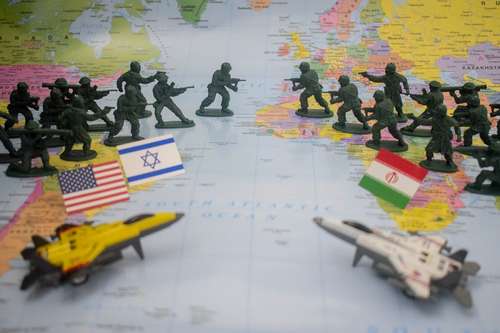
After 39 days of unprecedented military conflict, a fragile US-Iran ceasefire 2026 has officially taken effect, halting what many feared would become a devastating regional war. President Donald Trump has proclaimed the agreement a 'historic victory' following an 11th-hour diplomatic intervention. The two-week truce, heavily mediated by international partners, has paved the way for the critical Strait of Hormuz reopening, easing immediate fears of a global energy crisis. However, as the dust settles on the immediate military exchanges between the United States, Israel, and Iran, questions remain about whether this temporary pause can evolve into a lasting resolution.
An 11th-Hour Diplomatic Breakthrough
The path to the ceasefire was fraught with tension and brinkmanship. Just hours before a strict 8:00 p.m. Eastern deadline set by the White House, the Middle East was bracing for a massive escalation. President Trump had issued a severe ultimatum, warning of overwhelming, destructive force against Iranian power plants and civilian infrastructure if Tehran did not immediately capitulate. American bombers were reportedly already airborne.
In a dramatic turn of events, a Pakistan brokered ceasefire managed to bridge the immediate diplomatic gap. Pakistani Prime Minister Shehbaz Sharif, working frantically behind the scenes with quiet but vital backing from China, secured temporary concessions from both Washington and Tehran. While the two nations have vastly different interpretations of the terms—with the US pushing a comprehensive 15-point plan and Iran insisting on its own 10-point proposal—the immediate result is a cessation of direct military strikes. President Trump praised the development, suggesting it provides a highly workable foundation for a broader Middle East peace deal.
The Strait of Hormuz Reopening and Economic Relief
Perhaps the most vital global consequence of this truce is the immediate Strait of Hormuz reopening. As an essential artery for global energy transit, the strait's closure during the 39-day conflict sent shockwaves through international markets. By choking off nearly 20 percent of the world's oil supply, the blockade placed immense upward pressure on global oil prices.
Following the announcement of the ceasefire, international markets reacted with profound relief. Global oil price benchmarks plummeted by up to 13 percent overnight, reflecting sudden market confidence in the resumption of safe maritime transit. Nevertheless, this economic relief remains precarious. Iranian officials have stated they will maintain technical control over the passageway, and brief skirmishes prompted the White House to aggressively demand that the waterway remain entirely unobstructed for international shipping.
Domestic Politics and the 2026 Midterm Elections
The timing and execution of this ceasefire represent a defining moment for Donald Trump foreign policy. Domestically, the administration is heavily invested in framing this negotiated pause as a definitive triumph. White House Press Secretary Karoline Leavitt emphasized that the President's 'maximum leverage' strategy successfully forced Tehran to the negotiating table.
However, independent analysts point to domestic political pressures driving the rapid de-escalation. With the 2026 midterm elections fast approaching, the Republican party faced significant electoral risks associated with a prolonged overseas conflict and soaring gas prices. A long-term disruption in the Persian Gulf could have severely damaged the American economy, making a swift, decisive exit politically necessary. By securing a pause in fighting and lowering fuel costs, the administration hopes to present a narrative of unyielding strength and economic stability to American voters later this year.
A Fragile Truce: Lebanon and Ongoing Tensions
Despite the optimistic rhetoric in Washington, the underlying reality of the US-Iran ceasefire 2026 is highly volatile. The most significant crack in the agreement centers on Israel's ongoing military operations. Shortly after the two-week truce was announced, Israel launched a series of intense airstrikes against Hezbollah targets in Lebanon. Israeli Prime Minister Benjamin Netanyahu publicly supported the US-Iran deal but insisted that military actions in Lebanon were entirely excluded from the agreement.
Differing Interpretations Threaten the Peace
This exclusion has infuriated Tehran. Iranian parliament speaker Mohammad Baqer Ghalibaf accused the US and Israel of violating the foundation of the ceasefire, arguing that the Pakistani-mediated terms demanded an immediate halt to hostilities 'everywhere,' explicitly including Lebanon. Vice President JD Vance quickly countered, stating that any belief that Lebanon was included in the pause was a 'legitimate misunderstanding' by Iran and that the United States never made such a promise.
As diplomatic delegations prepare for formal talks in Islamabad, the international community watches anxiously. The temporary halt in bombings has provided a crucial window for de-escalation, but with heavily armed factions still mobilized and fundamental disagreements entirely unresolved, the path to a lasting regional settlement remains perilous.