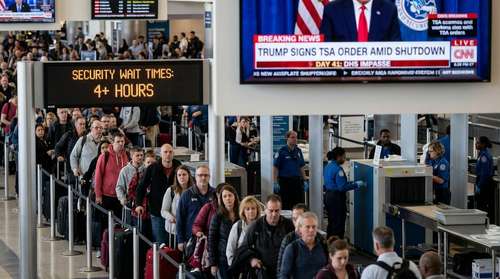
As the 41-day Department of Homeland Security funding lapse stretches into late March, President Donald Trump has announced unprecedented unilateral action to compensate essential workers. Facing a deepening crisis at the nation's transportation hubs, a highly anticipated Trump TSA executive order aims to immediately restore pay for 50,000 airport security personnel. The move comes as the DHS shutdown 2026 paralyzes terminals nationwide, stranding Spring Break travelers and igniting fierce legal debates over executive authority.
Record Airport Security Wait Times Prompt Emergency Declaration
The operational toll of the standoff has reached a breaking point. With screeners missing their second full paycheck, daily absentee rates have surged past 40 percent at major hubs like Atlanta, Houston, and Denver. Consequently, airport security wait times have ballooned to over four and a half hours during peak morning windows.
During sworn congressional testimony on Wednesday, Acting TSA Administrator Ha Nguyen McNeill painted a grim picture for lawmakers. McNeill confirmed that nearly 500 officers have formally resigned since the shutdown began on February 14. Even more alarming, physical assaults on the remaining screeners have spiked by more than 500 percent.
Morale among the screener workforce has collapsed entirely. According to union representatives, the financial strain has forced some essential personnel to sleep in airport parking garages to save on fuel costs, while others are donating plasma or taking overnight rideshare shifts just to afford basic groceries. The broader economic fallout is equally severe, with the U.S. Chamber of Commerce estimating that rebooking fees and missed connections have cost American businesses roughly $138 million in lost productivity this week alone.
Inside the Controversial Executive Action
To stop the bleeding, Trump took to Truth Social on Thursday night, declaring the travel chaos an Emergency Situation. He outlined plans to direct newly sworn-in Homeland Security Secretary Markwayne Mullin to release funds to the embattled workforce without congressional approval. Administration officials suggest the White House may siphon unspent funds from last summer's One Big Beautiful Bill Act, or invoke the National Emergency Act to reallocate capital.
Legal scholars are already sounding the alarm over the directive. Bypassing the legislative branch to fund a federal agency triggers a major power of the purse constitutional crisis. The U.S. Constitution strictly reserves the power of appropriation for Congress, meaning this unilateral maneuver will almost certainly face immediate court challenges. Yet, for frontline workers facing eviction notices and skipped meals, the legal mechanics take a backseat to financial survival.
The Senate Funding Impasse and the Fight Over ICE
The root of the crisis remains deeply entrenched in partisan warfare. The ongoing Senate funding impasse hinges almost entirely on the administration's aggressive deportation operations. Democrats have refused to advance any budget measures without strict guardrails on ICE enforcement funding, demanding federal agents wear identification, limit operations near sensitive locations, and face closer oversight.
The John Thune DHS Deal Stalls in the Senate
In a desperate attempt to break the gridlock before a scheduled recess, Senate Majority Leader John Thune presented what he dubbed a last and final offer to his Democratic counterparts. The proposed John Thune DHS deal would have temporarily separated ICE funding from the broader homeland security package, keeping the department afloat while sidelining the fiercest partisan battle for a later reconciliation bill.
However, the compromise failed to clear a procedural hurdle late Thursday, dying in a 53-47 vote. Senator John Fetterman stood as the sole Democrat willing to advance the standalone Republican proposal, highlighting the fractured nature of the negotiations. While Thune attempted to navigate the chamber, Trump actively urged Republicans to hold the line, demanding they link DHS funding to the SAVE America Act, an election bill that Democrats universally reject.
What This Means for Spring Break Travelers
Until a permanent funding solution materializes, or the courts validate the president's emergency pay order, passengers will bear the brunt of the disruption. Aviation authorities are strongly advising travelers to arrive at least three to four hours prior to domestic departures.
In a controversial stopgap measure, the administration has deployed armed Immigration and Customs Enforcement personnel to assist at 14 major airports. While these agents can handle identification checks and manage queue logistics, they lack the specialized certification to operate X-ray scanners. Travelers should prepare for heightened security postures, highly variable processing speeds, and widespread gate delays as the federal government grapples with one of the most consequential budgetary standoffs in modern history.