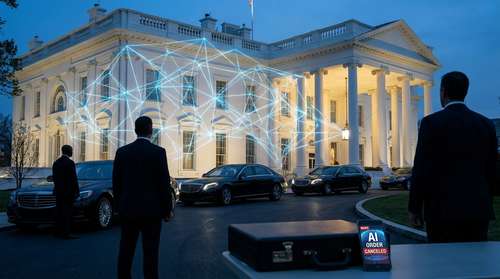
President Donald Trump abruptly canceled a highly anticipated Trump AI Executive Order just hours before its scheduled Oval Office signing on Thursday, effectively abandoning a landmark push for federal oversight of advanced artificial intelligence. The last-minute reversal followed intense pressure from tech titans, including xAI founder Elon Musk, Meta CEO Mark Zuckerberg, and former White House AI and crypto czar David Sacks. By shelving the proposed framework, the administration is steering the industry back toward a self-regulatory model, signaling a broader era of tech deregulation in 2026.
Silicon Valley Lobbying Halts Federal Oversight
The sudden policy pivot illustrates the immense sway of a faction often referred to as "accelerationists" within the technology sector. Throughout Wednesday night and into Thursday morning, Musk, Zuckerberg, and Sacks reportedly made direct appeals to the president. They warned that the proposed AI safety standards, though technically labeled as voluntary, would quickly morph into a de facto government licensing regime.
Such a framework, these industry leaders argued, would paralyze innovation and critically hamstring American developers. For Musk and Zuckerberg, who have historically held conflicting views on broader tech issues, their united front highlights a growing consensus among top executives against preemptive government interference. Their eleventh-hour intervention struck a chord with administration officials who favor aggressive technological expansion over precautionary guardrails. This aggressive Silicon Valley lobbying effectively short-circuited weeks of internal policy debates.
What the Scrapped Regulatory Order Would Have Accomplished
Before the pens were put away and the tech executives' invitations were revoked, the administration had spent weeks crafting a policy designed to address emerging cybersecurity threats. The scrapped directive would have required developers of advanced, or "frontier," models to provide the federal government with a 90-day voluntary review window before releasing their products to the public.
This mechanism was intended to allow infrastructure operators and intelligence agencies to scan new software systems for critical vulnerabilities. The urgency behind the order escalated dramatically in April 2026 following the release of Anthropic's highly capable "Mythos" model, which reportedly excelled at identifying software flaws. While safety advocates celebrated the draft order as a lightweight but necessary step toward establishing responsible oversight, critics framed it as "doomer regulation". The successful pushback from tech leaders demonstrates their fear that a 90-day hold would slow iterative software updates and jeopardize the breakneck pace of modern machine learning development.
Internal Turf Wars Over AI Safety Standards
The path to Thursday's planned signing ceremony was fraught with internal conflict. National security aides and Commerce Department officials were locked in what insiders described as a bureaucratic turf war over which agency would have primary oversight of the new technologies. Sacks, leveraging his recent experience as the administration's AI czar, capitalized on this internal friction. He argued forcefully that even a voluntary framework would invite mission creep, eventually allowing future administrations to weaponize the protocols against tech firms.
The US AI Race With China Dictates Policy
Speaking to reporters at the White House shortly after the cancellation, President Trump explicitly cited global competitiveness as the driving force behind his decision. "I didn't like certain aspects of it," he noted, referring to the draft document. "We're leading China, we're leading everybody, and I don't want to do anything that's going to get in the way of that lead".
The remark underscores how the overarching narrative of the US AI race against China is actively shaping the landscape. Chinese law currently requires that AI models be approved by state regulators before they launch. By contrast, the US administration's abrupt policy shift solidifies a radically different approach: prioritizing speed and market dominance over federal security vetting. With the executive order dead in the water, companies will continue to operate under a predominantly self-regulatory framework, relying on their internal red-teaming processes to catch vulnerabilities before deployment.
Shifting Dynamics in Tech Policy and Regulation
The successful lobbying effort marks a significant milestone in Mark Zuckerberg tech policy and Elon Musk AI regulation strategies. Historically, both executives have occasionally paid lip service to the idea of a government "referee" in the tech space. However, as the capabilities of multi-billion-parameter models have surged, so too has the financial incentive to bring them to market without bureaucratic delays. Their direct veto power over federal policy underscores a profound reality: in the current landscape, the private sector holds the reins on how artificial intelligence will integrate into society.
The demise of this executive order deals a significant blow to safety advocates and national security officials who spent weeks locked in internal debates over how best to manage these transformative systems. As developers race to build the next generation of frontier models, the responsibility for ensuring these powerful systems remain safe and secure now falls squarely back onto the shoulders of the very executives who successfully lobbied to keep the government out.