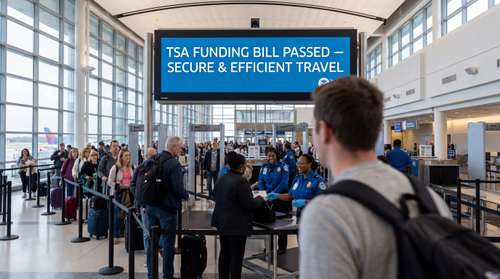
In the most critical TSA funding update 2026 has seen so far, the U.S. Senate unanimously approved an emergency relief package early Friday morning. The legislation aims to end a grueling 42-day partial Department of Homeland Security (DHS) shutdown that has thrown aviation hubs into absolute turmoil. With millions of passengers facing historic bottlenecks, this breakthrough offers a glimmer of hope for travelers caught in the crossfire of political gridlock.
For the past six weeks, the government shutdown travel impact has steadily worsened, culminating in a nationwide aviation crisis. As lawmakers race against the clock to stabilize the system, this legislative maneuver represents the first significant step toward fully reopening the affected federal agencies.
Senate DHS Funding Bill Breaks the Legislative Logjam
In a late-night session that stretched past 2 a.m. on Friday, March 27, lawmakers pushed through the Senate DHS funding bill via unanimous consent. This carefully negotiated legislation restores operational budgets for the Transportation Security Administration, the Coast Guard, the Cybersecurity and Infrastructure Security Agency (CISA), and the Federal Emergency Management Agency (FEMA).
Notably, the Senate's measure excludes funding for Immigration and Customs Enforcement (ICE) and portions of Customs and Border Protection (CBP). This exclusion was a firm demand from Democrats, who refused to fund those specific enforcement divisions without new oversight provisions. Because ICE was previously funded through a different sweeping policy bill, its operations have remained largely insulated from the current lapse.
While the upper chamber has found rare common ground, the battle now shifts to the House of Representatives. Conservative leaders, including Speaker Mike Johnson, have voiced strong opposition to the Senate's compromise, calling it unacceptable to leave key border agencies out of the continuing resolution. The coming days will determine if the lower chamber will adopt the Senate's blueprint or counter with a stopgap measure of their own.
The Severe TSA Agent Pay Crisis Fueling the Chaos
The core of this aviation meltdown stems directly from an escalating TSA agent pay crisis. Frontline security personnel have missed multiple paychecks since mid-February, accumulating an estimated $1 billion in lost wages nationwide. The severe financial strain has forced the hands of many dedicated workers.
According to recent DHS disclosures, nearly 500 officers have quit the agency entirely to seek reliable income elsewhere. Meanwhile, those attempting to hold the line are struggling to commute without pay. The resulting airport staffing shortages are staggering. On Wednesday alone, the DHS reported over 3,120 unscheduled absences—meaning more than 11% of the nationwide TSA workforce called out of their shifts.
Recognizing the dire human and economic toll, Donald Trump announced late Thursday that he would sign an emergency executive order to provide immediate backpay to TSA agents. This extraordinary measure repurposes existing federal funds to alleviate the immediate financial pressure on struggling families while Congress continues to debate the broader funding package.
Unprecedented Airport Security Wait Times
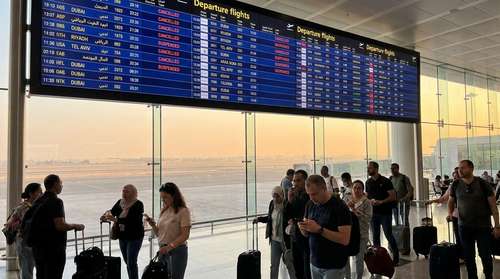
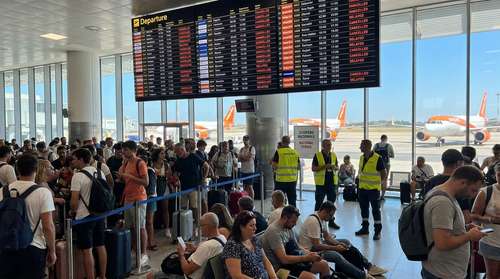
For passengers on the ground, the reality has been an absolute nightmare. Severe airport security wait times have stretched past the three-hour mark at major hubs like George Bush Intercontinental Airport in Houston and LaGuardia Airport in New York. Frustrated travelers have flooded social media with images of screening lines snaking through terminals, down escalators, and out the automatic doors.
The combination of unfunded, understaffed checkpoints and massive passenger volumes has created the perfect storm for spring break travel delays. Because fewer agents are available to operate the advanced imaging technology and baggage scanners, airport authorities have been forced to close entire security lanes during peak departure windows.
Airlines Demand Action to Stop Spring Break Travel Delays
The government shutdown travel impact extends far beyond individual passenger frustration; it is actively threatening the broader hospitality and tourism economy. Recognizing the looming threat, a powerful coalition of major airline CEOs—including top executives from Delta, American, Southwest, and JetBlue—recently published an open letter imploring Congress to intervene.
Industry leaders are demanding that lawmakers stop using the aviation system as leverage in unrelated political disputes. With peak vacation weeks in full swing and major international sporting events on the horizon, airlines warn that systemic airport staffing shortages will lead to widespread missed connections, grounded flights, and massive revenue losses.
Former New Hampshire Governor Chris Sununu, now the CEO of the trade group Airlines for America, praised the emergency executive action to pay workers. However, he cautioned that even with immediate intervention, processing payroll takes time, and travelers will continue to feel the squeeze through the weekend.
What This TSA Funding Update 2026 Means for You
If you are heading to the airport in the coming days, prepare for lingering friction. While the latest TSA funding update 2026 development is a massive step in the right direction, fully resolving the TSA agent pay crisis and returning schedules to normal will take several days.
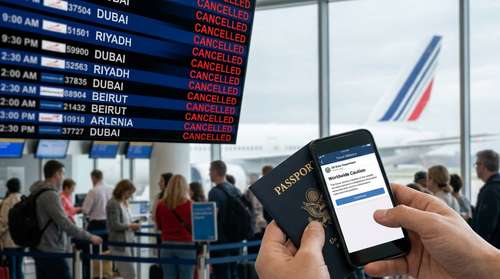
To navigate the ongoing spring break travel delays, experts recommend arriving at least three to four hours early for domestic flights. Additionally, check your airline's mobile app for real-time alerts regarding gate changes or consolidated security checkpoints.
The immediate passage of the Senate DHS funding bill provides a tangible blueprint for recovery. Yet, the ultimate resolution rests on swift, bipartisan cooperation in the House. Until the political dust settles, passengers should pack an extra dose of patience alongside their vacation gear.