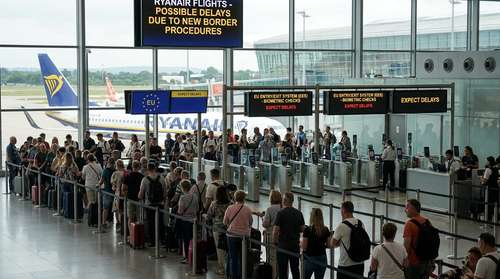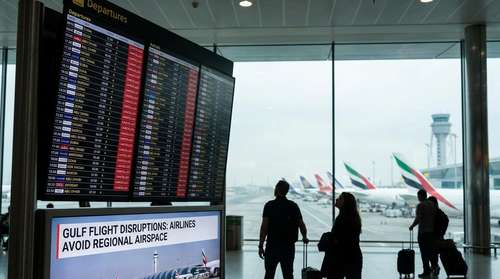
Global tourism has officially entered a new era of prosperity, shattering pre-pandemic records to reach an all-time high in traveler numbers. The UN Tourism Barometer 2026, released today by the specialized agency of the United Nations, confirms that international tourist arrivals 2025 surged to 1.52 billion worldwide. This milestone represents a robust 4% increase over 2024, signaling that the sector has not only fully recovered but is now charting a trajectory of sustained growth. With global tourism recovery statistics painting a picture of resilience, the industry generated an estimated $1.9 trillion in export receipts, underlining its pivotal role in the world economy.
A Historic Milestone: Breaking the Pre-Pandemic Ceiling
For the first time since the onset of the global health crisis, international tourism has decisively surpassed the benchmarks set in 2019. The latest data from the UN Tourism body indicates that the 1.52 billion overnight visitors recorded in 2025 eclipse the previous high of 1.46 billion seen in 2019. This achievement marks the conclusion of a tumultuous five-year recovery period and the beginning of a new growth cycle.
"This record-breaking performance demonstrates the enduring power of travel and the resilience of the tourism sector," stated UN Tourism Secretary-General Zurab Pololikashvili in a press briefing from Madrid. The report highlights that while pent-up demand drove the initial rebound in 2023 and 2024, the growth witnessed in 2025 was fueled by stabilized travel patterns, improved air connectivity, and the reopening of the last remaining Asian markets.
Regional Performance: Europe Leads, Asia Accelerates
The world tourism revenue report reveals a landscape of uneven but promising growth across different continents. Europe continued to assert its dominance as the world's most visited region, welcoming 793 million international tourists—a 4% increase from the previous year. The region's appeal remains undiminished, bolstered by a strong US dollar encouraging American visitors and a resurgence in intra-European travel.
Meanwhile, the Asia-Pacific region, which had been slower to recover due to prolonged restrictions, emerged as a key driver of growth in 2025. Arrivals in the region climbed to 331 million, reaching 91% of pre-pandemic levels. This rapid acceleration, marking a 6% jump from 2024, suggests that international travel trends 2026 will likely be defined by the complete return of the Asian market to the global stage.
The Middle East continued its exceptional performance, maintaining its status as the only region to have exceeded 2019 levels for consecutive years. Africa also posted strong results with an 8% rise in arrivals, driven by popular destinations like Morocco, Egypt, and Tanzania.
Economic Impact: Receipts Hit $1.9 Trillion
Beyond visitor numbers, the economic footprint of the sector has expanded significantly. The UN Tourism report estimates that international tourism receipts reached a staggering $1.9 trillion in 2025. When including passenger transport, total export revenues from tourism climbed to nearly $2.2 trillion. This influx of capital has been a lifeline for many developing economies, where tourism accounts for a substantial portion of GDP and employment.
Travel Industry Growth 2026: Outlook and Challenges
Looking ahead, the forecast for travel industry growth 2026 remains cautiously optimistic. The UN Tourism panel of experts predicts a "normalization" of growth rates, expecting international arrivals to increase by a further 3% to 4% in 2026. This stabilizes the frantic post-pandemic rebound into a more sustainable long-term trajectory.
However, the path forward is not without hurdles. The report identifies several headwinds that could impact tourism industry news in the coming months:
- Rising Costs: High inflation in tourism services, particularly accommodation and transport, remains a primary concern for travelers.
- Geopolitical Tensions: Ongoing conflicts and trade disparities pose downside risks to consumer confidence.
- Climate Impact: Extreme weather events are increasingly influencing destination choices and seasonality.
Despite these challenges, early indicators for 2026 suggest robust demand. Advance booking data for the first quarter shows strong momentum, particularly for long-haul travel.
The Future of Global Mobility
As the industry pivots from recovery to expansion, sustainability has moved to the forefront of the agenda. The record 1.52 billion arrivals bring into sharp focus the need for effective destination management to combat overtourism and ensure that the benefits of travel are shared equitably.
"We are no longer talking about recovery; we are talking about transformation," the UN Tourism report concludes. With international tourist arrivals 2025 setting a new global standard, the focus for 2026 and beyond will be on quality, sustainability, and inclusivity. As the world reconnected in 2025, the challenge now lies in ensuring that this growth supports both planetary health and local communities.