A seismic disruption has hit global aviation as military strikes involving the U.S., Israel, and Iran triggered the immediate closure of critical airspace across the Middle East. As of Sunday, March 1, 2026, major transit hubs in the UAE, Qatar, and Jordan have been brought to a standstill, leaving hundreds of thousands of passengers stranded. With flight cancellations March 2026 reaching unprecedented levels, travelers are facing a chaotic start to the spring travel season.
Middle East Airspace Closure: The Eye of the Storm
The escalation of the US Israel Iran conflict travel impact has been swift and severe. Following joint military strikes on Saturday, February 28, aviation authorities in the region moved quickly to shut down airspace to civilian traffic. The skies over Iran, Iraq, Jordan, and Israel are largely empty, creating a massive "no-fly zone" that effectively severs the primary air corridor connecting Europe and North America with Asia.
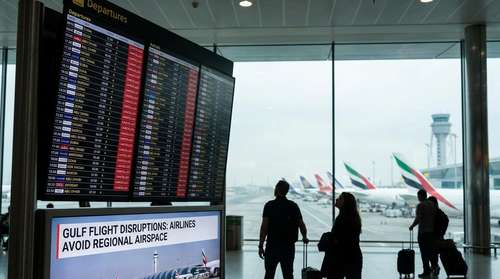
The Middle East airspace closure has forced airlines to scramble for alternative routes, but the sheer scale of the restricted zones has made rerouting nearly impossible for many long-haul flights. The United Arab Emirates and Qatar—home to two of the world's busiest international transit hubs—have seen their operations severely curtailed. Authorities have cited safety as the top priority, refusing to clear flights until the security situation stabilizes.
Etihad Flight Status Abu Dhabi and Dubai Grounded
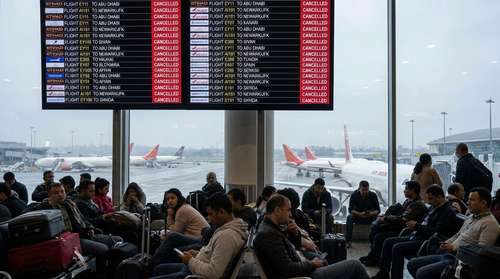
Travelers connecting through the UAE are bearing the brunt of these disruptions. Etihad Airways, the national carrier of the UAE, announced a total suspension of departures from its hub at Zayed International Airport. The latest Etihad flight status Abu Dhabi update confirms that all departures are suspended until at least 2:00 PM local time on March 1, 2026.
Passengers scheduled to arrive in Abu Dhabi before this deadline have seen their flights canceled outright, preventing aircraft from being stranded on the ground. Similarly, Dubai-based Emirates has suspended operations, leaving thousands of transit passengers stuck in airport terminals. Reports from the ground describe chaotic scenes at duty-free zones and departure gates, as stranded travelers Middle East struggle to find accommodation or rebooking options amidst the confusion.
Key Hubs Affected
- Abu Dhabi (AUH): Departures suspended; inbound flights canceled.
- Dubai (DXB): Massive cancellations; transit operations halted.
- Doha (DOH): Qatar Airways suspends flights as Qatari airspace closes.
- Amman (AMM): Flights diverted or canceled due to Jordanian airspace restrictions.
Air India Newark JFK Cancellations and US Routes
The ripple effect of the conflict is being felt keenly in the United States, particularly for travelers heading to India. Air India has been forced to cancel dozens of flights that typically overfly the conflict zone. Specifically, Air India Newark JFK cancellations have disrupted plans for thousands of the Indian diaspora.
High-traffic flights such as AI101 (Delhi to JFK) and AI191 (Mumbai to Newark) scheduled for March 1 have been axed. Without the ability to fly over Iran or Afghanistan safely, these ultra-long-haul routes become operationally unviable for many aircraft types. Travelers holding tickets for these sectors are advised not to proceed to the airport. The airline has stated they are monitoring the situation, but with the conflict evolving rapidly, a clear timeline for resumption remains uncertain.
International Travel Disruption News: A Global Domino Effect
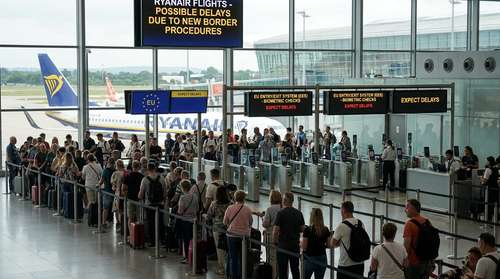
This is not just a regional issue; it is a global aviation crisis. European carriers including Lufthansa, British Airways, and Air France have suspended flights to Tel Aviv, Beirut, and Tehran, while also rerouting flights to Asia to avoid the entire Arabian Peninsula. This adds hours to flight times and requires technical fuel stops, causing further delays.
Breaking international travel disruption news indicates that flights from Australia to Europe, which often rely on the "Kangaroo Route" through the Middle East, are also diverting or returning to base. Qantas and Singapore Airlines are currently assessing alternative flight paths, potentially routing flights via Sri Lanka or avoiding the region entirely by flying westward across the Pacific, a move that would drastically alter schedules.
What Stranded Travelers Need to Know
For those currently caught in this geopolitical crossfire, the situation is fluid. If you are one of the stranded travelers Middle East airports are currently hosting, airline staff are overwhelmed. The most effective way to manage your booking is often through airline mobile apps or by contacting support centers located in time zones less affected by the crisis.
If you have upcoming travel booked through a Middle Eastern hub or on a route that traverses the region, assume your flight is affected. Check your flight status directly with the airline before leaving home. Travel insurance providers are already seeing a surge in claims; check your policy for "civil unrest" or "airspace closure" clauses, as standard trip delay coverage may not apply to acts of war.