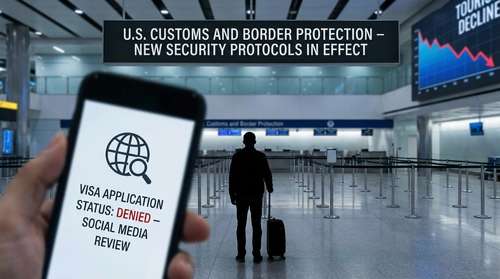
The United States tourism sector is facing a potential economic catastrophe, with the World Travel & Tourism Council (WTTC) issuing a stark warning this week that new, stricter entry requirements could cost the U.S. economy up to $21.5 billion in 2026. The alert comes just days after the Department of Homeland Security proposed sweeping changes to the Electronic System for Travel Authorization (ESTA), mandating five-year social media history audits for millions of international visitors. Industry leaders fear these aggressive vetting protocols will trigger a massive US tourism loss in 2026, reversing years of post-pandemic recovery.
WTTC Travel Warning: A $21.5 Billion Blow to the Economy
In a report released Wednesday, the WTTC outlined a "high-impact" scenario where the new US travel security protocols could deter approximately 4.7 million international visitors from entering the country this year. This represents a staggering 23.7% decline in arrivals from Visa Waiver Program (VWP) nations—including key markets like the United Kingdom, Germany, France, and Japan.
According to the Council's economic modeling, this drop in visitation would result in a direct loss of $15.7 billion in international visitor spending. When factoring in the broader supply chain and indirect economic effects, the total hit to the U.S. GDP is projected to reach $21.5 billion. Perhaps most alarming for American workers is the forecasted impact on employment; the WTTC estimates that up to 157,000 U.S. jobs could be wiped out if the decline in travel demand materializes as predicted.
ESTA Social Media Check 2026: The New "Extreme Vetting"
At the heart of the controversy is the administration's new rule package, published on the Federal Register earlier this week. The protocols would transform the ESTA application—traditionally a quick online formality for citizens of low-risk countries—into a comprehensive background check mechanism. Under the proposal, applicants must provide:
- Social Media History: A list of all social media handles and platforms used over the past five years.
- Expanded Biometrics: Submission of additional biometric data, including iris scans, prior to travel.
- Extended Contact Data: Ten years of email addresses and phone numbers.
Privacy advocates and travel organizations have labeled these the most invasive US visa vetting impact measures in decades. "Security at the U.S. border is vital, but the planned policy changes will damage job creation, which the administration values so much," said Gloria Guevara, President & CEO of the WTTC, in a statement accompanying the report. She warned that the sector is "particularly sensitive to perceptions and trust," and that even modest shifts in traveler sentiment could drive tourists to competing destinations like Canada or Europe.
International Visitor Spending Decline Already Visible
The American tourism crisis may already be underway. Reports from late 2025 indicated a softening in demand as rumors of the new rules began to circulate. Data from the U.S. Travel Association suggests that uncertainty regarding border entry has already contributed to an eight-month slump in international arrivals leading into January 2026.
A recent survey conducted by the WTTC in partnership with Oxford Economics found that awareness of the proposed changes is high, with 66% of potential travelers in ESTA-eligible markets already familiar with the "extreme vetting" plans. Crucially, around one-third of respondents stated they would be "somewhat or much less likely" to visit the United States in the next two to three years if the social media disclosure becomes mandatory. This sentiment is particularly strong in Europe, where privacy laws like GDPR make citizens wary of sharing personal digital data with foreign governments.
Industry Calls for Urgent Policy Reassessment
The travel industry is mobilizing to oppose the implementation of the final rule. The U.S. Travel Association and the Global Business Travel Association (GBTA) have joined the WTTC in urging the White House to reconsider the ESTA social media check 2026 requirements. They argue that while security is paramount, the current proposal uses a "sledgehammer to crack a nut," alienating allies and legitimate business travelers without necessarily stopping bad actors who can easily sanitize their digital footprints.
"Travel & Tourism is a critical driver of the American economy," Guevara noted. "We urge U.S. policymakers to carefully assess this policy and its consequences." With the 60-day public comment period now open, the industry is racing against the clock to prevent what they view as a self-inflicted economic recession for the U.S. travel sector.