The U.S. tourism sector is facing a new wave of turbulence this week as the Department of State's latest directive suspending visa issuances for nationals from over 75 countries enters its first full week of implementation. As of Tuesday, January 27, 2026, industry leaders are reporting an immediate cooling effect on inbound travel bookings, with widespread confusion among international travelers regarding the scope of the new financial self-sufficiency requirements. While the suspension technically targets immigrant visas, the ripple effects are already being felt across the broader US tourism industry impact landscape, from airline cancellations to hotel vacancy concerns.
Understanding the US Visa Suspension 2026 Policy
Effective January 21, 2026, the Trump administration directed the State Department to pause the issuance of immigrant visas to nationals of 75 designated countries. The list includes major travel markets such as Brazil, Colombia, Nigeria, and Egypt. The policy is rooted in stricter enforcement of "public charge" rules, requiring applicants to demonstrate they will be financially self-sufficient and not reliant on U.S. welfare systems.
Although the US visa policy 2026 update explicitly focuses on those seeking permanent residence, the "heightened scrutiny" applied to vetting financial solvency has reportedly slowed processing for non-immigrant (tourist and business) visas as well. Immigration attorneys warn that the broad language regarding "high-risk" countries has created a bottleneck, leaving thousands of potential leisure travelers in limbo just as the spring travel season approaches.
Ripple Effects: Confusion and Cancellations
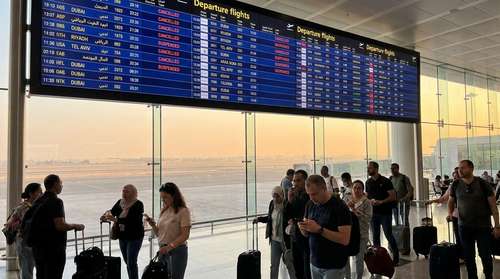
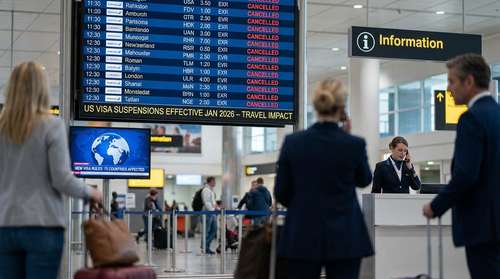
The immediate consequence of the international travel restrictions has been a surge in flight cancellations, particularly on routes serving West Africa, the Middle East, and South America. Airlines reporting from major hubs like New York and Miami have noted a spike in no-shows and last-minute cancellations since the announcement.
Travel industry analysts point to a "chilling effect" where legitimate tourists, fearing rejection at the border or indefinite processing delays, are opting to travel elsewhere. "The message being received globally is one of uncertainty," says a senior analyst at the U.S. Travel Association. "Even if a traveler holds a valid tourist visa, the fear of aggressive financial questioning at customs is discouraging trips. We are looking at a potential deficit of millions in visitor spending if this perception isn't corrected quickly."
Economic Fallout for Hospitality
Hotels and destination marketing organizations are scrambling to adjust their forecasts for inbound travel US 2026. Markets heavily reliant on visiting friends and relatives (VFR) traffic are expected to be hit hardest. For example, the suspension of visas for nationals from countries like Haiti and Jamaica threatens to sever a vital economic lifeline for tourism-dependent communities in South Florida that rely on cross-border family travel.
State Department Travel Update: What Travelers Need to Know
For those navigating the current US visa suspension 2026 landscape, experts advise caution and over-preparation. The State Department has clarified that the pause technically does not revoke existing tourist visas. However, travelers from the affected 75 nations should be prepared for:
- Longer Wait Times: Consular resources are being diverted to conduct the new "public charge" reviews, leading to delays in routine B1/B2 visa interviews.
- Additional Documentation: Travelers may be asked to provide more robust proof of financial independence, including bank statements or affidavits of support, even for short visits.
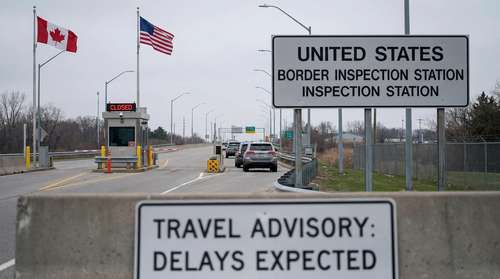
- Entry Scrutiny: Customs and Border Protection (CBP) officers have intensified screening at ports of entry to ensure temporary visitors do not intend to remain permanently.
Outlook for 2026 Travel
As the airline cancellations news continues to develop, the long-term impact on the U.S. economy remains to be seen. Industry projections that initially forecasted a rebound in international visitors for 2026 are now being revised downward. With the policy set to remain indefinite pending a full review of vetting procedures, the U.S. tourism industry is preparing for a challenging year of reduced global connectivity and lost revenue.
Travelers and industry stakeholders are urged to monitor official channels closely, as the list of affected countries and specific enforcement protocols may evolve in the coming weeks.