The clock is ticking. With just 100 days remaining until the June 11 kickoff, the excitement surrounding the expanded 48-team tournament is colliding with harsh logistical realities. A barrage of 2026 World Cup travel alerts has begun sounding across the globe as international travelers navigate a maze of soaring expenses and bureaucratic red tape. New data indicates a concerning 5% dip in projected international visitation to North America, driven by geopolitical friction, a nearly 100% hike in entry fees, and visa wait times exceeding eight months in critical overseas markets. For those dreaming of witnessing football history, getting to the stadium is proving to be the hardest match of all.
The US ESTA Fee Increase 2026 and Border Tolls
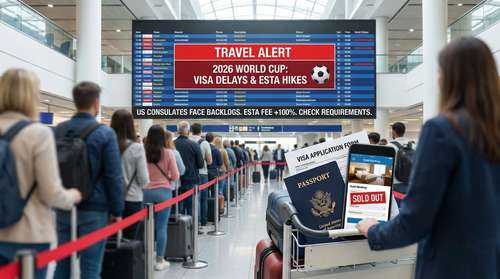
Fans eligible for the Visa Waiver Program (VWP) are facing unprecedented entry costs. The US ESTA fee increase 2026 represents the sharpest jump since the program's inception. Following the passage of the One Big Beautiful Bill Act (HR-1) late last year, the baseline cost for the Electronic System for Travel Authorization doubled from $21 to $40. As of January 1, 2026, an inflation adjustment pushed the final price to $40.27.
Corporate mobility managers and tourism boards are urging travelers not to overlook these fractional costs. While the $0.27 inflation bump seems microscopic on paper, the foundational shift to a $40 baseline fee has fundamentally changed the financial calculus for large groups and frequent travelers. While a $40 entry permit might seem manageable in a vacuum, the compounded costs for families undertaking international travel to US 2026 are significant. Furthermore, fans traveling overland from Canada or Mexico face a newly implemented $30 fee for land border I-94 forms—a steep climb from the previous $6 charge. Chinese B-1/B-2 visa holders must also navigate a newly introduced $30 EVUS authorization fee.
FIFA World Cup Visa Delays: A Race Against the Clock
For fans outside the VWP, the bureaucratic hurdles are even steeper. Severe FIFA World Cup visa delays are jeopardizing attendance from football strongholds across Latin America, Asia, and the Middle East. At US consulates in cities like Bogotá, Mumbai, and Guadalajara, wait times for B1/B2 tourist visas stretch well beyond the tournament dates.
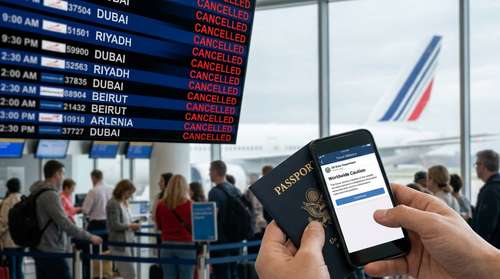
In the Middle East, a recently announced US visa pause sparked widespread panic among ticket holders. However, a subsequent US Department of State travel advisory clarified that the freeze applies strictly to immigrant visas, ensuring that B1/B2 tourist, athlete, and media visas remain unaffected. To mitigate the backlog, authorities have rolled out the FIFA Priority Appointment Scheduling System (PASS), but immigration lawyers warn it does not guarantee approval or completely erase wait times.
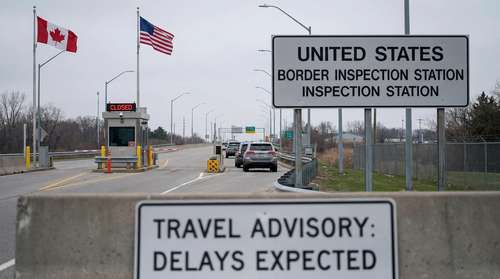
Canada is wrestling with its own parallel crisis. Processing times for Canadian visitor visas have skyrocketed by 27%, with some applicants facing delays of over 200 days due to massive application surges and a recent 20% staffing cut. The Canadian border agency is attempting to redeploy officers to priority hubs, but tour operators are advising fans to build a 12-week buffer into their travel plans just to be safe.
World Cup Host City Hotel Prices Hit Astounding Highs
Securing a visa is only half the battle; finding a place to sleep is the other. Recent hospitality data reveals that World Cup host city hotel prices are experiencing astronomical markups driven by the tournament's game day premium. Across the 16 host cities, match-day rates have surged dramatically, often doubling or tripling standard pricing.
The localized spikes are staggering. In Houston, hotels have inflated their prices by up to 544%, transforming a standard $110 room into a $700-per-night luxury. Kansas City is seeing mid-range accommodations climb by 364% to average $654 nightly. The most extreme price gouging is unfolding around MetLife Stadium in New York/New Jersey—site of the July 19 final—where rooms that historically cost $300 are now commanding upwards of $1,500 to $3,500.
Cross-border venues offer no relief. Vancouver has emerged as the most expensive market for the group stage, with average nightly rates hovering around $1,230. Meanwhile, Mexico City's opening match has triggered an astounding 2,373% price hike at nearby properties, with standard $157 rooms listed for nearly $3,882. High-demand markets are practicing aggressive rate anchoring, purposefully keeping prices sky-high early in the booking window to prevent low-yield sell-outs before the peak desperation phase begins.
Navigating 2026 World Cup Flight Disruptions
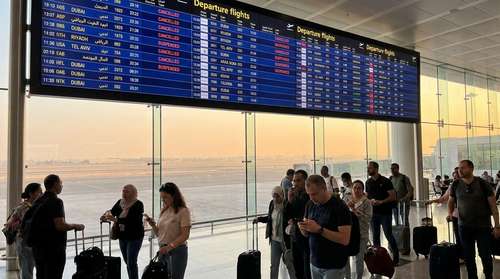
Beyond ground logistics, aviation experts are already issuing warnings about potential 2026 World Cup flight disruptions. With an estimated 20 million visitors descending on North America, major airline hubs like Atlanta, Los Angeles, and New York are bracing for airspace congestion not seen in years. Carrier capacity constraints, combined with regional air traffic controller shortages, mean that flight schedules are highly vulnerable to localized weather events or operational hiccups. Airlines are scrambling to add temporary routes between key host cities, but the sheer volume of international and domestic transit will push the infrastructure to its absolute limit.
Travelers are strongly advised to build buffer days into their itineraries. Relying on same-day flights for match attendance carries catastrophic risks this summer. If a connecting flight is delayed or canceled, the cascading effect could easily force a fan to miss a once-in-a-lifetime match.
The Final Push for Fans
The 2026 tournament promises to be the largest and most lucrative in FIFA history. Yet, as the final 100-day countdown continues, the very fans expected to fuel this economic boom are being priced out and delayed out of the experience. Thorough preparation, early bookings, and relentless patience are no longer optional—they are the strict requirements for anyone hoping to take part in the global spectacle.