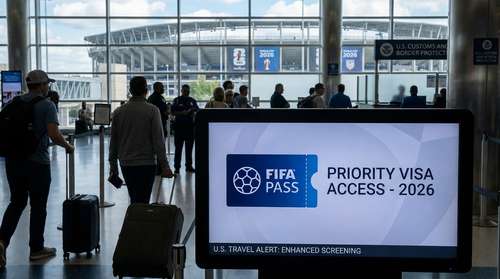
The U.S. State Department has officially launched FIFA PASS, a priority visa scheduling tool designed to fast-track entry for international fans, as the 2026 FIFA World Cup faces mounting logistical headwinds. This strategic rollout comes at a critical moment, with new data revealing a sharp 14% decline in European airline bookings and the expansion of strict U.S. visa restrictions to 39 countries. As host cities brace for a projected $30 billion economic impact, officials are racing to ensure that tightened border policies and safety concerns don't derail the largest sporting event in history.
FIFA PASS: A Lifeline for International Fans?
In a direct response to unprecedented visa backlog anxieties, the U.S. State Department's new FIFA PASS initiative aims to streamline the entry process for verified ticket holders. This digital tool is not a visa waiver but a priority scheduling system, allowing fans with valid match tickets to bypass standard wait times for consular interviews, which in some regions currently exceed 600 days.
While the tool offers a glimmer of hope, immigration experts warn it may not be a silver bullet. The system prioritizes interview slots but does not alter the rigorous adjudication standards required for B1/B2 visitor visas. "FIFA PASS is a logistical band-aid, not a policy shift," notes a senior travel analyst. "It gets you to the window faster, but it doesn't guarantee the window will open."
How the Priority System Works
Ticket holders must register their purchase through the official FIFA portal to generate a unique scheduling code. This code can then be used on U.S. consular websites to unlock reserved appointment blocks. However, the State Department has clarified that this benefit is exclusively for ticket holders and does not extend to non-ticketed family members or fans traveling solely for the atmosphere in fan zones.
Visa Restrictions Expanded to 39 Countries
The launch of FIFA PASS coincides with a significant tightening of U.S. border policies. The administration has expanded visa restrictions to a total of 39 countries, a move that complicates travel for thousands of potential World Cup attendees. This list now includes a "Full Travel Ban" on 19 nations—including Iran, Burma, and Sudan—where visa issuance is largely suspended.
More critically for the tournament, a "Partial Travel Ban" has been applied to 20 additional countries, including Nigeria, Senegal, and Venezuela. For nationals of these countries, the issuance of B1/B2 tourist visas—the primary document needed for World Cup travel—has been suspended or severely restricted. This policy effectively sidelines millions of football-passionate fans from key African and South American nations, raising questions about the tournament's promise of global inclusivity.
European Bookings Plummet by 14%
Beyond visa hurdles, a worrying trend has emerged from traditional stronghold markets. Flight booking data for June and July 2026 shows a 14.2% year-over-year decline in reservations from Europe to the United States. The slump is most acute in major hubs, with Frankfurt seeing a staggering 36% drop and Barcelona down 26%.
Industry insiders attribute this World Cup 2026 flight booking slump to a "perfect storm" of rising transatlantic airfares, strong dollar valuations making U.S. travel expensive, and lingering geopolitical unease. "European fans are voting with their wallets," says a German travel consultant. "The combination of high costs and perceived unpredictability at the U.S. border is pushing many to watch from home."
Host City Safety and Economic Stakes
The projected $30 billion economic windfall for U.S. host cities is now under scrutiny as safety concerns deter some international travelers. Recent travel advisories from European governments, including France, Germany, and Ireland, have urged caution for citizens visiting Minneapolis/St. Paul following localized unrest. Similarly, civil rights coalitions have issued travel alerts for Florida, citing aggressive immigration enforcement that could affect international visitors.
Despite these challenges, U.S. tourism officials remain optimistic, citing the resilience of the global sports market. Host cities like Atlanta, Dallas, and New York/New Jersey are continuing to invest heavily in infrastructure and security to reassure visitors. The success of the tournament—and its economic legacy—will likely hinge on how effectively the FIFA PASS tool can bridge the gap between strict border enforcement and the welcoming spirit required for a global celebration.