
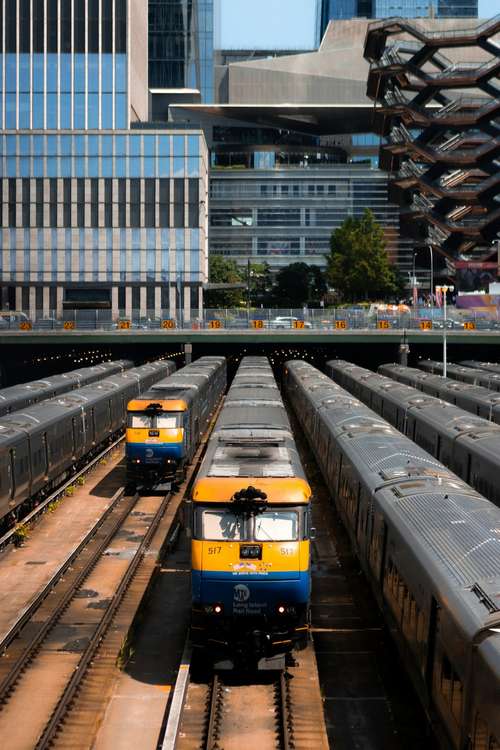
The history of transportation in the United States is a fascinating tale of ambition, innovation, and decisions that continue to shape our cities and lifestyles. There's been a lot of chatter about why the US passenger train system never evolved like its European counterpart. Maybe you've wondered: Why did the US choose other paths when Europe seems to thrive with their train networks?
When we think about American public transit, pictures of sprawling highways, bustling airports, and endless motorways come to mind, not sleek, high-speed trains weaving through neighborhoods. This pattern is a profound reflection of economic choices, historical priorities, and practical challenges that arose long ago. Let’s dive into the reasons behind these choices.
The Historical Context and Early Decisions
Before the rise of modern automobiles and highways, railroads were the heartbeat of America's expansion. However, as the country evolved, the focus shifted, and the ideas that once made rail travel America possible no longer had the same allure.
In the 19th and early 20th centuries, the US passenger train history was flourishing with significant routes connecting major cities. But as Americans began to spread out across vast territories, there were numerous competing interests. The industrial revolution and the innovation in automotive technology initiated a new era where private cars and air travel dominated the landscape. With the rise of suburbs and decentralization, investing heavily in an integrated US passenger train system started to seem less appealing.
There was also the hitch that the rail networks designed at the time were built primarily for freight. As a result, the American rail infrastructure was optimized for heavy goods transportation rather than for comfortable passenger travel. The US rail policy during the mid-20th century essentially favored economic growth via highways and aviation over maintaining or upgrading passenger services.
This shift became a defining moment that illustrates the differences in transportation policy between continents. In Europe, limited space and high population density drove governments to invest in more efficient European train efficiency models, resulting in a Europe train system comparison that appears almost tailor-made for compact urban travel.
Economic and Infrastructural Reasons
There’s a strong economic side to this story. The initial investments in our car-centric highways and airports made modern American public transit remarkably reliant on fossil fuels and automobiles. This choice was heavily influenced by the expanding oil industry and the lobbying power of automobile manufacturers.
It wasn’t just about building roads—changing the transportation profile of a country as large as the United States involves massive revisals of federal budgets, urban planning, and infrastructure designs. Essentially, the US prioritized train travel alternatives that would work best with its current priorities. The cost of transitioning to a new system would have been enormous, something historians and economists agree on when they analyze passenger rail challenges in the US.
Even today, when we look back and draw a Europe train system comparison, it is evident that Europe’s smaller scale, centralized planning, and intense urbanization made it a prime candidate for high-speed rails and integrated networks. In contrast, the vast distances and decentralized nature of the American landscape have made such investments less appealing politically and economically.
This economic rationale wasn't just theoretical. It directly impacted US transportation choices; funds were channeled into building interstate highways that linked up cities by roads rather than rails. As a cultural icon of progress, the car came to represent freedom and independence, creating a mindset that veered away from coordinated rail systems.
Geographical and Demographical Challenges
Geography played a huge role in shaping transportation strategies in the US. The sheer size of the country and its lower population density compared to Europe meant that building a comprehensive passenger train system was not only more expensive but also less naturally efficient.
Imagine trying to link cities that are hundreds of miles apart with a single rail line versus a network of trains crisscrossing a densely populated region. That’s a huge difference in planning and investment. This contrast makes for an interesting US vs Europe trains debate. While European nations, constrained by smaller land areas, have little choice but to invest in every available square inch, the US found that its sprawling territories were better served by cars and airplanes.
On the demographic front, the trends of suburban sprawl ensured that communities were not clustered enough to justify the high-speed rails seen in Europe. US transportation history shows that after World War II, there was a significant migration to suburbs, which further diluted the need for a concentrated passenger rail network.
The differences in train system differences are profound here. The US has always been a country of vast open spaces—land where highways stretch for miles, and air travel is deemed more practical for long distances. This geographical reality combined with demographic spread set the stage for American rail infrastructure to lean heavily towards freight and road travel.
Political and Social Influences
The decisions we see today were shaped not only by economic and geographical factors but also by political will and social trends. The role of lobbies, the pressure from automotive and oil industries, and voter sentiment all played a role in shaping the priorities of US transportation policy.
Politicians often focus on short-term wins, and investing in long-term rail projects simply does not offer the quick returns that highways and airports do. Voters, enthralled by the freedom of the open road and the convenience of personal vehicles, were less inclined to support large-scale government projects aimed at building an extensive US passenger train system.
This reality illustrates a fascinating journey in American public transit where decisions made decades ago continue to influence today’s urban planning and travel alternatives. The likes of California’s high-speed rail project do hint that under the right conditions, a change is possible, but these efforts remain the exception rather than the rule.
There is no denying that the US vs Europe trains contrast is also a tale of culture and politics. The US has cultivated a culture where the car represents independence, and many argue that nature itself—vast and diverse—demands the flexibility of road travel. This cultural identity further cements choices about transportation that continue to reveal themselves in the challenges of implementing a full-fledged passenger rail system.
Modern Reflections and Future Possibilities
Today, the discussion around American public transit is evolving. Urban centers are slowly seeing a revival in rail travel alternatives as parts of major cities invest in light rail and regional trains. This modern reflection shows a new awareness about the benefits of efficient transportation systems, even if they don’t mirror the European rail success completely.
While it's unlikely that the US will adopt a Europe train system comparison wholesale, there is growing momentum to address some of the longstanding challenges related to passenger rail in America. With environmental concerns and the rising cost of road maintenance, future investments might tilt towards more sustainable transit solutions. It’s similar to a house that needs renovation—a mix of preserving certain historical choices while modernizing others to meet current needs.
Many urban planners and policy experts believe that embracing some aspects of European train efficiency could improve American rail infrastructure. A blend of modern technologies and smart investments could pave the way for systems that are not only efficient from an engineering standpoint but also environmentally friendly, enhancing our overall transportation choices.
It’s exciting to imagine a future where, after making up our minds about car culture decades ago, we might finally recognize the benefits of diversifying our transit networks. After all, the story of US transportation history is one of innovation and adaptation, and nothing is set in stone forever.
In summary, the US’s decision to forgo a passenger train system like Europe’s wasn’t due to a single factor but a tapestry of historical, economic, geographical, and political reasons. Although we might admire the sleek, efficient trains of Europe, our nation’s vast territory, unique cultural values, and established infrastructure have all contributed to a transportation model that prioritizes different modes. As our needs evolve, so too might our approaches to public transit, showing that when it comes to travel, America’s journey is an ever-changing story.