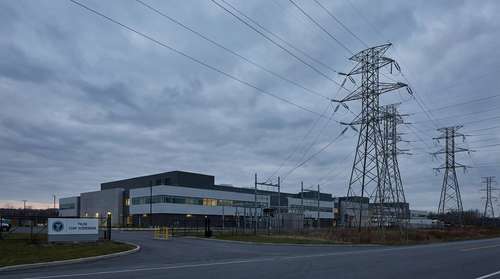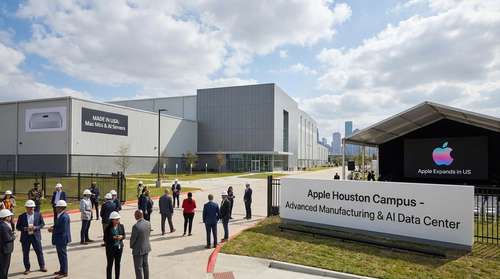
Apple has officially announced a massive expansion of its manufacturing footprint in Houston, Texas, confirming that Mac Mini production will move to the United States for the first time. In a landmark move revealed on Tuesday by CEO Tim Cook, the tech giant detailed plans to double its north Houston campus to accommodate a new factory for the popular desktop computer, alongside a significant scale-up of advanced AI server manufacturing. The strategic shift is a cornerstone of Apple's growing Apple Intelligence infrastructure 2026, designed to support the company’s ambitious AI rollout while strengthening its domestic supply chain.
Apple Houston Manufacturing: A New Era for Mac Mini
For the first time in the product's two-decade history, the Mac Mini Made in USA label will become a reality. Apple’s expansion in Houston involves the construction of a dedicated facility on its existing campus, which is scheduled to begin churning out the compact desktops later this year. This move signals a major departure from Apple's traditional reliance on Asian assembly lines for its core computing products.
The decision to localize production comes as the Mac Mini evolves into a critical tool for AI-driven workflows. "Apple is deeply committed to the future of American manufacturing, and we're proud to significantly expand our footprint in Houston with the production of Mac Mini starting later this year," Tim Cook stated during the announcement. The new assembly lines will likely integrate chips sourced from TSMC’s Arizona fabrication plant, creating a tighter, more resilient domestic ecosystem for Apple’s hardware.
Ramping Up Apple AI Server Production
While the Mac Mini headlines the consumer news, the industrial backbone of this expansion is the aggressive ramp-up of Apple AI server production. These high-performance servers are the engines behind "Apple Intelligence," the company's suite of generative AI features. Reports indicate that Apple secretly began manufacturing these servers in Houston in 2025, beating internal deadlines.
The expanded facility will not only assemble the servers but also manufacture the complex logic boards onsite. This vertical integration is crucial for securing the data centers that process private cloud computing tasks for iPhone, iPad, and Mac users. By localizing Apple Intelligence infrastructure 2026, the company aims to reduce latency, enhance security, and insulate its most critical AI assets from global supply chain disruptions.
Advanced Manufacturing Center to Train US Workforce
Beyond hardware, Apple is investing heavily in human capital. The Houston expansion includes a new 20,000-square-foot Advanced Manufacturing Center, currently under construction. This hub will open later this year to provide hands-on training for students, supplier employees, and local businesses. It mirrors a similar successful initiative in Detroit, focusing on modern fabrication techniques, automation, and AI integration in manufacturing processes.
Tim Cook Houston Announcement: $600 Billion US Commitment
This week's Tim Cook Houston announcement is part of a broader pledge to invest over $600 billion in the US economy by the end of the decade. The Houston project is expected to create thousands of new US tech jobs 2026, ranging from assembly technicians to supply chain logistics experts. It underscores a strategic pivot where "Designed in California" increasingly means "Assembled in Texas."
The expansion also benefits from key partnerships. Foxconn, Apple’s longtime manufacturing partner, will play a central role in operating the new Houston facilities. Additionally, the supply chain is being fortified by silicon wafers produced in Sherman, Texas, which are then finished by TSMC, further cementing the state's status as a semiconductor and tech manufacturing stronghold.
Apple Supply Chain Shift: Why Houston?
The Apple supply chain shift to Houston isn't random. Texas offers a unique convergence of logistical advantages, energy resilience, and a skilled talent pool. By clustering Mac Mini production and server assembly in one region, Apple gains operational efficiencies that are harder to achieve with a fragmented global chain. This proximity allows for faster iteration on hardware designs—critical when racing to lead the AI market.
Furthermore, this move acts as a hedge against geopolitical tensions that have historically threatened tech supply lines. By rooting the production of its most AI-capable desktop and the servers that power it on American soil, Apple is building a fortress around its future. As 2026 progresses, the tech industry will be watching closely to see if this bold Texas gamble sets a new standard for American consumer electronics manufacturing.