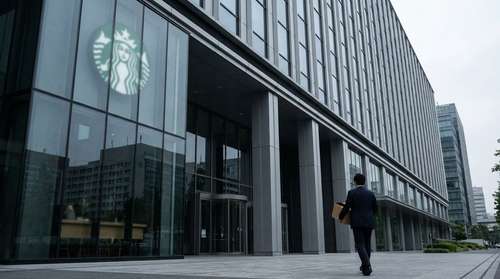
The sweeping changes hitting Seattle's most famous coffee giant are sending ripples through the corporate world. In the latest phase of the Starbucks layoffs 2026 cycle, the company announced Friday it is cutting 300 corporate support roles across the United States. Coupled with a series of major regional office closures, the move underscores a drastic shift in operational priorities. Instead of maintaining sprawling administrative hubs, leadership is redirecting capital toward the front lines—the retail cafes and the baristas who run them.
This latest overhaul will incur approximately $400 million in restructuring charges, a hefty price tag aimed at long-term agility. For market watchers tracking retail business news today, the coffee titan's aggressive lean-down serves as a stark indicator of where consumer-focused legacy brands are heading.
Behind the Starbucks Corporate Restructuring
The current wave of cuts specifically targets support functions, including marketing, human resources, supply chain management, and technology. Unlike previous retail disruptions, store-level coffeehouse employees will not be impacted. The Starbucks corporate restructuring is strictly an administrative trimming, intended to reduce internal complexity and decision-making bottlenecks.
According to SEC filings, the financial impact of this restructuring is split into two distinct categories. Starbucks expects roughly $120 million in cash charges directly tied to employee severance and separation benefits. The remaining $280 million consists of non-cash impairment charges. This accounting adjustment largely reflects reduced valuations on real estate holdings and office leases that the company no longer needs.
As part of the regional office closures news sweeping through corporate real estate markets, Starbucks is shuttering underused support hubs in Atlanta, Dallas, Chicago, and Burbank, California. Employees who survive the cuts at these specific locations will either transition to remote work environments or be offered relocation packages. Interestingly, this consolidation doesn't mean Starbucks is entirely abandoning regional footprints. The company is maintaining its primary headquarters in Seattle and actively developing a massive new corporate center in Nashville, Tennessee. This new southeastern hub is slated to employ up to 2,000 people over the next five years, indicating a geographic shift rather than just a pure real estate reduction.
Brian Niccol's "Back to Starbucks" Vision
Since taking the helm in the fall of 2024, Brian Niccol Starbucks CEO has been ruthlessly focused on simplifying the business. This marks the third major round of white-collar job cuts under his leadership. The company eliminated 1,100 corporate roles in February 2025 and shed an additional 900 non-retail jobs later that year as part of a sweeping $1 billion cost-reduction initiative.
Niccol's overarching philosophy is internally dubbed the "Back to Starbucks" strategy. The goal is straightforward: strip away bureaucratic layers that bloat operating expenses and invest those savings directly into the customer experience. A company spokesperson noted that leadership took a hard look at their respective functions to sharpen focus, reduce complexity, and lower costs.
The Starbucks cost-cutting strategy is already showing tangible retail results. By freeing up capital, the company has been able to invest heavily in what Niccol refers to as "green apron partner hours." This means more baristas on the floor during peak rushes, redesigned café layouts for better workflow, and faster service times. The company's U.S. same-store sales jumped by a robust 7% in the first quarter of 2026, a metric Niccol recently highlighted as the critical turning point in the brand's comeback journey.
Global Support Under Review
While the 300 immediate layoffs are concentrated in the United States, the restructuring is far from over. Starbucks confirmed it is currently evaluating its international corporate workforce. With roughly 5,000 international corporate employees on the roster as of late 2025, additional structural changes outside the U.S. are highly anticipated as the brand shifts to a predominantly licensed model in numerous overseas markets.
Reflecting Broader Coffee Industry Trends 2026
The maneuvers at Starbucks offer a masterclass in shifting corporate resource allocation. A defining theme among coffee industry trends 2026 is the pivot away from top-heavy management structures in favor of frontline empowerment. Consumers are demanding faster service and higher-quality in-store experiences, punishing brands that fail to deliver.
By sacrificing administrative real estate and corporate headcount, Starbucks is heavily padding its operational margins. Competitors are closely monitoring the Seattle giant's ability to maintain its impressive 7% domestic sales growth trajectory while concurrently executing a massive internal reorganization. Profit margins have begun expanding again, rising by 120 basis points to 9.4% in recent financial reporting. If the strategy successfully yields durable, profitable growth through the remainder of the fiscal year, expect other major quick-service and beverage brands to adopt similar aggressive restructuring playbooks.